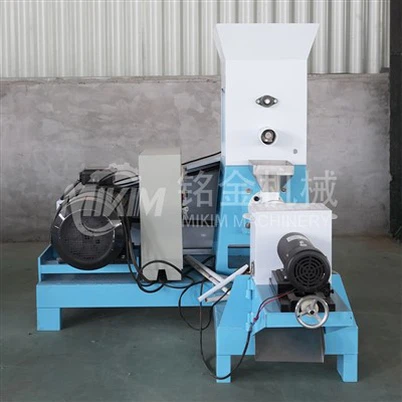
Common Faults & Daily Maintenance of Twin Screw dog food maker Machines
Leave a message
Twin screw pet food machines are high-precision processing equipment, and their stable operation is crucial for ensuring production continuity and product quality. Equipment faults not only cause production interruptions but also increase maintenance costs and reduce product qualification rates. Mastering common faults and daily maintenance methods can effectively extend the service life of the equipment, improve production efficiency, and reduce operational risks.
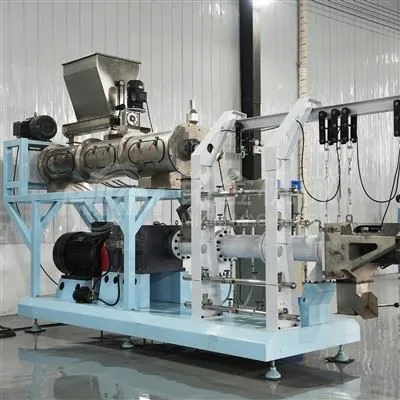

Common Faults & Solutions
1.Twin screw pet feed extruder machine No Discharge or Blocked Discharge
Causes: ① Raw material particle size is too large (exceeding 3mm) or moisture content is too high (above 25%) or too low (below 10%);
② Feeding speed is too fast, leading to material accumulation in the barrel;
③ Mold is blocked by foreign objects or hardened materials;
④ Screw speed is too low, resulting in insufficient extrusion force.
Solutions: ① Grind raw materials to the required particle size (0.5-2mm) and adjust moisture content to 12%-20%;
② Reduce feeding speed and increase screw speed appropriately;
③ Stop the machine, disassemble the mold, and clean blocked materials or foreign objects;
④ Check the screw drive system and adjust to the specified speed range.
Prevention Measures: Install a sieving device to filter raw materials; regularly check and adjust raw material moisture content; clean the mold after each production cycle.


2. Twin screw fish feed making machine Poor Product Molding (Irregular Shape, Easy Breakage)
Causes: ① Temperature and pressure parameters are unstable (starch gelatinization degree is too low or too high);
② Mold wear or deformation;
③ Raw material formula is unreasonable (insufficient binder content);
④ Cooling system fails, leading to uneven product cooling.
Solutions: ① Adjust the temperature and pressure of each barrel section to ensure starch gelatinization degree is 85%-95%;
② Replace worn or deformed molds;
③ Optimize the formula by adding an appropriate amount of binder (such as carboxymethyl cellulose);
④ Check the cooling water circulation system and clean the cooling pipe.
Prevention Measures: Regularly calibrate temperature and pressure sensors; inspect molds for wear after each production batch; maintain the cooling system regularly.
3. Temperature Control Instability
Causes: ① Temperature sensor is faulty or contaminated;
② Heating element is damaged or short-circuited;
③ Cooling water flow is insufficient or unstable;
④ Control system malfunctions, leading to incorrect temperature signals.
Solutions: ① Clean or replace the temperature sensor;
② Check the heating element and replace damaged parts;
③ Adjust the cooling water flow to the specified range (5-10 L/min) and ensure stable water pressure;
④ Reset the control system or contact technical personnel for maintenance.
Prevention Measures: Clean the twin-screw pet pellet making machine's temperature sensor daily, inspect the heating element and control system weekly, and ensure a stable cooling water supply.


4. Abnormal Noise During Operation
Causes: ① Screw and barrel are severely worn, leading to metal friction;
② Bearing is damaged or lacks lubricating oil;
③ Raw materials contain hard foreign objects (such as metal fragments);
④ Machine is not level, resulting in uneven load.
Solutions: ① Stop the twin screw pet food making machine immediately, disassemble and inspect the screw and barrel, and replace worn parts;
② Replace damaged bearings and add lubricating oil (No. 32 mechanical oil) as required;
③ Clean the raw materials and check the sieving device;
④ Adjust the machine level to ensure uniform load.
Prevention Measures: Add lubricating oil regularly; install a metal detector to remove foreign objects; check the machine level monthly.
5. Oil Leakage from the Machine
Causes: ① Seal ring is worn or aged;
② Oil pressure is too high;
③ Oil pipe is damaged or connected loosely.
Solutions: ① Replace worn or aged seal rings;
② Adjust the oil pressure to the specified range (0.3-0.5 MPa);
③ Repair or replace damaged oil pipes and tighten loose connections.
Prevention Measures: Inspect seal rings and oil pipes weekly; check oil pressure daily before starting the machine.
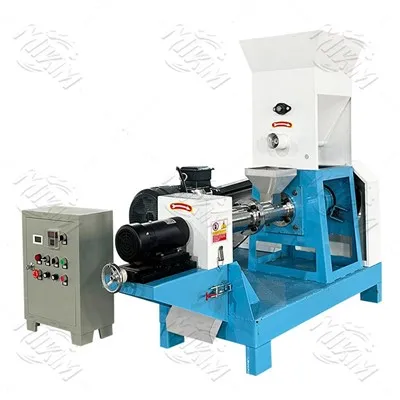

Daily Maintenance Process (By Cycle)
1. Pre-Startup Inspection (Before Each Shift)
Check the level of lubricating oil, hydraulic oil, and cooling water; add if insufficient.
Inspect temperature sensors, pressure gauges, and other instruments for normal operation.
Check the tightness of screws, bolts, and oil pipe connections.
Run the twin screw fish feed extruder machine idly for 5-10 minutes to check for abnormal noise and vibration.
2. Daily Maintenance (After Each Shift)
Clean the barrel, screws, and molds with clean water or food-grade cleaning agents to remove residual materials.
Wipe the machine surface and clean the surrounding environment to avoid dust accumulation.
Record the twin screw dog food extruder machine operation parameters, faults, and maintenance content.
3. Weekly Maintenance
Add lubricating oil to bearings, gears, and other moving parts.
Inspect seal rings, oil pipes, and heating elements for wear or damage.
Clean the cooling water tank and filter to remove impurities.
4. Monthly Maintenance
Disassemble and inspect screws, barrels, and molds for wear; grind or replace if necessary.
Calibrate temperature and pressure sensors to ensure accuracy.
Check the drive system (motor, reducer) for normal operation; adjust the belt tightness if necessary.
Wear Parts Replacement Guide
- Screws & Barrels: Replacement cycle is 8000-12000 operating hours (varies by raw material). Choose wear-resistant alloy materials for replacement to extend service life.
- Molds: Replacement cycle is 5000-8000 operating hours. Regularly polish the mold surface to maintain product shape.
- Seal Rings: Replacement cycle is 1000-2000 operating hours. Replace with food-grade seal rings to avoid contamination.
- Bearings: Replacement cycle is 12000-15000 operating hours. Choose high-temperature resistant bearings for the extrusion section.
- Our twin screw pet food machines are equipped with a complete after-sales service system, including on-site installation, operation training, and door-to-door maintenance. Learn more about our after-sales service or download the full maintenance manual for free.
about Us
Customer visit

Certificate of Honor