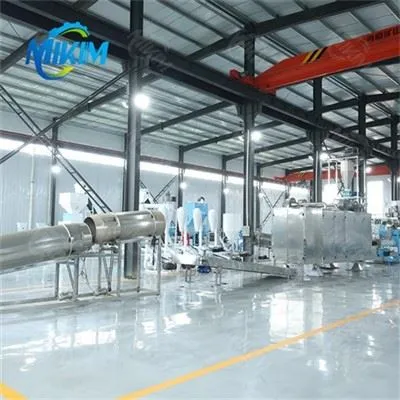
Wet dog food production machine vs Dry fish feed pellet extruder machines: Key Features
Leave a message
content
Operational Stability: Controllable Parameters vs. Frequent Fluctuations. The wet floating fish feed machine uses dual control of steam addition and screw speed, ensuring core parameters such as temperature and pressure fluctuate by ≤±2%. It exhibits strong consistency in pellet expansion and hardness, enabling 24-hour continuous and stable production with a low downtime rate. Dry extruders rely on frictional heat generation, and their heat and pressure are easily affected by fluctuations in raw material moisture and particle size, resulting in parameter fluctuations of up to ±5%. This leads to problems such as material jamming, scorching, and uneven expansion, requiring frequent shutdowns for adjustments and limiting continuous operation. For example, when processing raw materials with significant batch variations, the wet extruder can quickly adapt by adjusting the steam addition, while the dry-type floating fish feed pellet making machine requires repeated adjustments to speed and raw material moisture, significantly reducing production efficiency.
Core Component Durability: Low Temperature, Low Consumption vs. High Temperature, High Consumption. The wet pet food processing machine operates at a low temperature of 80-100℃, and with steam lubrication, friction and wear on the screw and barrel are significantly reduced, preventing high-temperature adhesion. The lifespan of core components is increased by more than 50% compared to the dry-type fish feed making machine. Meanwhile, the low temperature avoids changes in the fit clearance of components due to thermal expansion and contraction, reducing equipment vibration and abnormal noise, and further extending component life. The high temperature of 120-160℃ in dry extruders accelerates the corrosion and wear of the screw and barrel, and raw materials easily scorch and adhere to the surface of components, causing secondary damage during cleaning. The component replacement frequency is more than twice that of wet extruders. Furthermore, the seals, bearings, and other auxiliary components of wet extruders also have a longer service life due to the low-temperature environment.
Operation and Maintenance Ease: Precise and Easy Control vs. Complex and Cumbersome. The parameters of the wet fish feed pellet processing machine are simple to adjust; only the matching logic of steam pressure, feed rate, and screw speed needs to be mastered, making it easy to learn. The modular design allows the steam system and extrusion system to be independently disassembled and maintained, reducing cleaning difficulty and minimizing downtime for maintenance (≤30 minutes). Dry extruders require simultaneous control of multiple parameters such as rotation speed, raw material moisture content, and barrel temperature. The control logic is complex and difficult to master. High-temperature adhesion makes component cleaning cumbersome. Maintenance requires time-consuming disassembly and grinding, with downtime for maintenance exceeding 1 hour. Furthermore, the high-temperature environment increases operational safety risks, necessitating additional training for operators.
Related equipment


about Us
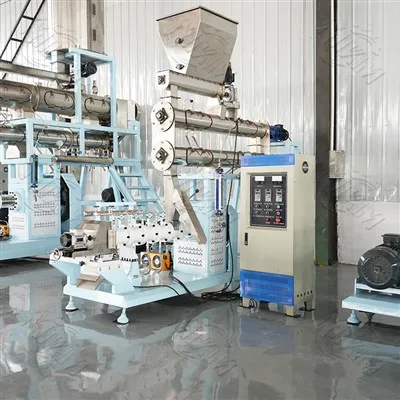
MIKIM's fish feed pellet production lines and supporting machinery offer excellent value for money. Not only are they affordable, eliminating middlemen markups and allowing small and medium-sized enterprises (SMEs) and fish farmers to purchase complete sets of equipment at reasonable costs, but they also boast exceptional efficiency. The fully automated process, from raw material crushing and precise ingredient mixing to extrusion pelleting and maturation, is completed in one continuous flow. This results in high starch gelatinization rates and uniform pellet formation, significantly improving production efficiency and feed quality, truly achieving "low cost, high output." Choosing a MIKIM fish feed pellet production line means enjoying comprehensive pre-sales and after-sales service, including 24-hour online customer support, a one-year warranty on the entire machine, professional on-site installation, commissioning, and maintenance, and a stable supply of spare parts. Customers can buy with confidence and use with peace of mind, with both excellent value and service quality!!!
Customer visit

Certificate of Honor

FAQ
1. What is the price of the single screw floating fish feed machine?
The price ranges from approximately $1,500-$55,000
2. Do you provide maintenance services for your customers?
Yes, we offer comprehensive after-sales maintenance services to our customers.
If you would like to learn more about MIKIM machinery, please contact us. We offer one-stop service and welcome your inquiries!!!