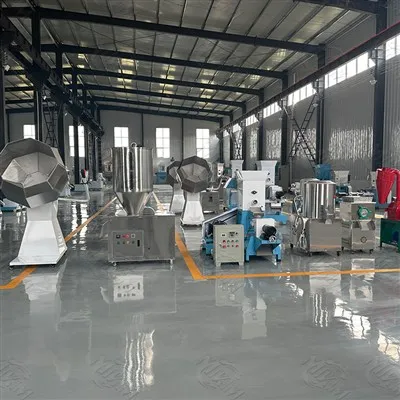
What are the core components of an aquatic sinking feed pellet production line?
Leave a message
To raise bottom-dwelling fish like California bass and catfish, you need to use sinking feed (feed that sinks quickly to the bottom so the fish can eat it). If you use a floating feed production line, the feed will float on top and the fish won't be able to eat it; while sinking production lines have a special design to make the feed "sink," and you can't do it without any of these components.
Core components and functions
Raw Material Processing Section: Adapting to Sinking Feed Requirements
Coarse Grinding Mill: Unlike floating feeds, sinking feed raw materials do not need to be ground too finely (generally 40-60 mesh, like fine sand). A coarse grinding mill is sufficient. Grinding too finely will make the feed too light and difficult to sink.
Raw Material Dryer: If the moisture content of the raw materials is too high (for example, corn with a moisture content exceeding 16%), it will make the feed soft and insufficient in density. The dryer reduces the moisture content of the raw materials to below 14%, ensuring that the feed can sink.
Ingredient Mixing Section: Precise Density Control
Automatic Feeding Scale: Sinking feeds require precise ingredient ratios (e.g., the amount of fishmeal, minerals, etc.). The feeding scale automatically weighs ingredients according to the formula (error not exceeding 0.3%), preventing incorrect ratios that lead to insufficient feed density and floating.
Gravity-Free Mixer: Thoroughly mixes the prepared ingredients, especially adding "weight-adding" ingredients (such as dicalcium phosphate) to increase feed density (generally ≥1.1g/cm³), allowing for rapid settling. Sufficient mixing time (15-20 minutes) is crucial to ensure uneven density.
High-Pressure Pelletizing Section: Ensures Feed Sinks and Resists Soaking
High-Pressure Ring Die Pelletizer: This is the "key" to sinking feed! Unlike extruders, this machine uses high-pressure rollers (0.8-1.0 MPa) to compress the raw material into the small holes of the ring die, making it extremely compact. High density causes it to sink to the bottom. The ring die needs a large length-to-diameter ratio (1:15) to make the feed more resistant to soaking (it won't disintegrate after soaking in water for more than 3 hours). Different ring dies with different hole diameters can be used (e.g., 3mm for juvenile fish feed, 5mm for adult fish feed). A release agent additive is used: a small amount of release agent (such as vegetable oil) is added to the raw material before pelleting to prevent the material from sticking to the ring die holes and clogging the machine. It also makes the pellet surface smoother and less prone to absorbing water and disintegrating.
Post-processing: Ensuring feed quality
Counter-current cooler: Freshly pressed pellets are very hot (50-60℃). The cooler blows cold air from bottom to top, quickly cooling the pellets and removing surface moisture, making the feed firmer and allowing it to settle faster.
Pellet polisher: Wipes off the powder from the surface of the cooled pellets, then applies a little oil to make the pellets smoother, more resistant to soaking, and improve their appearance for better marketability.


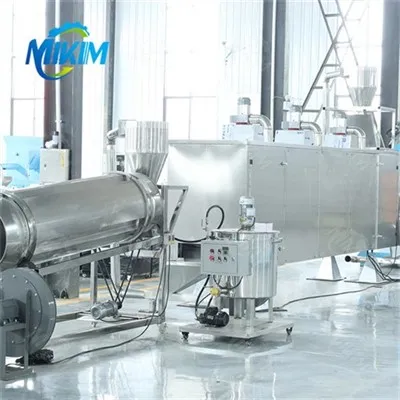

Why Choose Us
MIKIM boasts extensive experience in poultry feed pellet production lines, significantly reducing the incidence of poultry diseases. Its equipment is not only widely used across various industries domestically but also exported to Southeast Asia, Europe, Africa, and South America, earning a high reputation internationally. This global presence not only demonstrates the adaptability and competitiveness of its products, but also demonstrates the company's experience in adapting to diverse market standards and logistics conditions, enabling it to provide a stable supply chain for its overseas customers. Whether serving large domestic farms or cross-border feed companies, MIKIM can leverage its global service network to ensure a consistent, high-quality experience.
For more information on process flow design, equipment layout, factory construction plans, individual equipment pricing, or turnkey project proposals, please feel free to contact us!!!
FAQ
1. What is the price of the animal food extruder line?
The price ranges from approximately $10,500-$34,000
2. Do you provide maintenance services for your customers?
Yes, we offer comprehensive after-sales maintenance services to our customers.