What are the main components of an aquatic floating feed pellet production line?
Leave a message
When raising grass carp, bass, and other fish, floating feed is often needed (feed that floats in the water, making it easy for the fish to eat). However, many people don't know that the production line that can produce this kind of feed is different from ordinary production lines-it needs special equipment to make the feed "float." If this crucial component is missing, the feed will either sink to the bottom or disintegrate as soon as it's soaked.
Core components and functions
Raw material pretreatment section: Making the raw materials "qualified"
Cleaning machine: First, it removes stones, clods of dirt, and plastic bags from the corn and soybean meal (otherwise they will clog subsequent machines and affect feed quality). Iron nails and wires are attracted out by a magnetic separator to prevent damage to the equipment.
Ultra-fine grinder: Grinds the raw materials to an extremely fine state (generally 80-120 mesh, as fine as flour). This ensures the feed produced is uniform and easily expands and floats. If ground coarsely, the feed will easily sink to the bottom.
Mixing and Conditioning Section: Bound and Shaped Raw Materials
Twin-Shaft Mixer: Mixes the pulverized raw materials with fishmeal, vitamins, binders, and other additives until extremely homogeneous (otherwise, some feeds will have nutrients while others won't). It can mix hundreds of kilograms at a time, resulting in a uniform powder.
Double-Layer Conditioner: Steam is passed through the mixed powder, heating it to 80-90℃ to gelatinize the starch (like thickening porridge). This allows the feed to bind together and improves buoyancy. The steam pressure must be stable; otherwise, poor gelatinization will cause the feed to scatter.
Extrusion and Shaping Section: The Key to Making Feed "Float"
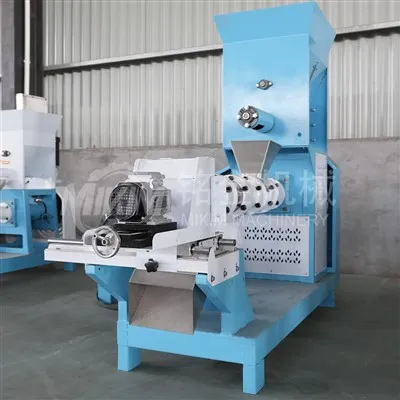
Single-Screw Extruder: This is the "core" of floating feed! The prepared raw materials are fed into the barrel, where they are extruded and heated (barrel temperature 120-130℃) by a screw. This causes the moisture in the raw materials to turn into steam, forming many small bubbles. This makes the feed lighter and allows it to float. The particle size can also be adjusted by changing the mold (e.g., 2mm for small fish feed, 4mm for larger fish feed).
Pelletizer: The extruder produces long strips of feed, which the pelletizer cuts into uniform small segments (e.g., 3-5cm long) for easier feeding by fish. The cutting speed is adjustable to prevent the pieces from being too long or too short.
Post-processing section: Ensuring the feed is "storable and easy to use".
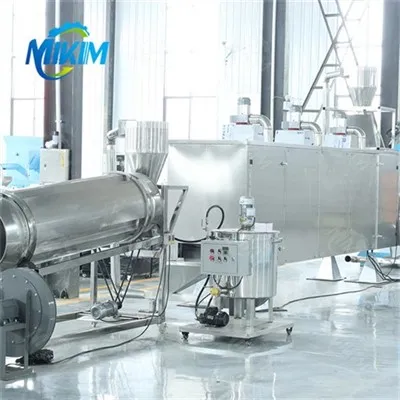
Wire mesh belt cooler: Freshly extruded feed is very hot (60-70℃). The cooler uses cold air to cool it to room temperature; otherwise, it will mold if piled up. It also makes the feed firmer and less prone to crumbling.
Vibrating screener: The cooled feed is sieved to separate out the debris and powder (the debris can be recycled into feed), ensuring that the finished product consists of intact pellets for easy packaging and feeding.



Why Choose Us
MIKIM boasts extensive experience in poultry feed pellet production lines, significantly reducing the incidence of poultry diseases. Its equipment is not only widely used across various industries domestically but also exported to Southeast Asia, Europe, Africa, and South America, earning a high reputation internationally. This global presence not only demonstrates the adaptability and competitiveness of its products, but also demonstrates the company's experience in adapting to diverse market standards and logistics conditions, enabling it to provide a stable supply chain for its overseas customers. Whether serving large domestic farms or cross-border feed companies, MIKIM can leverage its global service network to ensure a consistent, high-quality experience.
For more information on process flow design, equipment layout, factory construction plans, individual equipment pricing, or turnkey project proposals, please feel free to contact us!!!

FAQ
1. What is the price of the floating meal production line?
The price ranges from approximately $10,000-$25,000
2. Do you provide maintenance services for your customers?
Yes, we offer comprehensive after-sales maintenance services to our customers.