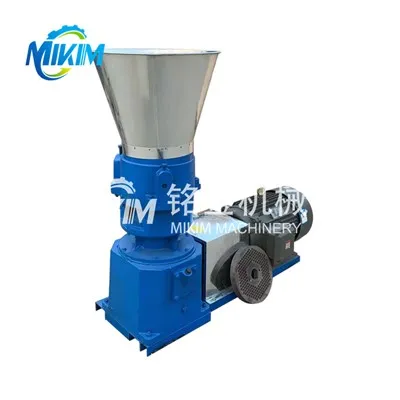
Components of a cat food pellet production line
Leave a message
Dry food pellets for cats (such as common cat food) not only need to be nutritionally balanced, but also have the right firmness (too hard for cats to chew, too soft and they'll crumble easily) and an appealing appearance. Production lines capable of producing this type of cat food have many components specifically tailored to cats' needs; it's not something just any production line can do.
Core components and functions
Raw Material Pre-processing Section: Meets Cats' Digestive Needs
Fresh Meat Processor: If adding fresh meat (such as chicken or fish), it is first ground into a fine paste (like minced meat), making it easier to mix with other ingredients and improving the palatability of the cat food, making it more appealing to cats.
Ultra-fine Grinder: Grinds grains (such as rice or oats) and vegetable powder into a fine powder of 100-120 mesh. Cats have short intestines, and fine powder is easier to digest; coarsely ground powder is more likely to cause indigestion.
Mixing and Stirring Section: Even Nutrition + Good Palatability
Dual-shaft Paddle Mixer: Mixes the minced meat, fine powder, chicken powder, fish oil, and vitamins together, stirring very evenly (otherwise, some pellets will contain meat while others won't, leading to picky eating by cats). Fish oil should be added slowly to avoid clumping.
Pre-conditioner: Adds a small amount of water and steam to the mixture, creating a "moist dough" consistency for easier shaping later. The temperature should not be too high (60-70℃) to avoid destroying the nutrients in the meat.
Extrusion Molding Section: Producing kibble that cats love to eat.
Twin-Screw Extruder: This is the core of cat food molding! It heats the material while extruding (barrel temperature 90-100℃), pressing the raw material into uniform kibble. It can also create different shapes (such as triangles or small bone shapes) by changing the mold. The kibble size is generally 3-5mm, just right for a cat to eat in one bite.
Cuter: Cuts the extruded long kibble into uniform small segments, with similar length and width (e.g., 4mm long), preventing them from being too long for the cat to chew.
Drying and Cooling Section: Ensuring Cat Food Lasts and Tastes Better
Hot Air Dryer: Freshly made kibble has a high moisture content (over 20%). The dryer uses 60-70℃ hot air to reduce the moisture to below 10%, allowing the cat food to last for over 6 months without mold. It also hardens the kibble (generally to a hardness of 2-3kg, making it easy for cats to chew).
Cooling Conveyor Belt: The dried cat food is very hot (40-50℃). A conveyor belt slowly transports it to cool naturally to room temperature while a small amount of cool air is blown to prevent the kibble from cracking due to rapid cooling.


Why Choose Us
MIKIM boasts extensive experience in poultry feed pellet production lines, significantly reducing the incidence of poultry diseases. Its equipment is not only widely used across various industries domestically but also exported to Southeast Asia, Europe, Africa, and South America, earning a high reputation internationally. This global presence not only demonstrates the adaptability and competitiveness of its products, but also demonstrates the company's experience in adapting to diverse market standards and logistics conditions, enabling it to provide a stable supply chain for its overseas customers. Whether serving large domestic farms or cross-border feed companies, MIKIM can leverage its global service network to ensure a consistent, high-quality experience.
For more information on process flow design, equipment layout, factory construction plans, individual equipment pricing, or turnkey project proposals, please feel free to contact us!!!
FAQ
1. What is the price of the animal meal extruder line?
The price ranges from approximately $10,000-$25,000
2. Do you provide maintenance services for your customers?
Yes, we offer comprehensive after-sales maintenance services to our customers.