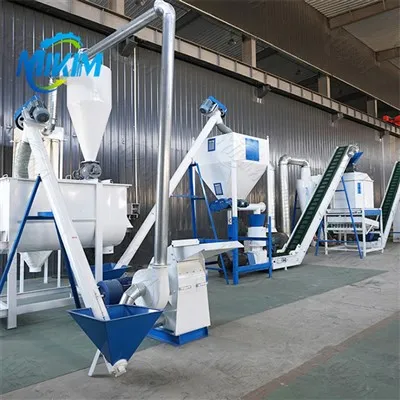
What are the maintenance requirements for the feed pellet production line?
Leave a message
Lubrication and tightening
Add special lubricating oil to transmission parts such as gears, chains, bearings, etc. on time to keep them lubricated
Check and tighten fasteners such as bolts and nuts to prevent them from loosening and falling off during equipment operation
Replacement of wearing parts: Regularly replace wearing parts such as blades, screens, belts, etc. according to the frequency of use to ensure processing quality.
Safety and protective measures
Operational safety
Power must be turned off before maintenance or cleaning the equipment. It is forbidden to put your hands into the feeding port. Tools are required to assist in feeding
Operators must wear protective gloves, masks and other equipment to avoid contact with high-temperature parts or dust

| Model | Capacity | Power | Dimensions |
| MK-250 | 100-200kg/h | 15kw | 1120*440*1060mm |
| MK-300 | 200-300kg/h | 22kw | 1280*560*1220mm |
| MK-350 | 300-400kg/h | 30kw | 1300*600*1250mm |
| MK-400 | 400-600kg/h | 37kw | 1390*650*1290mm |
| MK450 | 600-800kg/h | 45kw | 1620*700*1600mm |
Fault handling and recording
Pellets are loose/unformed: Check whether the mold is blocked and clean the mold hole with abrasives.
Equipment jam: Immediately stop the machine to check for foreign objects or component wear, and restart after cleaning.
Maintenance records: Establish equipment maintenance files to record the time and operation details of lubrication, cleaning, and replacement of components for easy traceability management.
Environmental and sanitation control
Production environment
Maintain ventilation in the workshop to reduce the accumulation of dust and harmful gases, and configure dust removal equipment when necessary. Control temperature and humidity to prevent the feed from getting damp and moldy.