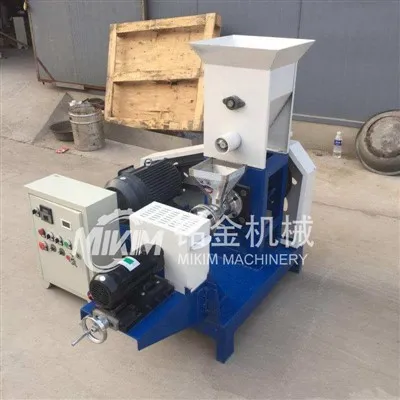
Raw Materials for Feed Pellet Milling
Leave a message
Which Raw Materials a Feed Pellet Mill Can Process
Feed pellet mills handle two broad groups of raw materials: energy ingredients and protein ingredients, plus minor components such as minerals, binders and liquids. Energy ingredients include maize, wheat, barley, sorghum and milling by-products such as bran and middlings. Protein ingredients include soybean meal, rapeseed meal, cottonseed meal, sunflower meal, fish meal, meat and bone meal, and synthetic amino acids. Minerals such as limestone, dicalcium phosphate and salt are added at low inclusion, and liquids such as molasses, vegetable oil and water are dosed separately.
What limits a raw material is not only its nutrient value but its physical behaviour in grinding, mixing, conditioning and pressing. High fat, high fibre, coarse particle structure and low starch content all reduce pellet durability.
Moisture: The First Acceptance Criterion
Excess water makes pellets soft, sticky and prone to mould during storage, and it also blocks the hammer mill screen. As a general working rule, the moisture of raw material entering the pellet mill should not exceed about 15%, and lower is better for cereals. Maize for feed use is specified with a moisture content of 14.0% or less under GB/T 17890, and the moulded kernel fraction is limited as well. Moisture is determined by ISO 6496 for animal feeding stuffs and by ISO 712 for cereals and cereal products, so incoming batches should be tested before unloading rather than after storage.
Particle Size and Grinding Targets
Grinding is the stage that decides pellet strength. Coarse particles create weak bonding and rough pellet surfaces, while excessively fine grinding raises energy consumption, lowers mill capacity and increases dust. Typical hammer mill screen sizes are 2.0-3.0 mm for cattle and poultry pellets, 1.5-2.5 mm for pig feed and 0.5-1.0 mm for aquafeed and creep feed. Screen holes worn beyond their nominal size are a common cause of sudden quality drift and should be checked with test sieves of the ISO 5223 series.
Fat, Fibre and Binder Limits
| Raw material type | Practical limit in the mash | Effect when exceeded |
|---|---|---|
| Free fat or oil | About 5-6% before pelleting | Pellets crumble, die slips |
| Crude fibre rich by-products | Depends on ration, keep grind fine | Lower durability, higher die wear |
| Molasses | About 5-10% with a dedicated doser | Blocked conveyors, sticky die |
| Binder (for example lignosulphonate) | About 1-2% | Cost with little extra benefit |
| Limestone and phosphate | According to the mineral premix | Abrasive wear on die and rollers |
Fat above the practical limit is normally applied after pelleting by coating rather than inside the mixer, because internal fat lubricates the die and reduces the mechanical work that binds particles together.
Nutrient Control and Feed Hygiene
Crude protein is calculated from nitrogen determined by ISO 5983-1, crude fat is measured by ISO 6492, crude fibre by ISO 6865 and crude ash by ISO 5984. These methods define the declared values on the label and should be run on each incoming raw material class. Finished feed must also satisfy the hygiene limits of GB 13078-2017 for heavy metals and mycotoxins, so a raw material sampling plan based on ISO 6497 belongs in the quality manual of every pellet plant.
Practical Intake Checks
Check moisture, bulk density, particle size after grinding, contamination by stones or metal, and mould smell on each delivery. Record the results against the supplier and the silo, because most pellet quality complaints trace back to one or two raw material batches rather than to the mill settings.
Frequently Asked Questions
Q: Can a pellet mill use wet maize straight from harvest?
A: Not safely. Fresh maize often carries more than 20% moisture, which exceeds the moisture limit for feed maize and causes sticking, mould growth and rapid die wear. Dry it to 14.0% or below, as specified for feed maize, before grinding.
Q: What screen size suits poultry feed?
A: A 2.0-3.0 mm screen is the usual range for poultry pellets. Fine mash for young birds needs 1.5-2.0 mm, while a coarse grind is used only when a crumbly texture is acceptable.
Q: Why do pellets break when bran content increases?
A: Bran has a high fibre content and a low starch content, so the pellet has fewer natural binders. Grind finer, add a small amount of binder or raise conditioning temperature slightly instead of increasing die pressure.
Q: Is molasses a raw material or an additive?
A: It is a liquid raw material dosed into the mixer or conditioner, usually at 5-10%. Above that level a dedicated molasses blender and extra cooling capacity are required.
Q: How is crude protein verified on incoming meal?
A: By determining nitrogen content with the Kjeldahl method of ISO 5983-1 and converting to crude protein. The result is compared with the contract specification before the batch is accepted into the silo.