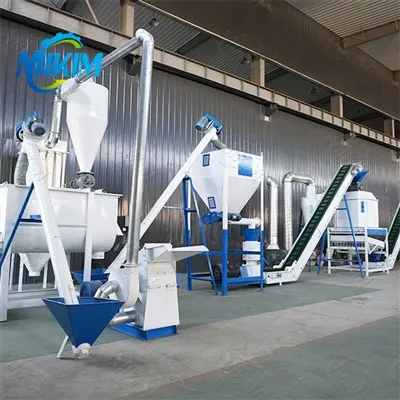
What could be preventing the pet food extrusion machine from turning?
Leave a message
The screw feed extruder is operating normally, but power cannot be transmitted to the screw, causing the screw to stop rotating. The problem is mostly concentrated in the transmission system-such as a slipping or broken drive belt, worn gearbox gears, or a loose coupling. The transmission system is the "core bridge" for power transmission in the extruder; once it malfunctions, it will directly cause the equipment to "lose power" and be unable to carry out extrusion production.
Fault Causes and Solutions
1.Drive belt slippage, breakage, or misalignment
Causes: The belt ages after prolonged use (surface cracks, decreased elasticity), or the belt tension is insufficient (motor position misalignment), causing slippage between the belt and pulley when the motor rotates; or the motor pulley and screw pulley are axially misaligned (more than 3mm), resulting in uneven belt stress and breakage after long-term wear; the wrong belt type is selected (e.g., using a regular V-belt instead of a narrow V-belt specifically for extruders), resulting in insufficient load-bearing capacity.
Solutions: If the belt slips, loosen the motor fixing bolts and move the motor backward (increase tension). Press the middle of the belt with your finger; the deflection should be controlled to 8-12mm. If the belt is broken, replace it with a narrow V-belt of the same type (e.g., SPB type, select the length according to the pulley diameter); use a ruler to calibrate the pulley alignment and adjust the screw pulley position to ensure axial misalignment ≤1mm, avoiding uneven belt wear.
2.Gearbox Gear Wear or Seizure
Causes: Insufficient gearbox lubricating oil (oil level below 1/4 of the oil gauge) or lubricating oil deterioration due to high temperature (affected by heat dissipation from the extruder), leading to dry friction of the gears, tooth surface wear (tooth thickness reduction exceeding 2.5mm), or broken teeth; metallic impurities (such as bearing fragments) mixed in the gearbox can become stuck in the gear meshing gap, causing gear seizure.
Solutions: After stopping the machine, open the gearbox oil level observation window. If the oil level is insufficient, add No. 46 high-temperature anti-wear gear oil to 1/2-2/3 of the oil gauge. If the oil is black and contains impurities, completely drain the old oil, clean the inside of the gearbox with diesel fuel, and replace with new oil. Remove the gearbox top cover and check the gear condition. If the tooth surface wear exceeds 25% or there are broken teeth, replace with alloy steel gears of the same module (such as gears with a module of 5 and 40 teeth), and clean internal impurities.
3.Loose coupling or damaged elastic element
Cause: The motor shaft and screw shaft are connected by a coupling. If the coupling bolts are loose (due to vibration), or the elastic pad (such as a polyurethane pad) is aged and broken, the coupling will slip, and power cannot be transmitted; or the coaxiality of the coupling is out of tolerance during installation (radial deviation exceeds 0.2mm, angular deviation exceeds 1°), resulting in uneven force during operation and damage to the coupling.
Solution: Loosen the coupling bolts and replace the aged elastic pad (using oil-resistant and wear-resistant polyurethane material); calibrate the coaxiality of the coupling with a dial indicator-radial deviation ≤ 0.1mm, angular deviation ≤ 0.5°. If the deviation exceeds the tolerance, fine-tune the motor position using the motor base shims; tighten the coupling bolts to the torque specified in the instruction manual (e.g., M12 bolt torque 40-50 N·m), and manually rotate the motor shaft to ensure the screw rotates smoothly and synchronously.



Why Choose Us
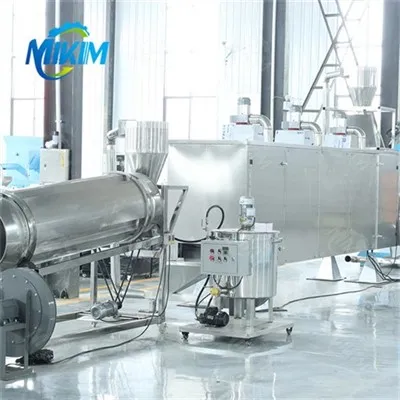
MIKIM boasts extensive experience in poultry feed pellet production lines, significantly reducing the incidence of poultry diseases. Its equipment is not only widely used across various industries domestically but also exported to Southeast Asia, Europe, Africa, and South America, earning a high reputation internationally. This global presence not only demonstrates the adaptability and competitiveness of its products, but also demonstrates the company's experience in adapting to diverse market standards and logistics conditions, enabling it to provide a stable supply chain for its overseas customers. Whether serving large domestic farms or cross-border feed companies, MIKIM can leverage its global service network to ensure a consistent, high-quality experience.
For more information on process flow design, equipment layout, factory construction plans, individual equipment pricing, or turnkey project proposals, please feel free to contact us!!!

FAQ
1. What is the price of the fish feed machine?
The price ranges from approximately $4,000-$21,000
2. Do you provide maintenance services for your customers?
Yes, we offer comprehensive after-sales maintenance services to our customers.