


What features distinguish wet fish feed extruders from dry ones?
Leave a message
The ultimate goal of using an extruder is to produce feed that fish and shrimp will love to eat. Some feeds may float, but fish and shrimp can't bite them; others are soft but don't float for long. Dry and wet extruders produce floating fish feed that differs greatly in buoyancy, taste, and nutrient retention. For example, grass carp may prefer soft feed made by a wet extruder, while bass may be more accustomed to hard feed made by a dry extruder. It's necessary to compare the characteristics of the two feeds based on the "preferences" of the fish and shrimp.
Buoyancy: Dry feed floats for a long time but is susceptible to soaking; wet feed floats steadily and is more resistant to soaking.
Dry machine feed: Floats for a long time, but will sink if soaked for too long. Dry machine feed generates relatively large bubbles through friction, resulting in low particle density. Freshly extruded feed can float on water for 3-5 days; however, the large bubbles make it easy for water to enter. After soaking for more than 24 hours, the particles will gradually absorb water and become heavier, eventually sinking to the bottom. This is suitable for fast-eating fish and shrimp, such as grass carp (which eat quickly and finish their feed in 1-2 hours). If fish and shrimp eat slowly (such as koi), prolonged soaking will result in the feed sinking to the bottom, which is wasteful. Wet-crank feed: Floats for a slightly shorter time, but is resistant to soaking and won't sink.
Wet-crank feed uses steam to generate small, dense bubbles with a compact particle structure. Water doesn't easily get into the bubbles, allowing the feed to float for 2-3 days and even after soaking for 36 hours without sinking. This makes it suitable for slow-feeding fish and shrimp, such as koi and ornamental fish (who eat slowly and require the feed to float for a long time), and also for net cage aquaculture (where strong water flow prevents the resistant feed from being washed away).
Texture: Dry feed is "hard and crunchy," wet feed is "soft and fluffy."
Fish and shrimp have distinct texture preferences. For example, fry prefer soft feed, while adult fish can eat hard feed. Dry feed: High hardness, crunchy texture. Dry feed pellets have low moisture content and high hardness after cooling (they require force to crumble when squeezed by hand), resulting in a crunchy texture. This is suitable for adult fish (such as grass carp and bass weighing over 1 pound) – adult fish have well-developed teeth and can crush hard feed, which provides a good chewy experience. However, it is not suitable for fry (such as grass carp fry under 3cm), as they cannot chew hard feed, leading to insufficient feeding.
Wet pellets: Low hardness, soft to chew
While wet pellets retain some hardness after dehydration and cooling, they are much softer than dry pellets (they can be easily deformed by hand). This soft texture makes them suitable for fish fry and soft-mouthed fish and shrimp (such as shrimp and small fish fry) – fry have small mouths, making soft feed easy to swallow and digest; however, adult fish may find it "not chewy" and have low feeding enthusiasm, requiring them to be fed with other harder feeds.

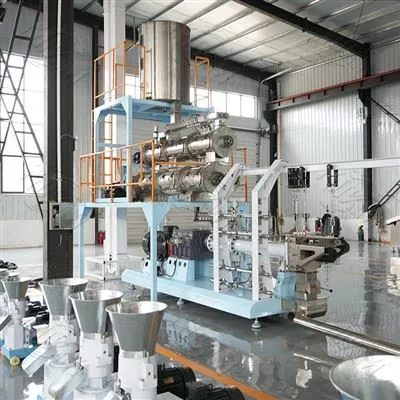
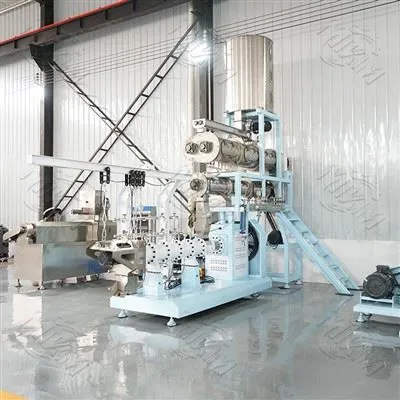

Summary: Choose feed based on fish and shrimp type, not just buoyancy.
For raising adult grass carp and bass, choose hard, crunchy feed made by a dry mill; for raising fish fry, shrimp, and ornamental fish, choose soft feed made by a wet mill; for producing high-nutrient specialty feed, prioritize wet mills as they retain nutrients more completely.
Why Choose Us
MIKIM boasts extensive experience in poultry feed pellet production lines, significantly reducing the incidence of poultry diseases. Its equipment is not only widely used across various industries domestically but also exported to Southeast Asia, Europe, Africa, and South America, earning a high reputation internationally. This global presence not only demonstrates the adaptability and competitiveness of its products, but also demonstrates the company's experience in adapting to diverse market standards and logistics conditions, enabling it to provide a stable supply chain for its overseas customers. Whether serving large domestic farms or cross-border feed companies, MIKIM can leverage its global service network to ensure a consistent, high-quality experience.
For more information on process flow design, equipment layout, factory construction plans, individual equipment pricing, or turnkey project proposals, please feel free to contact us!!!

FAQ
1. What is the price of the screw feed extruder?
The price ranges from approximately $6,600-$26,000
2. Do you provide maintenance services for your customers?
Yes, we offer comprehensive after-sales maintenance services to our customers.


