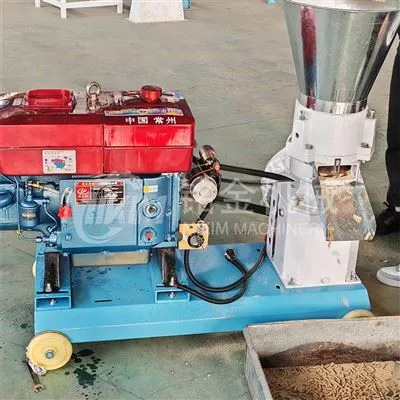
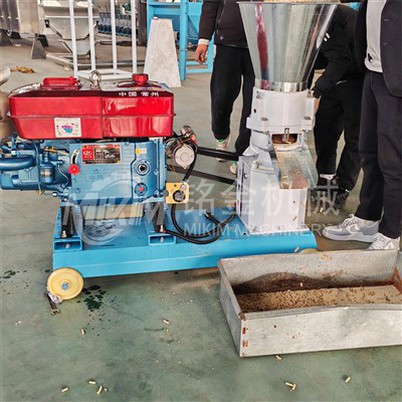
What impact does a poor production environment have on small fish feed pellet making machines?
Leave a message
content
Multiple Hazards of Dust Accumulation. Dust affects fish feed production equipment throughout the entire system: First, it accelerates wear on transmission components. Dust entering screw bearings, motor bearings, and drive belts forms abrasive, accelerating wear on bearing balls and raceways, leading to abnormal bearing noise and sluggish rotation. Dust also reduces friction between belts and pulleys, causing slippage and affecting speed stability. Second, it clogs the cooling system. Dust covering the heat sinks of the extruder drive motor and extrusion chamber reduces cooling efficiency by more than 50%, causing motor overheating, overload tripping, and uncontrolled temperature in the extrusion chamber. Third, it causes electrical system malfunctions. Dust entering the electrical control cabinet adheres to circuit boards, relays, and other components, causing short circuits and poor contact, leading to uncontrolled equipment parameters or shutdown. Fourth, it poses safety hazards. Feed dust is flammable; when the concentration reaches the explosion limit (10-30 g/m³), it can easily explode upon contact with static electricity or sparks generated during equipment operation.
Indirect Impacts of Environmental Pollution. Poor cleanliness in the production environment, besides dust issues, can lead to other hidden dangers: First, raw material contamination: dust and debris from the ground and equipment surfaces can easily mix with raw materials, damaging the screw and die head in automatic fish food making equipment, and contaminating the feed, affecting fish health. Second, accelerated equipment corrosion: water accumulation and debris buildup on the ground increase humidity in the production environment, accelerating the corrosion of metal parts in the extruder. Third, difficult maintenance: debris buildup on and around the equipment surface hinders daily inspections and maintenance, making it impossible to detect wear and tear, oil leaks, and other problems in a timely manner, allowing small faults to gradually escalate into major malfunctions.
Dust Control and Environmental Cleaning Solutions To address dust and cleanliness issues, a comprehensive solution encompassing "source control + process collection + regular cleaning" is needed: First, source control involves installing sealing devices during raw material crushing and conveying to prevent dust leakage, and using enclosed feed hoppers to reduce dust emissions during raw material addition. Second, process collection involves installing a central dust collection system and setting up suction ports at dust-concentrated areas such as the feed and discharge ports of the small fish food making machine to collect dust into dust collection boxes, ensuring the workshop dust concentration is below 10g/m³. Third, regular cleaning involves blowing dust off equipment surfaces with compressed air after daily production, cleaning the floor with a damp mop, performing deep cleaning of electrical control cabinets and motor heat sinks weekly, and disassembling and cleaning screw bearings and transmission components monthly. Fourth, equipment protection involves installing dust covers on electrical control cabinets and dustproof seals on screw bearings, motor bearings, and other components to prevent dust from entering.
Related equipment


about Us
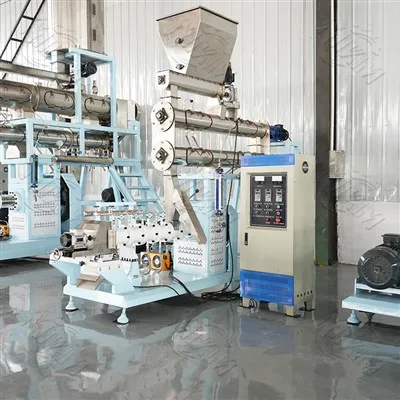
MIKIM's fish feed pellet production lines and supporting machinery offer excellent value for money. Not only are they affordable, eliminating middlemen markups and allowing small and medium-sized enterprises (SMEs) and fish farmers to purchase complete sets of equipment at reasonable costs, but they also boast exceptional efficiency. The fully automated process, from raw material crushing and precise ingredient mixing to extrusion pelleting and maturation, is completed in one continuous flow. This results in high starch gelatinization rates and uniform pellet formation, significantly improving production efficiency and feed quality, truly achieving "low cost, high output." Choosing a MIKIM fish feed pellet production line means enjoying comprehensive pre-sales and after-sales service, including 24-hour online customer support, a one-year warranty on the entire machine, professional on-site installation, commissioning, and maintenance, and a stable supply of spare parts. Customers can buy with confidence and use with peace of mind, with both excellent value and service quality!!!
Customer visit

Certificate of Honor

FAQ
1. What is the price of the fish pellet making machine?
The price ranges from approximately $1,500-$55,000
2. Do you provide maintenance services for your customers?
Yes, we offer comprehensive after-sales maintenance services to our customers.
If you would like to learn more about MIKIM machinery, please contact us. We offer one-stop service and welcome your inquiries!!!