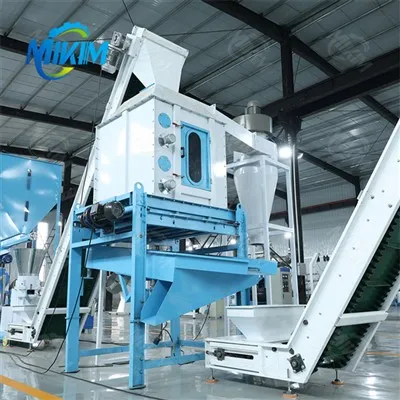
Twin-Screw vs Single-Screw Fish Feed Extruder Differences
Leave a message
What Are Single-Screw and Twin-Screw Fish Feed Extruders?
An extruder is the core machine that cooks, shapes, and expands feed ingredients into pellets. In fish feed production, extruders are classified by the number and arrangement of screws inside the barrel. A single-screw extruder has one screw with helical flights rotating inside a fixed barrel, while a twin-screw extruder uses two parallel screws that rotate together. The two designs produce very different results in feeding stability, mixing quality, and product flexibility.
The choice between them usually comes down to the target feed type and recipe complexity. Single-screw machines are widely used for simple formulations, while twin-screw machines are preferred when operators need consistent output from sticky, high-fiber, or low-moisture ingredients.
Working Principles Compared
A single-screw extruder works on a gravity feeding and friction conveying basis. Raw material falls into the barrel by its own weight and is pushed toward the discharge end by the screw flights. Heat from the barrel wall and shear from the screw plasticize and shape the material, with the screw typically rotating at about 200-300 rpm. Because feeding depends on friction between the material and the barrel, the feed rate can vary with particle size and moisture content; very dry or uneven material may bridge and clog the inlet.
A twin-screw extruder uses two co-rotating, intermeshing screws and a forced feeding device, so material is actively pushed into the barrel regardless of its flow characteristics. The meshing action generates strong kneading and shear, and a segmented temperature control system keeps each barrel section at the required temperature. This gives stable operation even with high-fiber and low-moisture formulations that would cause problems on a single-screw machine.
Key Technical Differences
| Item | Single-Screw Extruder | Twin-Screw Extruder |
|---|---|---|
| Feeding principle | Gravity feeding plus friction conveying | Forced feeding plus intermeshing shear |
| Typical screw speed | About 200-300 rpm | Variable, set by process design |
| Feeding stability | Affected by particle size and moisture | Stable with difficult ingredients |
| Screw material | Ordinary alloy steel | Wear-resistant alloy such as 38CrMoAlA, nitrided surface HV900 or higher |
| Barrel design | Mostly integral one-piece | Modular sections, replaceable by length |
| Relative screw service life | Baseline | About 2-3 times longer |
| Structure and investment | Simpler, lower cost | More complex, higher cost |
Choosing the Right Extruder for Sinking or Floating Feed
Floating fish feed needs a higher degree of expansion and a stable low bulk density, which usually requires precise control of temperature, pressure, and moisture. A single-screw extruder can produce floating pellets when the recipe and moisture are well managed, and it remains a cost-effective choice for standard floating feed lines. Sinking feed requires dense pellets that hold together in water; the stronger shear and more consistent mixing of a twin-screw machine help produce uniform sinking pellets from harder or higher-fiber ingredients.
For producers running a single recipe with good raw material quality, a single-screw machine offers lower investment and simpler maintenance. For multi-recipe plants, high-fiber ingredients, or feed that must meet strict water-stability requirements, a twin-screw extruder provides more process headroom and better batch-to-batch consistency.
Common Misconceptions
One common misunderstanding is that twin-screw extruders always produce better pellets. In practice, the screw configuration only matters when the recipe or raw material demands it; for simple, well-conditioned recipes the output quality can be equal. Another misconception is that higher screw speed means better expansion. Expansion depends on the combined effect of moisture, temperature, pressure, and residence time, not on speed alone. Finally, some buyers assume the more expensive twin-screw machine is automatically the best investment; the correct choice depends on the actual product range and throughput of the plant.
FAQ
Which extruder is better for floating fish feed?
Both types can make floating pellets when moisture, temperature, and die configuration are properly controlled. Single-screw machines are often sufficient for standard floating feed, while twin-screw machines give more stable results with difficult ingredients.
Why does a twin-screw extruder handle low-moisture materials better?
Because it uses forced feeding and intermeshing screws, material is transported mechanically instead of relying on friction. This prevents bridging and clogging when the material is dry or has uneven particle size.
What is 38CrMoAlA used for in an extruder?
It is a nitriding alloy steel commonly used for twin-screw extruder screws. After surface nitriding, hardness can reach HV900 or higher, which resists abrasive wear and gives roughly two to three times the service life of ordinary alloy steel screws under similar conditions.
Does a single-screw extruder always have a shorter service life?
Not necessarily. Screw life depends on the materials processed, load, and maintenance practices. Under the same abrasive conditions, however, a nitrided twin-screw usually lasts longer because of its harder surface layer.
Is the single-screw machine always cheaper to operate?
Its purchase price and routine maintenance are lower, but downtime from bridging and clogging with difficult ingredients can offset those savings. The economical choice depends on the recipes the plant actually runs.
Can one extruder make both sinking and floating pellets?
Yes. Many plants adjust die opening, moisture, and screw configuration to switch between sinking and floating pellets, although a machine sized and equipped for both needs a wider process window.