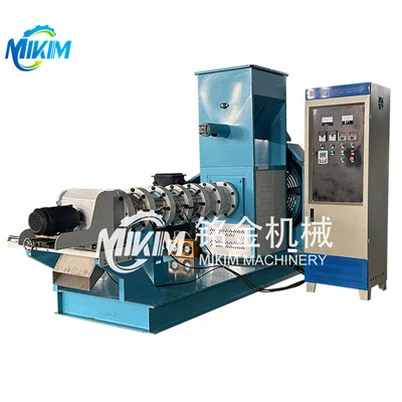
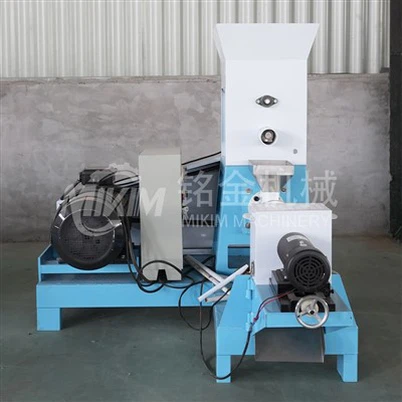
Why Extruded Feed Pellet Machines Matter in Fish Farming: 3 Core Benefits
Leave a message

Why Extruded Feed Pellet Machines Matter in Fish Farming
Many fish farmers used to feed their fish with powdered feed or regular pellets, only to find that the fish fought over the food chaotically, wasting a large share of it. It took about 10 kg of feed to grow just 1 kg of fish, making production costs extremely high. After switching to feed made by extruded feed pellet machines, only about 8 kg of feed was needed to grow 1 kg of fish, with more uniform growth. Extruded feed pellet machines solved a major pain point in fish farming - in three ways.
1. Floating and Sinking Flexibility Reduces Feed Waste
Floating pellet machines can produce both floating and sinking feed, adapting to the feeding habits of different fish species and reducing waste. Surface-dwelling fish (such as silver carp and bighead carp) prefer to feed at the surface: extruded feed machines adjust the degree of extrusion so the feed floats, making it easy for the fish to eat and preventing waste. Bottom-dwelling fish (such as common carp and crucian carp) prefer to feed at the bottom: the machine can reduce the degree of extrusion so the feed sinks slowly, perfectly matching their habits. For example, when raising grass carp - a mid-to-upper-level fish - using floating extruded feed allows the farmer to observe feeding activity clearly; uneaten feed can be retrieved, reducing feed waste from about 20% to below 5%.
2. Digestibility and Faster Growth Shorten the Breeding Cycle
Fish have short intestines; ordinary feed does not fully process starch and protein, resulting in low digestibility, with most nutrients excreted unused. The high-temperature, high-pressure process of extruded feed pellet mills increases starch gelatinization from about 60% to 90%, with more complete protein denaturation. Fish that eat this feed do not need to work hard to digest it, leading to faster nutrient absorption and growth. For example, when raising sea bass - a carnivorous fish - feeding extruded feed results in a weight gain of 3–4 g per day compared with feeding frozen fish. The farming cycle is shortened from 8 months to 5 months, allowing earlier market entry.
3. Better Fish Quality and Precise Nutrition
Fish fed with ordinary feed can have loose flesh and a muddy taste. Extruded feed production removes anti-nutritional factors and off-flavors from the raw materials and can add unsaturated fatty acids and vitamins, making the fish meat firmer and tastier. For example, in crucian carp farming, fish fed with extruded feed have about 20% more elastic flesh than those fed with ordinary feed, with significantly reduced muddy taste. At the same time, extruded feed machines allow precise nutritional control: adding lutein to fish feed makes the fish's colors more vibrant (such as koi and goldfish), enhancing the value of ornamental fish.
4. Data Notes and Typical Results
The figures above are typical results reported by farmers using extruded feed; actual results depend on species, water temperature, stocking density and formula. When planning an extruded-feed line, confirm the machine model, capacity and extrusion parameters (temperature, moisture, screw speed) with the supplier to match your target feed type (floating or sinking) and species.