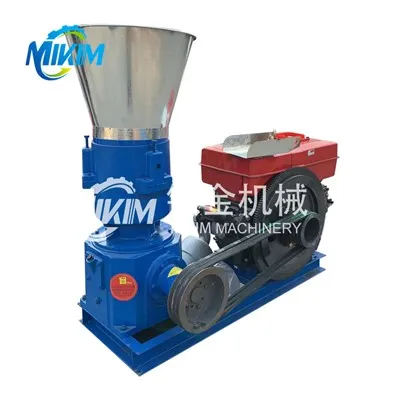
The Key Role of a Small Fish Feed Pellet Extruder in Quality Control
Leave a message
Why Quality Control Starts at the Extruder
In an aquafeed plant, the small fish feed pellet extruder sits at the centre of quality control because it is the unit that fixes both digestibility and pellet form. Starch gelatinization and protein denaturation, the two reactions that decide how much of the feed the fish can actually use, are driven by the temperature, moisture and pressure history of the material inside the barrel. Whatever the dryer or the coater does afterwards, it cannot recover a mash that was extruded at the wrong conditions.
For that reason the extruder is not only a forming machine. It is the control point where nutritional value, hygiene and pellet texture are set at the same time.
Temperature and Pressure Control Starch Gelatinization
Digestibility in aquatic feed depends strongly on the starch gelatinization rate and on the degree of protein denaturation. Both are regulated by extruder temperature and pressure. When barrel temperature stays too low, gelatinization remains incomplete and the pellets are poorly utilised, which shows up as wasted feed and deteriorating water quality. When temperature is pushed too high, protein denaturation goes too far, the pellet becomes hard, and heat-sensitive vitamins are degraded.
Multi-zone temperature control is what makes the process repeatable. Separate adjustment of the feeding, extrusion and discharging sections allows each zone to be tuned for the recipe rather than for a single average temperature.
| Zone | Typical working range | What it controls |
|---|---|---|
| Feeding section | Below the extrusion zone | Preheats the mash and sets a stable entry condition |
| Extrusion section | Around 120-140 C | Starch gelatinization, protein denaturation, cooking of the mash |
| Discharging section | Around 110-120 C | Final texture, expansion and pellet surface quality |
Holding the extrusion zone in the range shown while keeping the discharging zone slightly cooler favours a high gelatinization rate together with better retention of heat-sensitive nutrients than a single high setting across the barrel.
Sterilization and Pellet Purity
Hygiene is the second function of the extruder in quality control. Feed ingredients may carry harmful microorganisms, and the high-temperature, high-pressure environment of extrusion reduces that load far more effectively than simple drying or cold pelleting. A short residence time at barrel temperature of around 120 C or above is the condition normally relied on for microbial reduction.
The extrusion action also helps with physical purity. Small impurities in the raw material are encapsulated inside the pellet or released so that they can be removed by the screener that follows the cooler, which raises the cleanliness of the finished feed and reduces the risk of fines carrying dust into the bag.
Texture, Shape and Parameter Matching
The extruder also governs the taste and shape of the pellet through parameter matching. The balance between screw speed and feed rate decides texture: too high a speed with too slow a feed rate over-expands the pellet until it becomes loose and breaks easily, while too slow a speed with too fast a feed rate under-cooks the pellet and leaves it hard.
Screw speed and feed rate: match them so the barrel fills consistently; a stable fill is what makes expansion repeatable.
Die head selection: change the aperture and shape of the die head to produce the pellet size and form the target species needs, from fine sinking pellets to floating types.
Knife setting: a clean cut at the die face keeps pellet length uniform and reduces the fines that the screener has to remove.
Verification and Routine Checks
Control only works if it is verified. Operators should record barrel temperatures, screw speed and feed rate for every run, then check the output against the intended standard: pellet durability, water stability, floatability where relevant, and visual uniformity of length and diameter. Comparing the record with the result quickly shows which parameter drifted and when.
Routine checks on the wear parts deserve the same attention. Worn screws and die heads change the pressure profile inside the barrel, so a recipe that performed well last month can drift out of specification without any change in the settings that are recorded.
Misconception 1: higher temperature always means better cooking. Beyond the useful range, protein denaturation becomes excessive, vitamins are lost and the pellet turns hard.
Misconception 2: the extruder controls quality on its own. Grind size, mixing uniformity and cooling are equally decisive, and a defect created upstream cannot be extruded away.
Misconception 3: any visible steam or expansion is a sign of good cooking. Only measured gelatinization, durability and water stability show whether the process is actually under control.
Frequently Asked Questions
Q: What is the main quality control role of a small fish feed extruder?
It delivers controlled cooking, so that starch gelatinization and protein denaturation reach the levels the recipe needs while pellet texture and hygiene are set in the same pass.
Q: Why is multi-zone temperature control important?
Each section of the barrel performs a different task. Adjusting feeding, extrusion and discharging zones separately lets the operator favour digestibility without destroying heat-sensitive nutrients.
Q: How does screw speed affect pellet quality?
It sets residence time and fill level. A mismatched speed and feed rate either over-expands the pellet or under-cooks it, and both cases reduce water stability.
Q: How is extrusion related to feed hygiene?
High temperature and pressure reduce the microbial load in the mash, and the forming action helps contain small impurities so the following screening step can remove them.
Q: What records should be kept for each run?
Record barrel zone temperatures, screw speed, feed rate and die head used, then link them to durability and water stability results so drift can be traced to a specific parameter.
Q: Can changing the die head improve product range?
Yes. Different aperture and shape combinations give different pellet sizes and forms, which allows one extruder to serve several species and feeding stages without changing the whole line.