


What Is the Return Rate of a Feed Pellet Production Line?
Leave a message

What Is the Return Rate of a Feed Pellet Production Line?
1. What "Return Rate" Means
The return rate (ROI) of a feed pellet production line is the relationship between the total investment (equipment, plant, installation) and the profit the line generates over its working life. There is no universal number - it depends on local prices, energy costs, labor, utilization and market demand. The factors below determine it.
2. The Five Determining Factors
| Factor | How it affects ROI |
|---|---|
| Production efficiency and output | More pellets per unit time → more revenue at stable demand |
| Market demand and price | Demand sets sales potential; price sets margin - match capacity to market |
| Operating cost control | Energy, raw-material loss and labor erode profit directly |
| Equipment life and depreciation | Cash inflows must cover investment during the depreciation period (commonly 10 years) |
| Reliability and support | Low failure rates and easy maintenance minimize downtime |
3. Worked ROI Framework (Example)
Medium line: 3 t/h, 70% utilization, 300 days/yr → about 15,000 t/yr output.
At a gross margin of 150–300 yuan/t (varies widely), annual gross profit ≈ 2.25–4.5 million yuan.
ROI = annual net profit ÷ total investment; payback = total investment ÷ annual net profit.
Example figures only - calculate with your local costs and selling prices.
4. Example Line Configuration (15–20 t/h Commercial)
Fully automatic intelligent batching with a computer control system; stable, continuous, efficient output; labor-saving direct packaging; pellet sizes selectable from 1–12 mm; whole-line sizing according to land size and layout; typically 4–5 operators for this scale; shipment by 6×40 ft containers. Note: investment for a 15–20 t/h line is far above the US$12,000–56,000 range quoted in small/medium-line FAQs.
5. Supporting Equipment and Maintenance
- Hammer mill: crushes straw, grain and soybean meal into powder.
- Screw conveyor: dust-tight conveying of grain and powder.
- Stainless mixer: uniform powder mixing.
- Pellet machine: compresses feed into uniform pellets of various sizes.
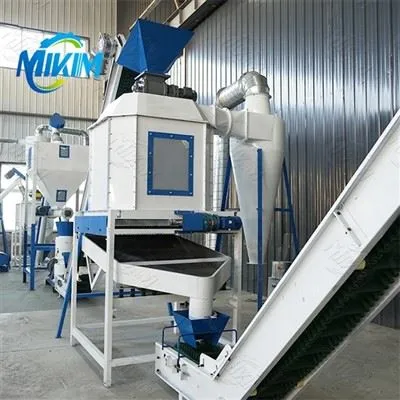
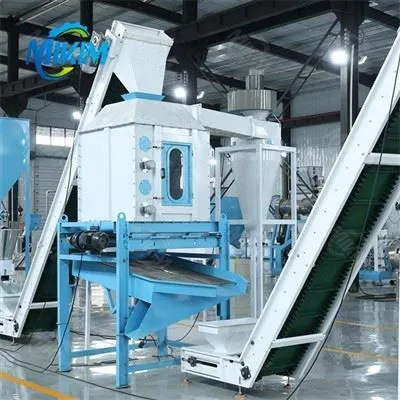
- Counterflow cooler: even, complete cooling.
- Packing line: automatic weighing, conveying and sewing.
Maintenance: weekly (belts/chains tension, filter/screen cleaning, electrical wiring check - power off first); monthly (crusher hammers and screens, mixer impellers/linings, pelletizer rollers and ring die); annual (motors and reducers, anti-corrosion treatment, sensor calibration).


