What Is the Working Principle of a Wet-Type Twin-Screw Floating Fish Feed Extruder Machine?
Leave a message

What is a Wet-type Twin screw floating fish food pellet maker machine?
A Wet-type Twin screw floating fish food extruder machine is a high-performance machine that utilizes two intermeshing, co-rotating screws to mix, knead, and cook steam-conditioned raw materials. By managing heat and moisture independently of mechanical friction, it produces highly digestible floating or sinking pellets with 100% expansion consistency, making it the industry standard for commercial-grade aquatic feed.
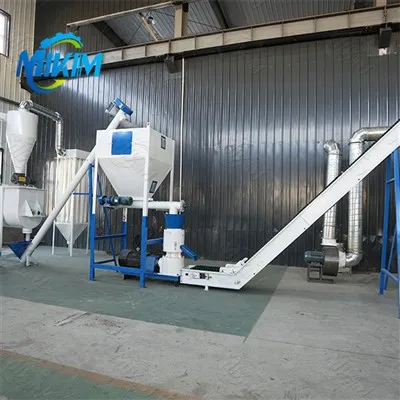
1000-1200kg/h Wet-type Twin screw floating fish feed production machine test for Singapore customers
I am interested in this product
1. What Makes Twin-Screw Extrusion the Industry Standard?
In commercial aquaculture, the Wet-type Twin screw floating fish feed pellet maker machine is considered the "Gold Standard." While a single screw floating fish feed pellet making machine relies on a single shaft and simple drag flow, the twin-screw system offers distinct mechanical advantages:
- Positive Displacement: The intermeshing screws act as a high-pressure pump, ensuring a constant volumetric flow regardless of the feed's viscosity or density.
- Uniform Shear: Material is sheared evenly between the two screws, eliminating "hot spots" and ensuring that 100% of the starch achieves uniform gelatinization.
- Self-Cleaning Ability: As the screws rotate, the flights of one screw "wipe" the root of the other, preventing material buildup and reducing downtime for maintenance.
2. The 5-Stage Working Principle of Wet-type Twin screw floating fish food maker machine
Phase 1: Precision Steam Conditioning (Pre-Cooking)
The process begins in a Dual-Shaft Conditioner before the material even touches the screws.
- The Action: Pressurized steam (0.4–0.8 MPa) and water are injected to raise the mash moisture to 25–30% and temperature to 90°C.
- Engineering Insight: This stage is vital for denaturing anti-nutritional factors (such as trypsin inhibitors in soy), making the feed safe for sensitive species like shrimp and fingerlings.
Phase 2: The Mixing & Kneading Zone
The conditioned mash enters the extruder barrel, where the two screws begin their synchronized work.
- The Action: The co-rotating screws create a high-energy kneading effect, transforming the powder into a plasticized dough.
- The Benefit: This mechanical logic allows the system to incorporate 12–15% internal fats directly into the dough-a feat single-screw machines cannot achieve without the screws slipping.
Phase 3: High-Pressure Thermal Cooking
As the dough moves toward the die, the screw "pitch" narrows, rapidly increasing the pressure.
- The Action: Mechanical energy is dissipated into thermal energy. Pressure reaches 30–60 Bar, and temperatures soar to 120–160°C.
- The Science: This triggers Starch Gelatinization, creating the elastic "starch bridges" required to trap air and maintain the pellet's structural integrity.
Phase 4: Instant Expansion
The dough is forced through a precision-engineered shaping die.
- The Action: The material moves from a high-pressure environment inside the barrel to atmospheric pressure instantly.
- The Result: The trapped, superheated moisture "flashes" into steam. This expands the pellet's volume by 2–3 times, creating a micro-porous structure that ensures the feed can float for over 12 hours.
Phase 5: Stabilization and Precision Cutting
A high-speed rotary cutter trims the expanding "rope" at the die face.
- The Action: Because the twin-screw system provides extremely stable internal pressure, the pellet size deviation is less than 2%.
- The Outcome: Uniform pellets ensure that all fish in the pond receive equal nutrition, preventing size disparity in the harvest.

3. Comparison: Wet-type Twin screw fish feed extruder machine vs. single screw floating fish extruder machine
| Metric | Wet-type Twin-Screw floating fish feed extruder | Wet single screw floating fish feed making machine |
| Formula Flexibility | High (High fat/protein/fiber) | Low (Standard formulas only) |
| Uniformity | Excellent (Consistent expansion) | Moderate (Varying densities) |
| Self-Cleaning | Yes (Intermeshing screws) | No |
| Wear Resistance | Higher (Modular alloy segments) | Lower (Solid shafts) |
| Ideal For | Commercial Mills & Specialty Feed | Small-to-Medium Farms |
Comparison Table of floating fish feed pellet extruder machines
| Feature | Motor | Screw | Conditioner | Steam Generator | Drive Belt | Gearbox | Speed Reducer | Material |
| Wet-Type single screw floating fish feed pellet extruder machine | ✅ | ✅ | ✅ | ✅ | ✅ | ✅ | ❌ | Carbon Steel |
| Wet-type Twin screw floating fish food extruder machine | ✅ | ✅ | ✅ | ✅ | ✅ | ❌ | ✅ | Carbon Steel |
This comparison table highlights the core structural differences between single screw floating fish food pellet maker machine and Wet-type Twin screw floating fish feed making machines. While both utilize steam conditioning and carbon steel construction, the twin-screw model features a specialized speed reducer to handle higher torque for complex formulas.
FAQ:
1. Why is a Wet-type Twin screw floating fish feed pellet making machine better for floating fish feed?
Answer: It provides superior expansion control. The co-rotating screws ensure that every pellet has the exact same density and buoyancy. It is also the only machine capable of processing high-fat formulas (up to 15%) without loss of pressure, which is critical for high-energy carnivorous species.
2. How do you switch between sinking and floating feed by using a wet-type Twin screw floating fish feed pellet extruder machine?
Answer: While you cannot produce both simultaneously, switching is easy. To make floating feed, you maximize expansion via high heat (>130°C). To make sinking feed, you "vent" the steam from the barrel or increase moisture and lower the temperature to 90–100°C, increasing the pellet's density.
3. What does "Self-Cleaning" mean for production ROI?
Answer: In a twin-screw system, the screws wipe each other clean during rotation. This prevents "dead zones" where feed can char or rot. This reduces the time required for flavor changes and deep cleaning by up to 50%, directly increasing your daily production hours.
4. What is the maintenance cycle for twin-screw barrels?
Answer: We recommend inspecting the screw-to-barrel clearance every 1,000 hours. Since our screws are modular, you only need to replace the specific worn sections rather than the entire shaft, reducing long-term maintenance costs by 40%.
Final Recommendations for Commercial Investors
If your production goal exceeds 2 tons per hour, a Wet-type Twin screw floating fish feed making machine is the only viable investment for modern aquaculture. It guarantees the water stability required by international standards and allows you to utilize a wider range of low-cost raw materials while maintaining premium-grade output.
Ready to optimize your feed production?
Contact our engineering team for a customized screw configuration optimized for your specific local ingredients.
Company Profile