Why do poultry feed pellet mills spray feed
Leave a message
The ring die and pressure roller are the "core partners" of an animal feed pellet machine. If these two malfunction, such as a clogged ring die or a worn-out pressure roller, the raw material cannot be extruded properly and will spray out of the feed inlet. Many people assume that the problem lies with the raw material when they encounter material spraying, but they should first check the ring die and pressure roller, which may resolve the issue quickly.
The ring die is malfunctioning; why is it spraying material?
1. Too much blockage in the ring die holes: This occurs when the ring die wasn't cleaned after production, or when the raw material was too wet or sticky, causing blockages in the die holes (like a "blocked straw"). The material cannot be extruded from the holes and accumulates in the barrel, only being ejected from the feed inlet. Solution: Remove the ring die and use a thin wire to unclog each hole (avoid using anything too hard to prevent scratching the hole walls). After unblocking, wash it thoroughly with clean water. Next time after production, be sure to clean the ring die with dry material.
2. Severe wear of the ring die: Over time, the ring die orifice will become larger and rougher (for example, an original 3mm orifice worn down to 3.5mm). When the raw material is extruded, it becomes too loose and unable to generate sufficient pressure. The subsequent material is pushed too quickly and will spray out of the feed inlet. Solution: Check the wear condition of the ring die orifice. If the orifice diameter increases by more than 0.5mm, or if there are obvious scratches on the orifice wall, replace it with a new ring die (choose a model that matches the machine, such as a Φ120mm ring die for a Φ120mm machine).
Why is the material spraying out due to a problem with the pressure roller?
1. The pressure roller surface is worn smooth: The pressure roller originally had textured surfaces (like tire treads) that gripped the material and fed it forward. After being worn smooth, it can no longer grip the material, causing it to slip inside the barrel and fail to be pressed into the ring die hole. Accumulation leads to material spraying out.
Solution: Replace the pressure roller skin (choose a wear-resistant rubber material with a Shore hardness of 75-80), or sand the surface of the pressure roller to re-grind a shallow texture (don't sand too deeply to avoid damaging the pressure roller).
2. The gap between the pressure roller and the ring die is too large: The normal gap is 0.2-0.3mm. If the gap exceeds 0.5mm, the pressure roller cannot press the material tightly, preventing it from entering the ring die hole and causing it to accumulate below the feed inlet and spray out.
Solution: Use a feeler gauge to measure the gap. If the gap is too large, adjust the adjusting screw of the pressure roller, pushing the pressure roller towards the ring die until the gap is appropriate (after adjustment, manually rotate the pressure roller; it should rotate without scraping the ring die).
Inspection Tips
Before each startup, check if the ring die hole is blocked and feel the surface of the pressure roller for any textures. If there are any problems, deal with them promptly; don't wait until the material is sprayed before repairing.



Why Choose Us
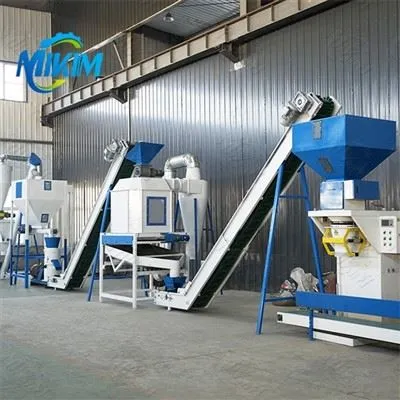
MIKIM boasts extensive experience in poultry feed pellet production lines, significantly reducing the incidence of poultry diseases. Its equipment is not only widely used across various industries domestically but also exported to Southeast Asia, Europe, Africa, and South America, earning a high reputation internationally. This global presence not only demonstrates the adaptability and competitiveness of its products, but also demonstrates the company's experience in adapting to diverse market standards and logistics conditions, enabling it to provide a stable supply chain for its overseas customers. Whether serving large domestic farms or cross-border feed companies, MIKIM can leverage its global service network to ensure a consistent, high-quality experience.
For more information on process flow design, equipment layout, factory construction plans, individual equipment pricing, or turnkey project proposals, please feel free to contact us!!!