


Why does the twin screw fish feed extruder adapt to diverse needs?
Leave a message
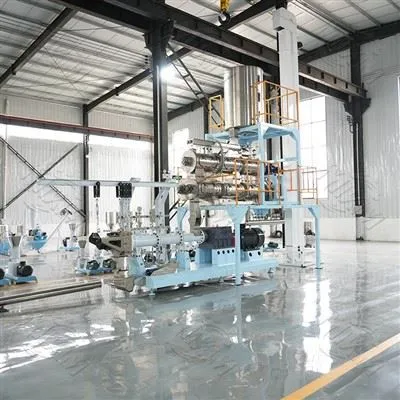
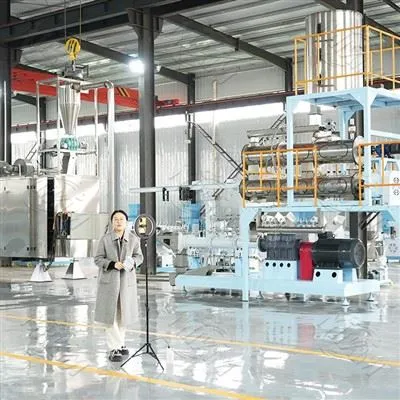
The twin-screw floating fish feed extruder can precisely control the physical properties of feed to meet the needs of different fish species. Different fish species have significantly different requirements for feed buoyancy, hardness, and particle size. For example, grass carp prefer sinking feed, while bass prefer floating feed; juvenile fish need fine particles of 2mm, while adult fish need coarse particles of 6-8mm. By adjusting the screw speed, barrel temperature, and die orifice diameter, the twin-screw floating fish feed extruder can precisely control the physical properties of the feed: increasing the screw speed and temperature increases the extrusion degree, producing floating feed; decreasing the speed and temperature produces sinking feed; and changing the die orifice diameter allows for the production of particles of different sizes from 2-10mm. One feed mill, by adjusting parameters, produced three different feeds with different characteristics using only one twin-screw extruder: floating bass feed, sinking grass carp feed, and slowly sinking crucian carp feed, meeting the needs of different customers.
The extruder also allows for rapid switching of production formulas, adapting to small-batch, multi-variety production. Traditional single-screw fish feed extruders require lengthy equipment cleaning and parameter adjustments when switching formulas, resulting in long changeover times and making them unsuitable for small-batch production. Twin-screw extruders, with their rapid die-changing and efficient cleaning design, reduce formula changeover time to under 30 minutes. For specialty aquatic feeds with lower market demand (such as grouper and eel feed), companies can adopt small-batch production models to avoid inventory backlog. One feed mill used a twin-screw extruder to produce small batches of high-end grouper feed; although the annual output was only 500 tons, the profit per ton reached 2,000 yuan, far exceeding that of ordinary feed, thus improving the company's profitability.
Twin-screw extruders can also produce functional fish feeds to meet specific aquaculture needs. With the increasing sophistication of aquaculture, the market demand for functional feeds (such as immune-enhancing feeds, color-enhancing feeds, and weight-loss feeds) is growing. The precise processing control of twin-screw extruders ensures that functional additives are evenly distributed in the feed, achieving optimal results. In koi color-enhancing feed production, twin-screw fish feed pellet extruders can evenly disperse color enhancers such as astaxanthin in the feed, avoiding uneven coloration caused by excessively high local concentrations. In immune-boosting feeds, the temperature at which probiotics are added can be precisely controlled to ensure their activity and enhance fish immunity. A functional sea bass feed produced by a certain feed mill has increased the disease resistance of sea bass by 30%, making it highly popular among fish farmers.
Production scale is flexible and adjustable to meet the needs of different enterprises. Twin-screw extruders for fish feed have a wide range of production capacities, from small units with an hourly capacity of 0.5 tons to large units with an hourly capacity of 10 tons. Small feed workshops can use small units to meet local needs, while large feed companies can use large units for large-scale production. Furthermore, large twin-screw extruders can achieve stepless capacity adjustment by adjusting the feed speed. This allows for reduced capacity when orders are insufficient, avoiding equipment idleness and waste; and full-capacity production during peak order periods to meet market demand.
Related equipment


about Us
MIKIM's fish feed pellet production lines and supporting machinery offer excellent value for money. Not only are they affordable, eliminating middlemen markups and allowing small and medium-sized enterprises (SMEs) and fish farmers to purchase complete sets of equipment at reasonable costs, but they also boast exceptional efficiency. The fully automated process, from raw material crushing and precise ingredient mixing to extrusion pelleting and maturation, is completed in one continuous flow. This results in high starch gelatinization rates and uniform pellet formation, significantly improving production efficiency and feed quality, truly achieving "low cost, high output." Choosing a MIKIM fish feed pellet production line means enjoying comprehensive pre-sales and after-sales service, including 24-hour online customer support, a one-year warranty on the entire machine, professional on-site installation, commissioning, and maintenance, and a stable supply of spare parts. Customers can buy with confidence and use with peace of mind, with both excellent value and service quality!
Customer visit

Certificate of Honor

FAQ
1. What is the price of the extruded fish feed pellet equipment?
The price ranges from approximately $3,500-$55,000
2. Do you provide maintenance services for your customers?
Yes, we offer comprehensive after-sales maintenance services to our customers.
If you would like to learn more about MIKIM machinery, please contact us. We offer one-stop service and welcome your inquiries!!!


