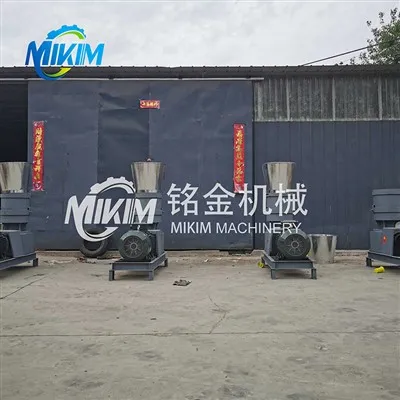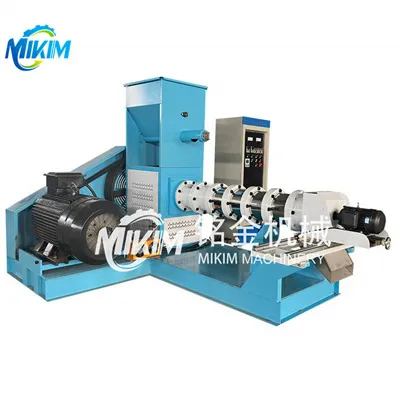
3-5 Tons Per Hour Wet-Type Twin-Screw Floating Fish Feed Extruder Machine Testing For Cameroon Customers
Leave a message

The 3-5 T/H Wet-Type Twin-Screw Fish Feed Production Line is a turnkey industrial solution designed for commercial feed mills in Cameroon (Douala, Yaoundé, etc.). Unlike small-scale machines, this system utilizes Twin-Screw technology and Steam Conditioning to produce high-precision floating, sinking, and slow-sinking pellets. Optimized for local raw materials like Cassava and Palm Kernel Cake, it offers superior starch gelatinization (>90%) for improved Feed Conversion Ratios (FCR).
Wet-type Twin screw floating fish feed pellet extruder machine testing for Cameroonian Customers
I am interested in this product
1. The Factory Acceptance Test (FAT): Hard Data Performance
As a professional supplier, we provide the data that proves your ROI before the machine leaves our floor.
During the final inspection for our Cameroonian client, this production line underwent a 4-hour continuous load test using a high-fiber local formulation.
Core Performance KPIs (Key Performance Indicators)
| Technical Metric | Test Result | Industrial Standard | Status |
| Actual Throughput | 4.2 Tons / Hour | 3.0 - 5.0 T/H | PASSED |
| Pellet Floating Rate | 99.5% | >95% | EXCEEDED |
| Water Stability | >24 Hours | No disintegration | PASSED |
| Gelatinization Rate | 94.2% | High-efficiency cooking | EXCEEDED |
| Sizing Accuracy | 98.5% | Uniform & Smooth | PASSED |
| Motor Running Current | 185 - 195 A | Rated @ 220A | STABLE |
-
Utility & Consumption Requirements
- Steam Demand: 450 kg/h at 0.4 - 0.6 Mpa (Essential for pathogen elimination and starch cooking).
- Moisture Adjustment: 100 - 150 Liters/hour via precision electromagnetic flowmeter.
- Conditioning Temp: 95°C - 105°C (Ensures 100% sterilization against Salmonella).

2. Beyond the Machine: The Turnkey Production Flow
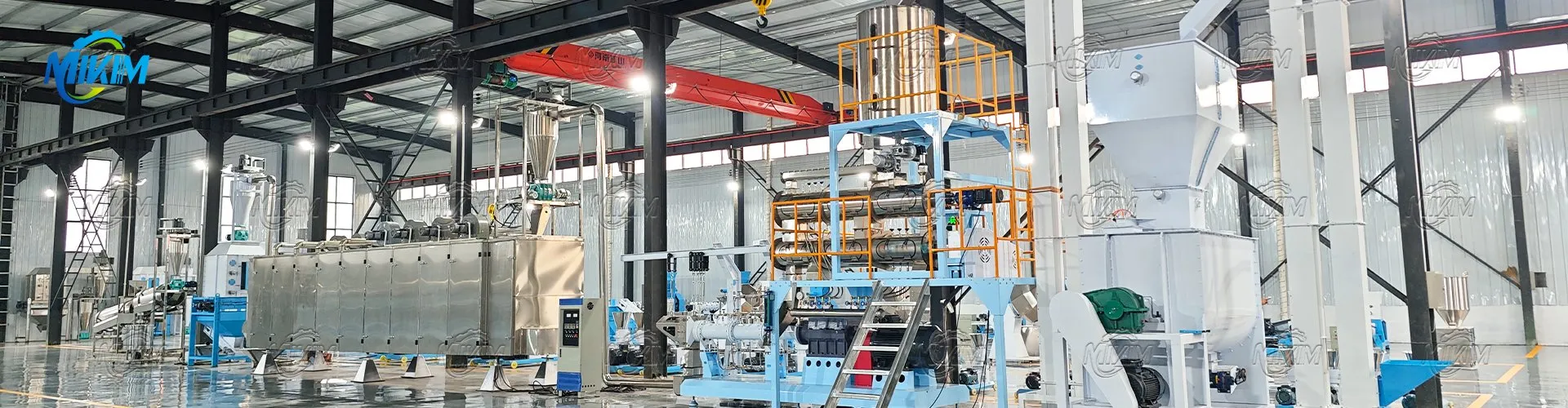
At a 3-5 T/H capacity, the Wet-type Twin screw floating fish food extruder machine is only one part of an integrated industrial ecosystem. For our Cameroonian customers, we provide a complete Turnkey Mill Solution:
- Pulse Dust-Collection Grinding: Reduces raw materials (Maize, Soya) to 60-80 mesh fineness for smooth pellet texture.
- High-Precision Horizontal Mixing: Ensures a Coefficient of Variation (CV) <5% for uniform nutrient distribution.
- Steam Pre-Conditioning: A Dual-Axis Differential Conditioner hydrates the mash, pre-cooking the starch before it hits the screws.
- Twin-Screw Extrusion: The "heart" of the system, providing high shearing force for complex formulations.
- Multi-Layer Steam Drying: Optimized for Cameroon's high humidity to ensure final pellet moisture is <10% for mold-free storage.
- Automated Vacuum Packaging: 10kg to 50kg bagging for commercial distribution.

3. Twin screw floating fish feed pellet maker machine vs. Single-Screw floating fish feed pellet mill
For an industrial investor in Cameroon, understanding the ROI of Twin-Screw technology is vital.
| Comparison Item | Single-Screw (Dry Type) | Twin-Screw (Industrial Wet Type) | Strategic Value for Cameroon |
| CAPEX | Low / Budget-friendly | High / Heavy Investment | Entry-level vs. Large-scale mill |
| Ingredient Versatility | Limited (High starch required) | Extreme (High protein/fat/fiber) | Lower OPEX by using local PKC & Cassava |
| Product Grade | Farm-use / Local market | Premium / Commercial Grade | Better surface finish = Higher market price |
| Alpha-Degree (Starch Gelatinization) | 70% - 80% | 95% - 98% | Lower FCR (Better feed conversion) |
| Maintenance Cycle | Short (Frequent downtime) | Long (Wear-resistant alloy) | Crucial for Cameroon's slow supply chain |
| Power Setup | Diesel / Basic Electric | Industrial Grid + Boiler | Urban factories vs. Rural farms |
Deep Dive into Commercial Value
1. Lower OPEX: Tackling High Material Costs
- Single screw fish feed making machine: High reliance on expensive wheat starch to bind pellets. If your local Cassava ratio isn't perfect, the machine jams.
- Twin-Screw floating fish feed extruder machine: Features forced conveying and high shearing force. It easily processes low-cost, high-fiber local materials like Palm Kernel Cake (PKC) and Cottonseed cake.
Value: Reduce your formula costs by 15%–20% by switching to local agricultural by-products.
2. FCR (Feed Conversion Ratio): What Farmers Really Care About
- Single screw fish feed extruder machine: Often leads to under-cooked pellets that disintegrate in water, leading to waste and pond pollution.
- Twin screw floating fish feed pellet making machine: Advanced steam conditioning and precision cooking ensure nearly 100% starch gelatinization.
Value: Cameroonian farmers are professionalizing. If your feed hits market weight 15 days faster (FCR 1.2 vs 1.6), they'll happily pay a 10% premium. This is how you build a top-tier brand.
3. Market Expansion: Beyond Tilapia
- Single screw floating fish feed pellet extruder machine: Stuck with floating Tilapia/Catfish feed.
- Twin screw floating fish feed pellet extruder machine: Precise control over density and sink-rate.
Value: You can capture the high-margin Sinking Feed market (Shrimp/Crab/Trout) in regions like Kribi or Limbe-a market where single-screw competitors simply cannot compete.
4. Reliability & Maintenance: Reducing Downtime
- Single-Screw floating fish food extruder machine: Cheap parts, but the screw wears out fast in humid climates, causing floating rates to drop.
- Twin screw floating fish feed making machine: Uses self-cleaning screws and modular alloy segments (38CrMoAl).
Value: Customs clearance at Douala Port is a nightmare. Our components last 3x longer. Plus, you only replace worn "segments," not the entire shaft, slashing maintenance costs by 60%.
Contact us to help you choose the right extruder machine
4. Localized Energy & Raw Material Solutions (Cameroon Focus)
Industrial success in Central Africa requires adapting to local resource availability.
A. The Steam & Energy Challenge
Wet-type extrusion requires a consistent steam source (approx. 400-600kg/h).
- Boiler Options: We provide Diesel/Gas boilers for efficiency in Douala's industrial zones, or Biomass boilers (burning wood chips or palm shells) for rural projects in the West Region to lower OPEX.
- Power Grid: Systems are equipped with Siemens/ABB motors and specialized stabilizers to protect against the voltage fluctuations common in the Eneo grid.
B. Formulating with local "Gold"
In Cameroon, wheat is expensive. Our twin-screw system is engineered to process:
- Cassava Flour: A superior, low-cost binder for floating pellets.
- Palm Kernel Cake (PKC): High-fiber local byproduct; our twin-screw handles its abrasive nature without excessive wear.
- Fish Meal: Locally sourced from Limbe or Kribi.
5. Engineering for the Tropics: Humidity & Heat Control
Cameroon's coastal humidity (often >80%) is the enemy of stored feed.
- Advanced Drying: Our dryers use an "Active Dehumidification" system. It doesn't just heat; it replaces moist air with dry air to ensure the "core" of the 8mm pellet is dry.
- Stainless Steel Construction: All contact parts are 304 Stainless Steel to prevent corrosion in humid environments.
6. Installation, Logistics & Bilingual Support
- Shipping: Experts in logistics to Port of Douala, including assistance with "Exonération" (tax exemption) documentation for agricultural machinery.
- Commissioning: We deploy a team of engineers to your site for 15-30 days for installation, electrical wiring, and staff training.
- Bilingual Documentation: All PLC interfaces, manuals, and training sessions are available in English and French to serve all regions of Cameroon.
7. FAQ
Q1: What is the estimated ROI for a 3-5 T/H fish feed plant in Cameroon?
A: Depending on local ingredient sourcing, most commercial mills break even within 12-18 months by replacing high-cost imported feed brands with local production.
Q2: Can this line produce both floating and sinking feed?
A: Yes. The Twin-Screw system uses a VFD (Variable Frequency Drive) to control density. By adjusting the screw speed and steam ratio, you can switch between floating (Tilapia), slow-sinking (Carp), and sinking (Shrimp) feed on the same line.
Q3: How do I manage the high cost of electricity?
A: We recommend a "Load Management" strategy, using our biomass-fueled steam to do 60% of the "cooking" (Thermal Energy), which reduces the mechanical load (Electrical Energy) on the main motor by 30%.
Q4: Is it difficult to find spare parts in Central Africa?
A: We provide a 2-year "Critical Spare Parts" kit (Screws, Dies, Heating Rings) with every shipment. For long-term support, our modular screw design allows you to replace only the worn segments rather than the whole shaft, saving 60% in maintenance costs.
8. Conclusion:
As Cameroon moves toward the "2030 Strategic Development Plan" for food sovereignty, industrial-scale feed production is the most profitable entry point. A 3-5 T/H Twin-Screw line provides the quality consistency required to compete with international brands while leveraging local Cameroonian ingredients.
Contact Our Project Engineering Team
Speak with our bilingual experts for a customized factory layout and FCR analysis.
WhatsApp/Mobile: +86 199 1372 6062
Email: market@mikimz.com
Official Website: https://www.feedpelletline.com/
Scaling Up in Cameroon: From a Pilot Extruder to a Commercial Wet Feed Line
Six months after his first small line went live, a Cameroon aquaculture operator came back to MIKIM with a bigger ask - a wet-type single screw fish feed extruder that could run all day, not just trials. The repeat order, handled end-to-end by our sales engineer, turned a cautious first purchase into a full production line. (The same client behind our earlier Cameroon pilot line - he simply outgrew it.)
The First Order
He started with a single small extruder - enough to make floating feed for his own ponds and learn the process. It was a low-risk way to test whether extruded feed would beat the traditional mash he had been using.
6 Months In
By month six the results were clear. Fish took to the floating pellets, and wet-method processing improved feed conversion against his earlier feed. The word from the farm was simple: the machine had not let him down, and he wanted more output. (Wet or dry? Our guide on wet vs dry extrusion for aquafeed breaks down the trade-offs.)
The Repeat Order
Instead of a second small unit, he upgraded. The new package centers on a 2–3 T/H wet-type single screw fish feed extruder, paired with a 5-layer, 5-meter dryer and the material-handling gear to keep it running without a crowd of workers.
What Changed
The real shift was integration. Adding a circulation fan and a rotary valve pneumatic conveyor meant finished pellets move from extruder to dryer without manual shoveling. Labor dropped, uptime rose, and the site stopped looking like a trial and started looking like a commercial fish feed production line.
Scaling from a pilot unit to a commercial line?
Talk to Our Engineers →Photo: Wet Feed Line in Production
Real production and shipping photos from this repeat order-Wet-type single screw fish feed processing machine, 5-layer dryer, and handling equipment before the line left our workshop.

Quotation for the complete 2–3 t/h wet processing line

Payment Record

The wet extruder with preconditioner and control cabinet.

The 5-layer dryer and conveying section secured for shipment.

Wet-Type Fish Feed Extruder Nameplate

Bill of Lading
Common Questions on Scaling From Trial to Commercial Feed Lines
Does a Wet-type single screw floating fish feed pellet making machine need a dryer?
Yes. Wet extrusion adds moisture and heat, so pellets leave the die soft and must be dried and cooled before storage. The 5-layer dryer in this repeat order stabilizes the product and protects its floating quality.
Why add pneumatic conveying instead of manual handling?
At 2–3 T/H the volume is too high to move by hand economically. A rotary valve pneumatic conveyor plus circulation fan keeps material flowing between machines, cuts labor, and reduces pellet breakage from repeated handling.
Company Introduction