

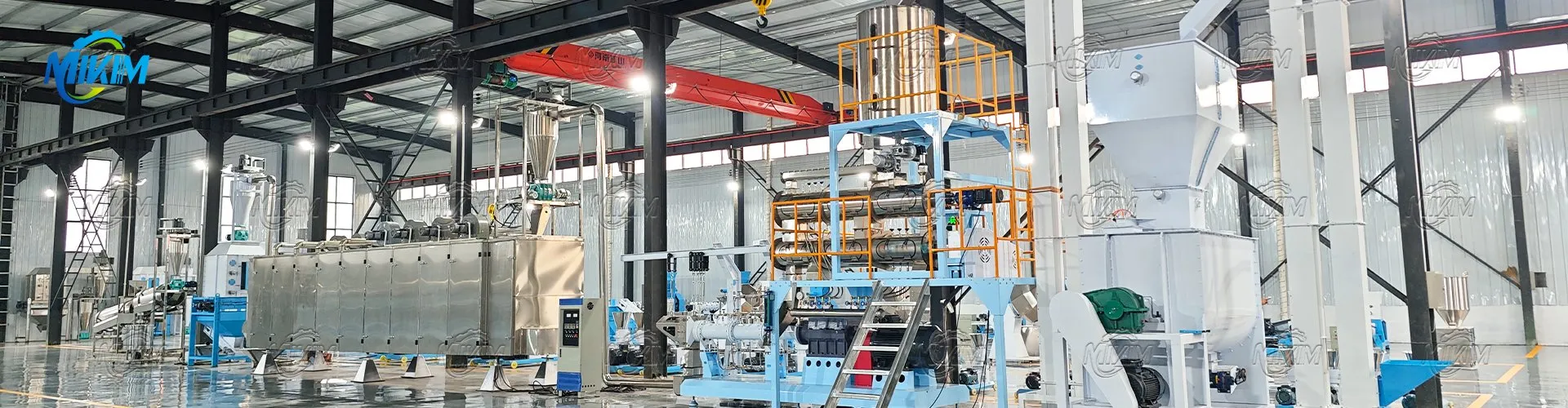
Controlling The Production Process Reduces Product Defects And Losses in The Fully Automatic Feed Extruder.
Leave a message
Reasons for Product Defects and Losses
1. Insufficient ingredient accuracy: Untimely calibration of the batching scale leads to excessive weighing errors (e.g., adding 10kg of soybean meal but the scale displays 10.5kg), causing the feed's nutrient ratio to deviate from the standard. During manual batching, operators may misread the formula or add the wrong ingredients (e.g., adding salt instead of baking soda), directly resulting in substandard products.
2. Uneven mixing: Insufficient mixing time in the mixer (e.g., mixing for only 3 minutes when specified as 5 minutes) results in incomplete mixing of ingredients, with some feeds having excessively high protein content and others too low. Dead zones within the mixer (e.g., old ingredients remaining in corners) cause new ingredients to mix with old ones, leading to unstable product quality.
3.Inappropriate pelleting parameters: Excessively high conditioning temperature (e.g., exceeding 95℃) destroys vitamins in the feed; excessively low temperature (e.g., below 80℃) results in insufficient starch gelatinization, making the pellets easily breakable; insufficient pelleting pressure leads to low pellet density, making them prone to powdering during transportation.
Management skills
1. Ensure accurate ingredient mixing: Calibrate the mixing scale weekly using standard weights (e.g., when weighing a 10kg weight, the error should be controlled within ±0.1kg). Repair any scales that fail calibration immediately. Utilize automated mixing systems whenever possible to minimize manual intervention. If manual mixing is necessary, assign two people to verify the process (one to mix the ingredients, and the other to check the type and weight of the ingredients) to avoid incorrect addition.
2. Ensure uniform mixing: Adjust the mixing time according to the amount of raw materials (e.g., 5 minutes for 100kg of raw materials, 8 minutes for 200kg of raw materials). Before each production day, use a "mixing uniformity test" (e.g., take samples from different locations in the mixer and test for differences in protein content; the difference should be less than 5%) to test the mixing effect. Regularly clean the hard-to-reach areas inside the mixer; use a soft brush to remove any residual raw materials from corners to ensure the pure mixing of new raw materials.
3. Optimize pelleting parameters: Set pelleting parameters according to feed type (e.g., conditioning temperature of chicken feed 85-90℃, duck feed 90-95℃), monitor the conditioning temperature in real time with a temperature sensor during production, and automatically alarm when it deviates from the range; adjust the pellet mill pressure (e.g., adjust the pressure to 3MPa for producing hard pellets and 2MPa for producing soft pellets), and sample and check the pellet hardness every hour (test with a hardness tester, the acceptable range is 2-4kg/cm²) to ensure that the pellet quality meets the standards.


about Us
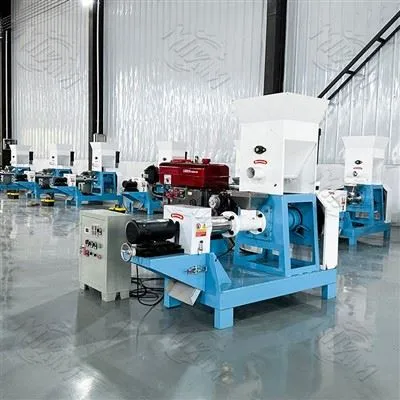
MIKIM is a high-tech enterprise integrating R&D, production, and sales. Its feed extrusion equipment utilizes a high-temperature, high-pressure process, which sterilizes, improves puffing density and digestibility, and saves 8%-15% on feed costs. Pellet diameters are adjustable from 1-16 mm, and it features controllable cutting and floating adjustment to suit the needs of fish, shrimp, crab, and pet food. Core components are sourced from international brands and undergo special treatment, ensuring stability and durability while balancing safety, efficiency, and peace of mind.
Qualifications and Honors

Customer visit

FAQ
1. What is the price of the Fully automatic feed extruder?
The price ranges from approximately $8,000-$40,000
2. Do you provide maintenance services for your customers?
Yes, we offer comprehensive after-sales maintenance services to our customers.


