Do You Understand The Working Principle Of Feed Extruder?
Leave a message
Before the feed extruder works, the raw materials usually need to be pretreated. The pretreatment process includes steps such as cleaning, crushing, mixing and adjusting the moisture content. Cleaning is to remove impurities in the raw materials, and crushing is to reduce the size of the raw material particles for subsequent processing. Mixing is to mix different types of raw materials in a certain proportion to achieve the expected feed formula. Adjusting the moisture content is to ensure that the raw materials have a suitable moisture content during the extrusion process to ensure the extrusion effect and feed quality.

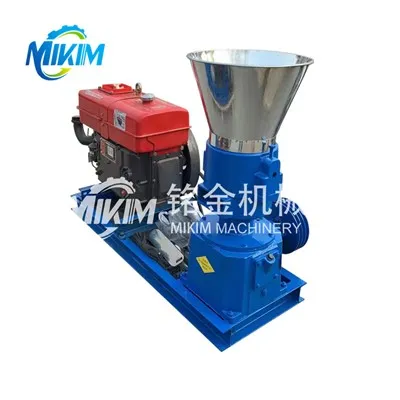
| Model | Power | Feeder | Cutter | Capacity | Dimension | Weight |
| DGP40 | 4KW | 0.4KW | 0.4KW | 0.04-0.05T/H | 1400*1030*1200MM | 240KG |
| DGP50 | 11KW | 0.4KW | 0.4KW | 0.06-0.08T/H | 1400*1030*1200MM | 320KG |
| DGP60 | 15KW | 0.4KW | 0.4KW | 0.12-0.15T/H | 1450*950*1430MM | 480KG |
| DGP70 | 18.5KW | 0.4KW | 0.4KW | 0.18-0.25T/H | 1600*1400*1450MM | 600KG |
| DGP80 | 22KW | 0.4KW | 0.75KW | 0.3-0.35T/H | 1850*1470*1500MM | 800KG |
| DGP90 | 30KW | 1.1KW | 1.5KW | 0.4-0.45T/H | 1900*1500*1600MM | 1200KG |
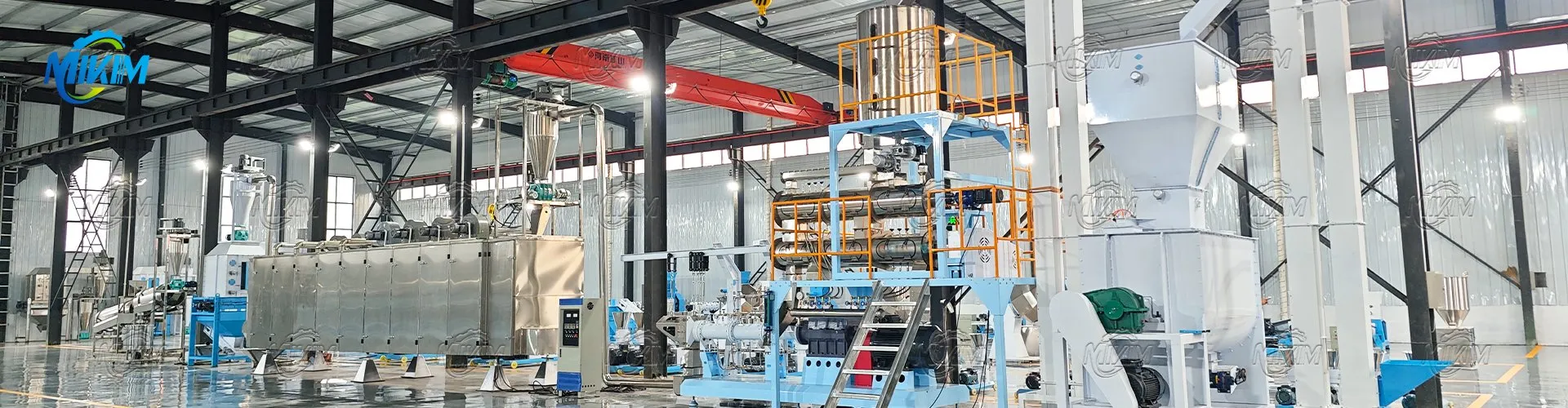
The pretreated raw materials are sent to the extrusion and cooking area of the feed extruder. In this area, the raw materials are subjected to high temperature and high pressure, and a series of physical and chemical changes occur. The high temperature causes the water in the raw materials to vaporize rapidly, producing a large amount of water vapor. At the same time, the high pressure compresses the gaps between the raw material particles to form a tight structure. During the extrusion and cooking process, the starch, protein and other nutrients in the raw materials undergo gelatinization, denaturation and other reactions, which improves the nutritional value and digestibility of the feed.
The extruded material is sent to the cutting area for cutting. The cutting area is usually equipped with rotating blades and fixed blades, and the cutting length can be controlled by adjusting the distance and speed between the blades. The cut feed pellets are sent to the cooling area for cooling and drying. The cooling process can reduce the temperature of the feed to prevent the loss of nutrients and microbial growth caused by high temperature. At the same time, the drying process can remove excess water in the feed and improve the shelf life and stability of the feed.