Floating Fish Feed Pellet Extruder Machine Usage Tips You Need To Know: Daily Maintenance & Fault Prevention
Leave a message
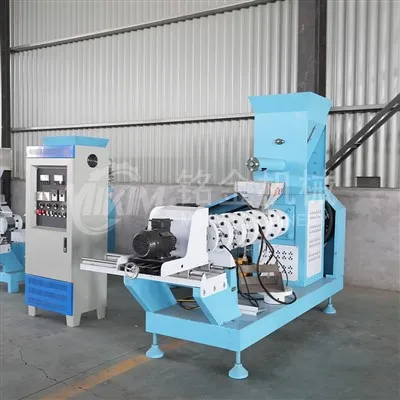
Best Floating Fish Feed Pellet Extruder Machine Daily Maintenance Tips for Core Components: The screw and extrusion chamber are the core of the extrusion function and require daily cleaning. After processing, wait for the equipment to cool to below 50℃, then disassemble the die and screw. Use a special tool to clean any remaining raw materials to prevent clumping and mold growth. Also, check the screw threads for wear-if wear exceeds 2mm, it will affect extrusion and extrusion effects, requiring immediate replacement.
The die orifices of the die are prone to clogging. Use a thin steel wire to unclog them, ensuring uniform orifice diameter. Check the die surface for scratches; severely worn die orifices require grinding or replacement. The heating element is crucial for temperature control. Before starting the machine daily, check if the heating element is heating normally. If uneven heating or no heating occurs, replace it immediately to avoid affecting the stability of the extrusion temperature. Additionally, the transmission system requires regular lubrication to ensure smooth screw rotation and reduce wear.
Floating fish feed extruder machine General maintenance tips: Conduct a comprehensive inspection of the equipment weekly, tighten all bolts on the machine body to prevent vibration from causing parts to loosen; check the electrical system to ensure wire connections are secure and free from aging or damage, preventing short circuits; clean the equipment's heat dissipation vents to prevent dust accumulation from affecting heat dissipation, especially the heat dissipation components of the temperature control system, ensuring they are kept unobstructed. Calibrate the pressure gauges and temperature controllers monthly to ensure accurate parameter displays and prevent processing parameter deviations due to instrument errors, which could affect feed quality. When the equipment is not in use for extended periods, thoroughly clean all parts, apply rust-preventive oil to the surfaces of metal parts such as the screw and die head, and store it in a dry, ventilated place to prevent moisture and rust.
Common fault prevention tips: Clogging is a common fault in automatic fish food making equipment. The key to prevention is proper raw material pretreatment (controlling particle size and moisture) and standardized start-up and shutdown procedures to avoid raw material residue. If blockage occurs, immediately stop the machine and disconnect the power. Clean the equipment after it has cooled down; do not force it to start. Unstable pressure in the small fish feed pellet extruder is often due to die blockage, screw wear, or uneven material distribution. Regularly clean the die, check the screw, and ensure uniform material mixing. Poor pellet forming may be due to improper temperature or pressure parameters or die wear. Optimize parameters or replace the die. Through routine maintenance and troubleshooting, the equipment failure rate can be reduced by more than 80%, extending the equipment's lifespan to 5-8 years.
Why choose us?
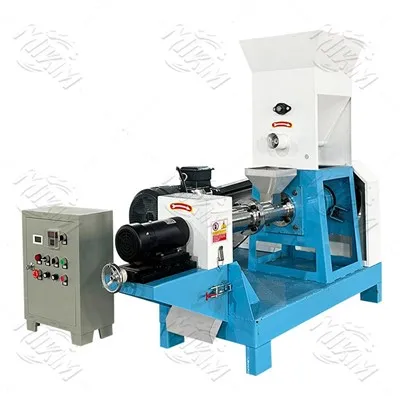
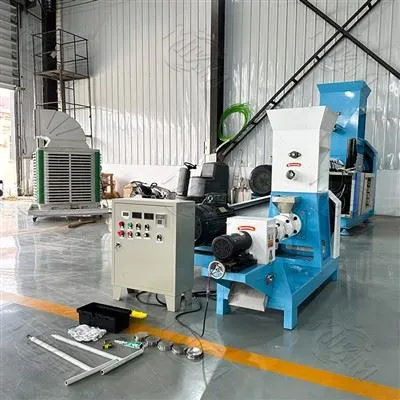
The MIKIM's floating fish feed extruder machine is constructed entirely of food-grade 304 stainless steel, fully complying with food processing hygiene standards. It is corrosion-resistant, easy to clean, and eliminates potential contamination at the source. The core screw is made of high-quality alloy steel through special heat treatment, offering outstanding wear resistance and corrosion resistance. Combined with its integrated structural design, this significantly extends its service life. The entire machine has passed CE and ISO international authoritative certifications, aligning with global quality standards and ensuring safer and more reliable processing.
Our equipment


Our Services
We offer:
One-Year Whole Machine Warranty Service
On-site Installation, Commissioning, and Technical Guidance
24/7 Online Technical Support
Qualifications and Honors

Customer visit

FAQ
1. What is the price of the small fish feed pellet making machine?
The price ranges from approximately $1,500-$50,000
2. How do you deliver to customers?
MIKIM Machinery's machinery delivery follows a complete process of "customized preparation - safe and fast delivery - precise handover - after-sales extension", with 3-day fast delivery, multi-layer protective packaging, global logistics tracking and 1-year warranty + on-site technical service to ensure that the equipment is delivered efficiently and in good condition and put into use smoothly.