

How Are Aquatic Feed Pellets Dried And Cooled
Leave a message
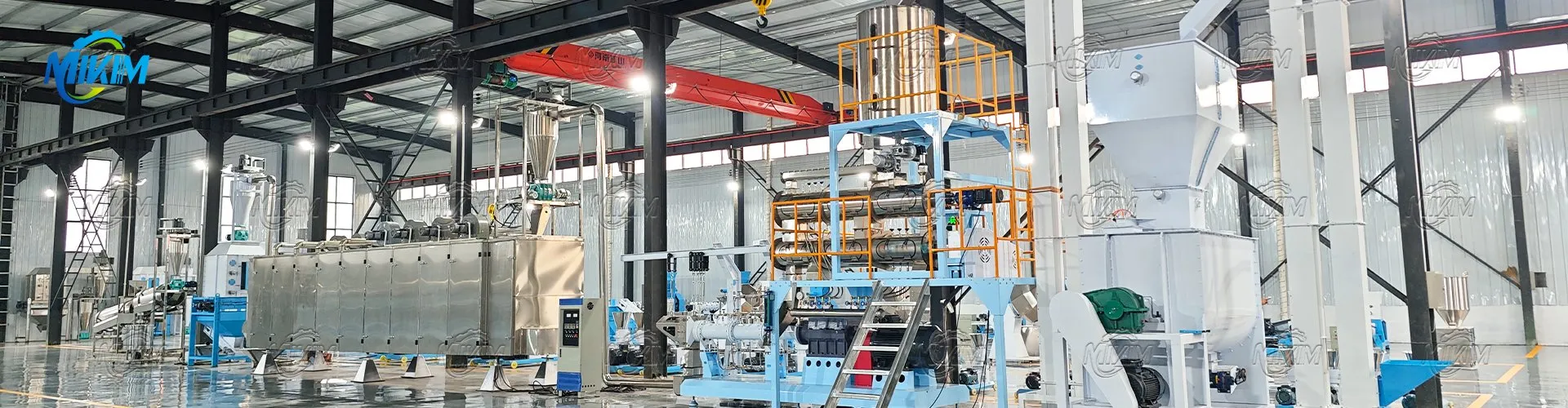
Freshly produced aquatic feed pellets from a mini floating fish feed machine are at approximately 60-80℃ with a moisture content as high as 18%-22%. Direct storage makes them prone to moisture absorption and mold growth, and they easily disintegrate in water. Drying and cooling must follow the principle of "low-temperature slow drying and uniform dehydration," with the core objective of reducing the moisture content to 10%-12% and the temperature to room temperature ±2℃, while preserving the dense structure formed by starch gelatinization to improve water resistance.
A counter-current dryer is preferred for the drying process. This equipment achieves efficient heat exchange by using hot air flowing counter-currently to the feed pellets. During operation, the hot air temperature should be controlled at 80-90℃, the airflow speed adjusted to 1.2-1.5 m/s, and the hot air should flow upwards from the bottom of the equipment while the feed pellets slowly fall from the top, maintaining a contact time of 15-20 minutes. Special care must be taken to avoid high-temperature rapid drying; temperatures exceeding 100℃ will cause the starch on the pellet surface to gelatinize and form a crust, preventing internal moisture from escaping and creating a "dry outside, wet inside" situation, which makes subsequent storage prone to mold growth. For fish feed with high starch content, a two-stage drying process can be used. The first stage uses a low temperature of 70℃ to remove surface moisture, and the second stage uses a medium temperature of 85℃ for thorough dehydration, ensuring uniform moisture content.
The cooling process must be closely integrated with the drying process. A counter-flow cooler is recommended, utilizing room temperature air in reverse contact with the hot pellets to quickly remove heat. The pellets exiting the dryer are approximately 45-55℃. After entering the cooler, air enters from the bottom at a speed of 1.0-1.2 m/s, ensuring sufficient contact with the pellets for 20-25 minutes to lower the temperature to below 25℃. Excessive airflow during cooling should be avoided, as it can cause pellet breakage, affecting appearance and water resistance; insufficient airflow will result in incomplete cooling, and condensation may occur after packaging due to temperature differences, leading to moisture absorption.
Operational precautions are particularly crucial. First, monitor parameters in real time, checking pellet moisture and temperature every 10 minutes. If the moisture content is too high, increase the hot air temperature by 5-10°C or extend the drying time. If pellets crack, reduce the hot air temperature and slow down the feeding speed. Second, control the uniformity of feeding, using a variable frequency feeder to deliver pellets at a uniform speed, avoiding accumulation inside the dryer and ensuring each pellet is subjected to even force. Third, keep the equipment clean, cleaning the dryer's hot air channels and cooler filters after each day's production to prevent feed residue from becoming moldy and contaminating the next batch. Furthermore, different aquatic animal feeds have different requirements. Shrimp feed requires stricter moisture control below 10%, while grass carp feed can have a more relaxed moisture content of up to 12%, necessitating adjustments to process parameters accordingly.


about Us
We offer:
One-Year Whole Machine Warranty Service
On-site Installation, Commissioning, and Technical Guidance
24/7 Online Technical Support
Qualifications and Honors

Customer visit

FAQ
1. What is the price of the fish feed production machine?
The price ranges from approximately $4,500-$35,000
2. Do you provide maintenance services for your customers?
Yes, we offer comprehensive after-sales maintenance services to our customers.


