

What Are Some Techniques For Drying And Cooling Poultry Feed Pellets?
Leave a message
Poultry feed pellets are produced in large quantities and are cost-sensitive. Freshly pelleted pellets have a temperature of 55-75℃ and a moisture content of 16%-20%. Drying and cooling must prioritize "high efficiency, low breakage, and low cost," controlling the moisture content to 12%-14% and lowering the temperature to around 25℃ to meet the needs of poultry for feeding and storage.
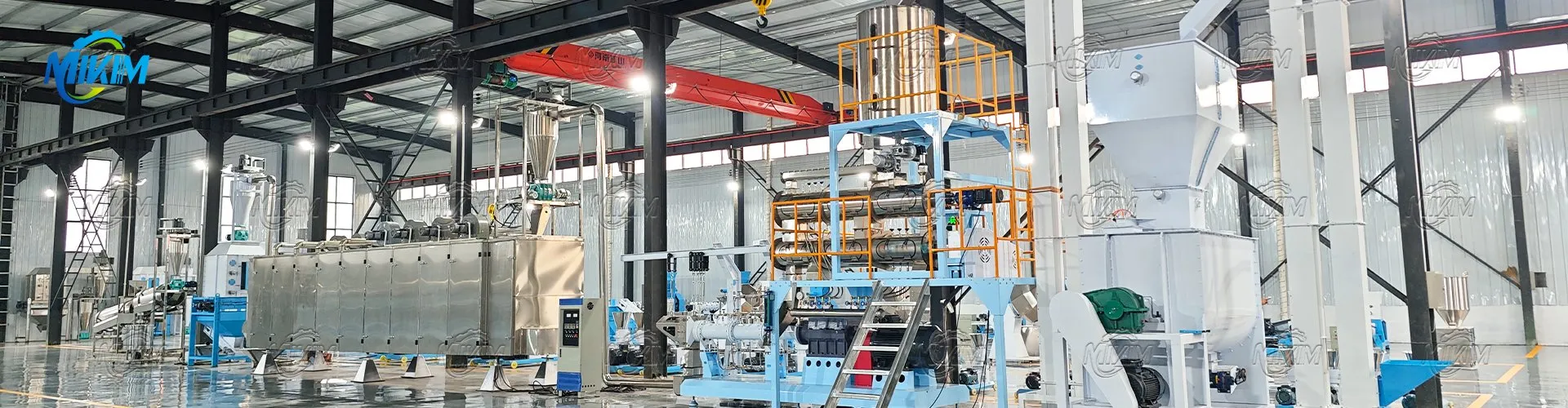
A fluidized bed dryer is recommended. It uses hot air to create a "boiling" state within the machine, resulting in a large contact area and uniform drying. During operation, the hot air temperature should be set to 75-85℃, the air velocity to 0.8-1.0 m/s, and the drying time to 10-15 minutes. Compared to traditional co-current flow dryers, this type of equipment improves thermal efficiency by 30%, and the pellets are buffered and collided within the airflow, keeping the breakage rate below 5%. For fine pellet products such as chick feed, buffer baffles can be added inside the dryer to further reduce friction and collision between pellets. For smaller-scale production, a belt dryer can be used. The pellets are spread evenly on a conveyor belt, with a thickness controlled at 3-5 cm. Hot air is blown from both above and below simultaneously to ensure uniform dehydration.
The cooling process can utilize a combined cooler. The pellets first pass through a pre-cooling section (initial cooling with room temperature air) before entering the main cooling section (deep cooling with low-temperature air). The pre-cooling section's air velocity is adjusted to 0.6-0.8 m/s, reducing the pellet temperature from 50-60℃ to 35-40℃. The main cooling section's air velocity is 0.8-1.0 m/s, further reducing the temperature to below 25℃, with a total cooling time of 15-20 minutes. This segmented cooling method provides rapid cooling while preventing stress cracking caused by excessive temperature differences. For duck and goose feed, which has a high crude fiber content and strong pellet toughness, the air velocity can be appropriately increased to 1.0-1.2 m/s to shorten the cooling time and improve production efficiency.
Practical considerations include three aspects. First, cost control: hot air can utilize waste heat from boiler exhaust to raise the temperature to the required range, saving over 60% of energy compared to electric heating; regular cleaning of the dryer's heat exchanger ensures heat exchange efficiency and avoids energy waste. Second, pellet protection: controlling the pellet flow rate during feeding prevents accumulation and compression at the equipment inlet; after drying and cooling, pellets are transferred through a buffer hopper before entering the packaging stage, reducing the free fall height. Third, quality monitoring: hourly sampling tests are conducted on pellet moisture content; if moisture exceeds the standard, the hot air temperature can be increased or the conveyor belt speed slowed; if the pellets are too brittle, the hot air temperature needs to be reduced and the drying time extended to prevent rapid moisture loss and pellet brittleness. Furthermore, poultry have different feed requirements at different growth stages; chick feed pellets are small, requiring reduced airflow and temperature; adult chicken feed pellets are large, allowing for appropriate parameter increases to balance efficiency and quality.



about Us
We offer:
One-Year Whole Machine Warranty Service
On-site Installation, Commissioning, and Technical Guidance
24/7 Online Technical Support
Qualifications and Honors

Customer visit

FAQ
1. What is the price of the poultry feed pellet mill?
The price ranges from approximately $1,500-$35,000
2. Do you provide maintenance services for your customers?
Yes, we offer comprehensive after-sales maintenance services to our customers.


