

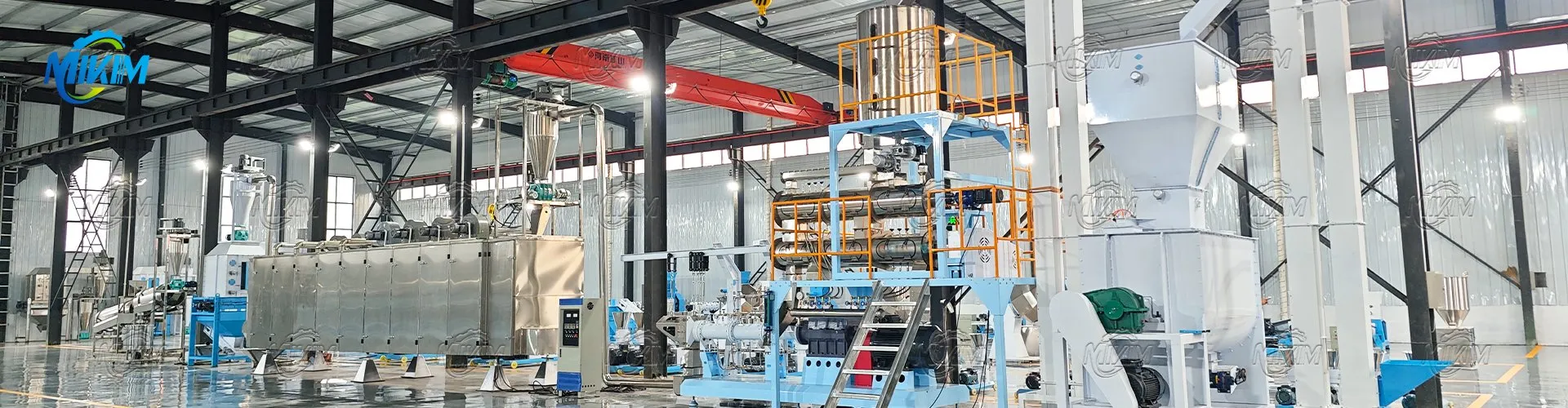
How Do Extruded Fish Feed Pellet Equipment Enhance Pellet Quality?
Leave a message
Upgrading the materials of core processing components is key to optimization. The screw and barrel are the "heart" of the pellet mill. Traditional ordinary steel components are prone to wear; it is recommended to replace them with alloy wear-resistant steel, such as 38CrMoAlA. After nitriding treatment, its hardness can reach HV900 or higher, extending its service life from 800 hours to 2000 hours, while ensuring that no metal impurities are generated during processing to contaminate the feed. The extruder die for floating fish feed should be made of high-strength alloy steel, using precision CNC machining technology to ensure that the hole diameter tolerance is controlled within ±0.1mm, improving pellet size consistency. One feed mill reduced the feed pellet size deviation rate to below 3% by upgrading the materials of its components.
Precise control of the fit clearance between the screw and barrel components improves processing quality. The fit clearance between the screw and barrel needs to be adjusted according to the characteristics of the raw materials. When processing high-fiber raw materials (such as algae powder), the clearance should be controlled at 0.2-0.3mm to prevent slippage; when processing high-protein raw materials, the clearance should be reduced to 0.1-0.2mm to enhance the shearing and extrusion effect. Regularly check the gaps using a feeler gauge. When the gap exceeds the tolerance, calibrate using the adjustment device or replace worn parts. The gap between the pressure roller and the die also needs to be strictly controlled, usually maintained at 0.15-0.25mm. Too large a gap can lead to insufficient material compaction and loose particles; too small a gap will accelerate wear and increase energy consumption. Precise control can be achieved by fine-tuning the pressure roller bearing seat with a special wrench.
Standardized maintenance is the foundation for ensuring component performance. Establish a maintenance system of "pre-shift inspection, in-shift inspection, and post-shift cleaning": Before the shift, check the wear of the screw and die, and add lubricating oil to the mark; during the shift, check the equipment's operating sound and component temperature every 2 hours to ensure there are no abnormalities; after the shift, thoroughly clean the residual material in the barrel and screw, especially cleaning the blockages in the die holes to prevent material carbonization from affecting the next production. Check the component mating gaps weekly, and perform a comprehensive disassembly and maintenance monthly, replacing easily worn parts such as seals and bearings in a timely manner to ensure the equipment is always in optimal operating condition.
Why choose us?
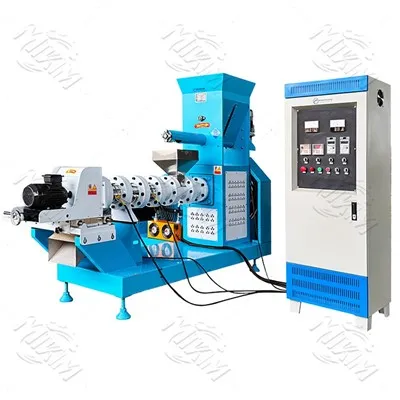
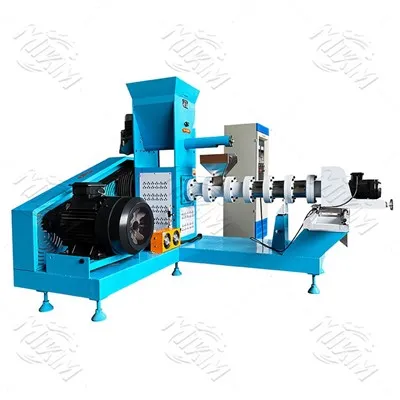
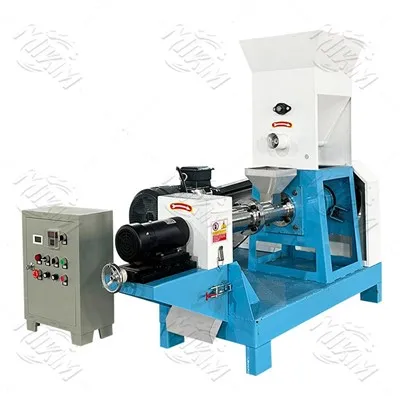
The MIKIM's floating fish feed extruder machine is constructed entirely of food-grade 304 stainless steel, fully complying with food processing hygiene standards. It is corrosion-resistant, easy to clean, and eliminates potential contamination at the source. The core screw is made of high-quality alloy steel through special heat treatment, offering outstanding wear resistance and corrosion resistance. Combined with its integrated structural design, this significantly extends its service life. The entire machine has passed CE and ISO international authoritative certifications, aligning with global quality standards and ensuring safer and more reliable processing.
Our equipment

Our Services
We offer:
One-Year Whole Machine Warranty Service
On-site Installation, Commissioning, and Technical Guidance
24/7 Online Technical Support
Qualifications and Honors

Customer visit


