

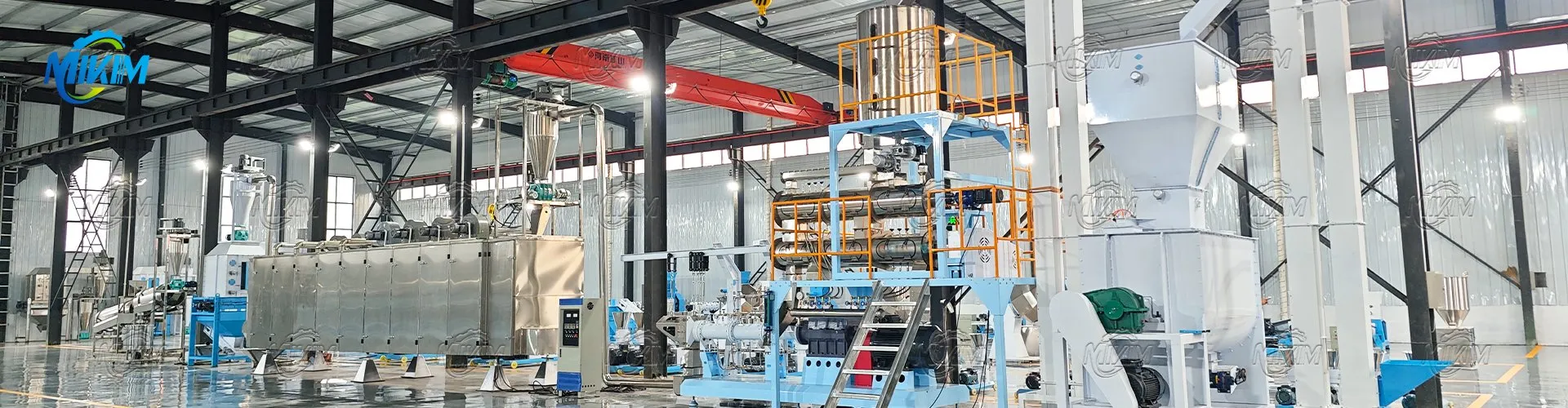
In What Ways Can Dry Type Fish Feed Extruder Improve Pellet Quality?
Leave a message
The graded control of extrusion temperature is key to improving quality. The barrel of a fish feed extruder is typically divided into a feeding section, an extrusion section, and a forming section, each with a temperature gradient. The feeding section temperature is controlled at 60-70℃ to prevent premature gelatinization and barrel blockage of the raw material; the extrusion section temperature is raised to 110-120℃ to promote full starch gelatinization, improving feed binding properties and digestibility; the forming section temperature is stabilized at 90-100℃ to ensure stable pellet formation. Flexible adjustments are needed when farming different species. When producing high-protein eel feed, the extrusion temperature can be lowered to 100-110℃ to avoid excessive protein denaturation; when producing ordinary grass carp feed, the temperature can be raised to 120-130℃ to enhance sterilization. One feed mill improved feed protein digestibility by 22% through graded temperature control.
The coordinated control of screw speed and feed rate in a floating fish feed extruder machine affects the physical quality of the pellets. The screw speed determines the shear strength and residence time of the raw material in the barrel. When producing sinking aquatic feed, the speed is controlled at 200-250 rpm to extend the residence time and ensure compact pellets, preventing them from floating. When producing floating ornamental fish feed, the speed is increased to 300-350 rpm, creating a porous structure through strong shearing. The feed rate must be precisely matched to the speed, using a variable frequency feeder to ensure uniform filling of the raw material in the barrel and avoid uneven pellet density caused by pressure fluctuations. When the speed increases by 10%, the feed rate should increase by 8%-10% simultaneously to maintain a stable pressure in the barrel at 3-5 MPa. One fish farm used this method to control the coefficient of variation of feed pellet density to within 5%.
The adaptability adjustment of the fish feed extruder machine mold parameters is crucial. The mold orifice diameter should be selected according to the mouth size of the farmed animals: 1.5-2 mm orifice diameter for juvenile fish and 3-5 mm orifice diameter for adult fish to ensure easy feeding. Meanwhile, the compression ratio of the die must be matched with the characteristics of the raw materials. For feeds with high fishmeal content, a high compression ratio die of 1:8 should be used to enhance pellet compaction; for feeds with high grain content, a medium compression ratio die of 1:5 should be used to avoid excessively hard pellets. Regularly check the wear of the die, and repair or replace it in time when the aperture enlarges by more than 0.2mm to ensure stable pellet specifications.
Why choose us?
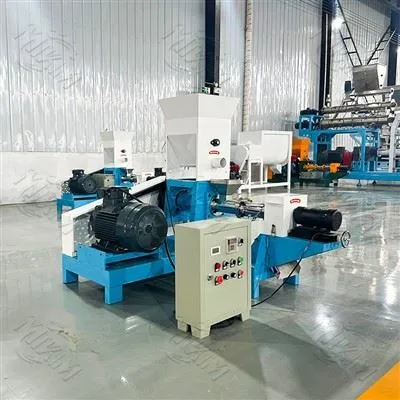
The MIKIM's floating fish feed extruder machine is constructed entirely of food-grade 304 stainless steel, fully complying with food processing hygiene standards. It is corrosion-resistant, easy to clean, and eliminates potential contamination at the source. The core screw is made of high-quality alloy steel through special heat treatment, offering outstanding wear resistance and corrosion resistance. Combined with its integrated structural design, this significantly extends its service life. The entire machine has passed CE and ISO international authoritative certifications, aligning with global quality standards and ensuring safer and more reliable processing.
Our equipment



Our Services
We offer:
One-Year Whole Machine Warranty Service
On-site Installation, Commissioning, and Technical Guidance
24/7 Online Technical Support
Qualifications and Honors

Customer visit


