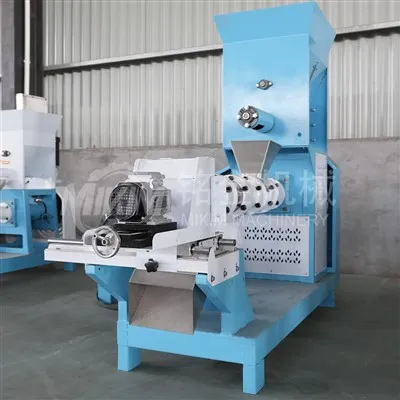
How Do Extruder Machine For Floating Fish Feed Boost The Quality Of Feed Pellets?
Leave a message
Efficient cooling and drying are key to improving feed stability. The initial product temperature after processing is typically 60-80℃, with a moisture content of 15%-18%. Direct packaging can easily lead to mold and pellet sticking. A counter-flow cooler is required, with a cooling airflow controlled at 1500-2000 m³/h to lower the feed temperature to room temperature (≤30℃) and simultaneously reduce the moisture content to below 12%. During cooling, the airflow speed must be controlled to avoid excessive dust generation or incomplete cooling. For feeds produced from high-moisture raw materials, a mesh belt dryer is added after cooling, with a drying temperature set at 50-60℃ to prevent high temperatures from damaging heat-sensitive nutrients. One feed mill, using this combined treatment, stabilized the feed moisture content at 10%-11%, extending shelf life by three times.
Precise screening and grading improve feed specification consistency. The finished product from a small fish feed making machine for dry extruders may contain fragments, powder, and oversized particles. These require screening using a multi-layer vibrating screen. The first screen removes oversized particles and impurities, the second separates qualified particles, and the third collects powder for reprocessing. The screened feed is then graded and packaged according to particle size; for example, 2mm, 3mm, and 5mm particles correspond to feed for juvenile, medium, and adult fish, respectively, meeting the feeding needs of different growth stages. One fish farm increased the percentage of qualified feed particles from 85% to 98% through screening and grading, reducing feed waste.
Post-coating technology preserves nutrients. Heat-sensitive additives such as vitamins and probiotics in aquatic feed are easily destroyed during the high-temperature processing of the pellet mill. Therefore, they need to be added after the finished product has cooled using post-coating technology. A dedicated spraying device evenly sprays the dissolved additives onto the feed surface, controlling the spray amount to 1%-3%, while simultaneously using a drum mixer to ensure uniform adhesion. To enhance adhesion, a small amount of vegetable oil can be sprayed as a carrier before coating. After adopting this technology, a feed mill saw its vitamin E retention rate in feed increase from 30% to 85%, significantly improving the feed's nutritional value. Furthermore, finished product packaging requires sealed, moisture-proof composite bags, with air removed from the bags before packaging to prevent feed oxidation and spoilage, further ensuring feed quality.
Why choose us?
The MIKIM's floating fish feed extruder machine is constructed entirely of food-grade 304 stainless steel, fully complying with food processing hygiene standards. It is corrosion-resistant, easy to clean, and eliminates potential contamination at the source. The core screw is made of high-quality alloy steel through special heat treatment, offering outstanding wear resistance and corrosion resistance. Combined with its integrated structural design, this significantly extends its service life. The entire machine has passed CE and ISO international authoritative certifications, aligning with global quality standards and ensuring safer and more reliable processing.
Our equipment


Our Services
We offer:
One-Year Whole Machine Warranty Service
On-site Installation, Commissioning, and Technical Guidance
24/7 Online Technical Support
Qualifications and Honors

Customer visit