How To Choose A Pellet Machine For Farming?
Leave a message
Among them, pellet machines, as one of the important equipment for feed processing, are indispensable for farmers. However, the numerous brands and models of pellet machines on the market make farmers very confused when choosing. So, how to choose a pellet machine that suits you? The following will analyze and discuss from the following aspects.
When choosing a pellet machine, you need to consider its performance parameters, mainly including:
1. Output: According to the scale of farming and production needs, choose a pellet machine that can meet the production requirements. It is generally recommended to choose equipment with a larger output to avoid frequent mold replacement or equipment maintenance.
2. Motor power: The power of the motor directly affects the output and performance of the pellet machine. It is necessary to choose the appropriate motor power according to production needs.
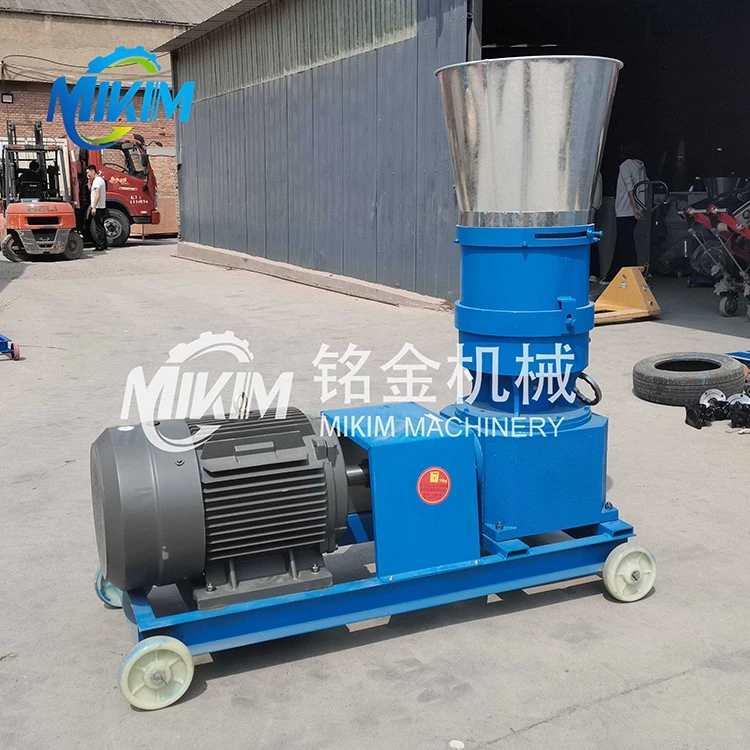
| Model | Capacity | Power | Dimension | Weight |
| 125 | 80-100kg/h | 3kw | 110*35*70 cm | 95 kg |
| 150 | 120-150kg/h | 4kw | 115*35*80cm | 100 kg |
| 210 | 200-300kg/h | 7.5kw | 115*45*95cm | 300 kg |
| 260 | 500-600kg/h | 15kw | 138*46*100cm | 350 kg |
| 300 | 700-800kg/h | 22kw | 130*53*105cm | 600 kg |
3. Compression ratio: The compression ratio is an important parameter of the pellet machine, which determines the density and hardness of the pellets. Farmers need to choose a suitable compression ratio according to their needs to meet the quality requirements of the feed.
4. Ease of operation: Ease of operation is crucial to the use and maintenance of equipment. It is recommended to choose equipment that is easy to operate and maintain.
5. Safety: The safety performance of the equipment must be considered, especially for high-speed equipment such as ring-mode pellet machines, safety is even more important.
When choosing a pellet machine, factors such as feed raw materials and production processes also need to be considered. For example, for feeds that require the addition of more liquid or trace elements, it is necessary to choose a pellet machine that can adapt to this process. In addition, for feeds that need to be produced in different shapes and particle sizes, it is also necessary to select corresponding molds and process parameters.
In summary, farmers need to consider multiple aspects when choosing a pellet machine. Only by choosing a high-quality pellet machine that suits them can they improve feed processing efficiency, reduce costs, ensure product quality, and thus obtain better economic benefits.