

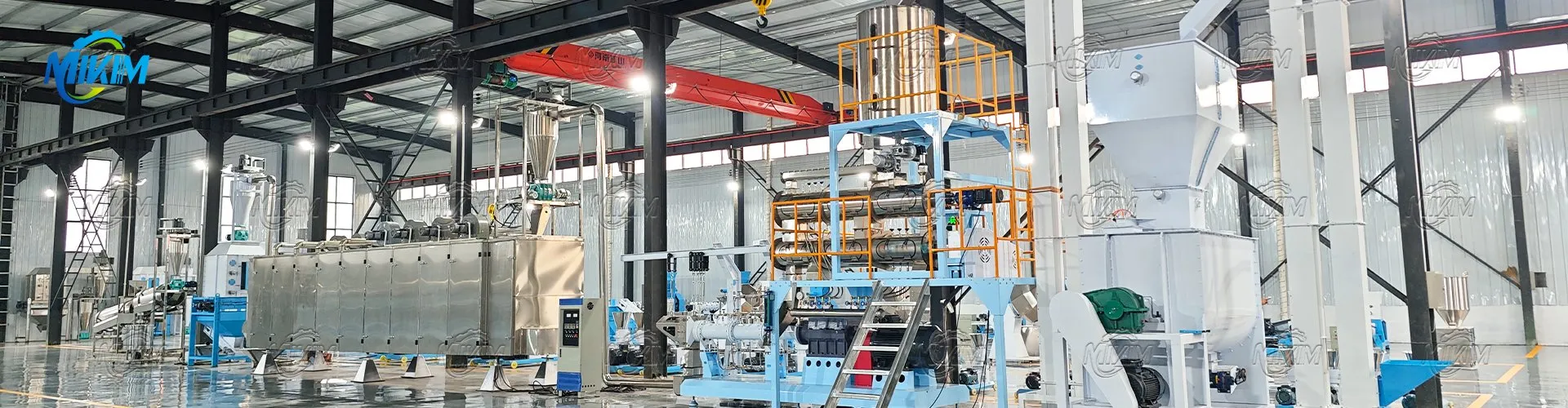
How To Perform Motor Replacement On A Dog Food Pellet Maker Machine
Leave a message
content
Emergency Principles: Safety First, Speed and Efficiency, Avoiding Secondary Losses
Emergency replacement of the motor in a dog food pellet machine must adhere to three core principles, balancing safety, efficiency, and equipment protection, while meeting the needs of the production scenario.
First, Safety First: Even in urgent production situations, strict adherence to shutdown, power-off, and protective procedures is essential. Live operation and unauthorized disassembly are strictly prohibited to avoid electric shock, mechanical injuries, and other safety hazards. Simultaneously, avoid damage to core components such as the extruder screw and barrel due to improper operation, preventing secondary losses.
Second, Speed and Efficiency: Prioritize the use of spare motors (prepare spare motors compatible with the dog food pellet extruder machine in advance), simplifying some unnecessary procedures (such as dust cleaning of non-core parts). Focus on the core steps of "disassembly-installation-adjustment," aiming to complete replacement of small motors within 30 minutes and large motors within 1-2 hours.
Third, Compatibility First: During emergency replacement, if the original motor of the same model is unavailable, a replacement motor with the same power, speed, and installation dimensions can be selected. Prioritize compatibility to avoid starting failure due to model incompatibility, requiring a replacement with the original motor later.
Emergency Replacement Process: Simplified, Efficient, and Rapid Production Resumption
Based on emergency production scenarios, the motor replacement process has been optimized, simplifying unnecessary steps to ensure rapid replacement and production resumption. Simultaneously, it is linked to the dog food pellet making machine for integrated debugging.
Step 1: Emergency Shutdown and Power Cut-off: Immediately shut off the main power supply to the extruder, unplug the power cord, hang warning signs, assign dedicated personnel to monitor the process, and prevent unauthorized start-up. Quickly clean up any material residue around the motor (only clean areas affecting disassembly), and disconnect the motor wiring from the linkage shaft.
Step 2: Quickly Disassemble the Old Motor: Using prepared tools, quickly unscrew the old motor's fixing bolts, separate the motor from the base and linkage shaft, and use lifting tools to lift the old motor (for large motors) away, avoiding collisions with dog food extruder machine parts.
Step 3: Quickly Install the New Motor: Precisely place the spare or replacement motor on the base, align the bolt holes, and quickly tighten the fixing bolts. Connect the linkage shaft to the reducer and tighten the connecting bolts. Following the old motor's wiring method, quickly complete the wiring and insulation treatment, and use a multimeter to briefly check the wiring correctness.
Step 4: Quick Debugging: Connect the power supply and start the dog food processing machine. Run the machine motor idle for 3-5 minutes, observe its operating status, and after confirming there are no abnormalities, start the extruder for a trial run. Add a small amount of raw materials for a small-scale trial production. Once no abnormalities are detected, immediately resume normal production. Afterwards, refine details such as motor securing and dust removal.
Emergency Precautions: To mitigate risks and reduce production losses for small pet food making machines:
1. Do not disassemble or install the motor while it is energized, or omit insulation steps to save time, to avoid electric shock.
2. Do not forcibly install an incompatible motor. Even in an emergency, ensure the motor's power, speed, and installation dimensions are compatible with the extruder to avoid starting problems or equipment damage.
3. After an emergency replacement, conduct a comprehensive inspection of the motor installation, wiring, and linkage components during production breaks, reinforce loose parts, and improve insulation to prevent subsequent operational abnormalities.
4. Regularly check the status of the spare motor to ensure it is in good working order and ready for immediate use. Also, keep a stock of commonly used motor parts (such as terminals and bearings) to cope with unexpected failures and minimize emergency replacement time.
Our equipment



Why choose us?
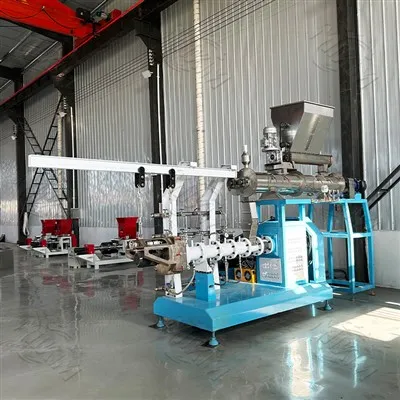
The MIKIM's floating fish feed extruder machine is constructed entirely of food-grade 304 stainless steel, fully complying with food processing hygiene standards. It is corrosion-resistant, easy to clean, and eliminates potential contamination at the source. The core screw is made of high-quality alloy steel through special heat treatment, offering outstanding wear resistance and corrosion resistance. Combined with its integrated structural design, this significantly extends its service life. The entire machine has passed CE and ISO international authoritative certifications, aligning with global quality standards and ensuring safer and more reliable processing.
Our Services
We offer:
One-Year Whole Machine Warranty Service
On-site Installation, Commissioning, and Technical Guidance
24/7 Online Technical Support
Qualifications and Honors

Customer visit

FAQ
1. What is the price of the small cat food making machine?
The price ranges from approximately $1,500-$50,000
2. How do you deliver to customers?
MIKIM Machinery's machinery delivery follows a complete process of "customized preparation - safe and fast delivery - precise handover - after-sales extension", with 3-day fast delivery, multi-layer protective packaging, global logistics tracking and 1-year warranty + on-site technical service to ensure that the equipment is delivered efficiently and in good condition and put into use smoothly.


