Replacing The Motor in Your Dog Food Pellet Making Machine: A Step-by-Step Guide
Leave a message
content
Post-replacement debugging key points: Comprehensive testing to ensure long-term stable operation
Comprehensive debugging after motor replacement is crucial to avoiding subsequent operational failures. It needs to focus on two main dimensions: motor operating status and the linkage effect with the dog food extruder machine.
First, motor self-testing: Run the motor idle for 10-15 minutes, checking motor speed, temperature, and noise to ensure stable speed (compatible with the extruder), temperature controlled between 40-50℃, no abnormal noises or vibrations, and smooth bearing operation; use a multimeter to test motor current and voltage to ensure they meet rated parameters and there are no overload or short circuit risks.
Second, dog food processing machine linkage debugging: Start the extruder and perform idle linkage operation to test the linkage status of the motor, screw, and reducer, ensuring smooth linkage without jamming or abnormal noises; introduce raw materials for trial production, testing pellet forming quality and raw material maturation effect, adjusting motor speed and extruder pressure parameters to ensure compatibility and no material blockage or motor overheating issues.
Third, detailed testing: Inspect motor fixing bolts, terminals, and linkage shaft connections to ensure all components are firmly fixed, well-insulated, and without loosening or displacement.
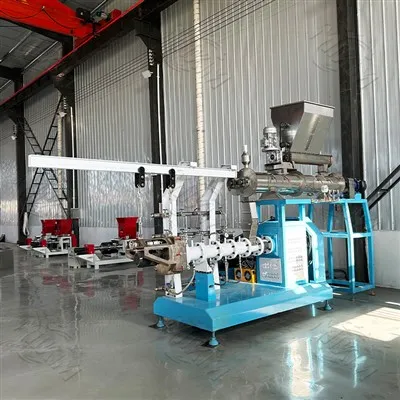

Routine Maintenance Tips: Regular maintenance extends the lifespan of the dog food pellet extruder machine motor
1. Regular Cleaning: Weekly clean the motor surface, cooling fan, and wiring terminals to remove dust and material residue, preventing dust from clogging the cooling channels and causing the motor to overheat and burn out. Monthly clean the connections between the motor and the drive shaft and reducer, adding high-temperature grease to reduce friction.
2. Regular Inspection: Weekly before starting the machine, check if the dog food pellet machine motor mounting bolts and wiring terminals are loose and if the insulating tape is intact. Monthly check the motor current and voltage, and inspect the bearing operation; replace any bearings that are stuck or worn. Quarterly check the motor cooling system, cleaning the cooling channels to ensure good heat dissipation.
3. Proper Operation: Avoid prolonged full-load operation of the extruder to prevent motor overload. When stopping the machine, first close the feed inlet, let the motor idle for 5 minutes, and then turn off the power to prevent material residue from clogging the screw and causing overload when the motor starts next time.

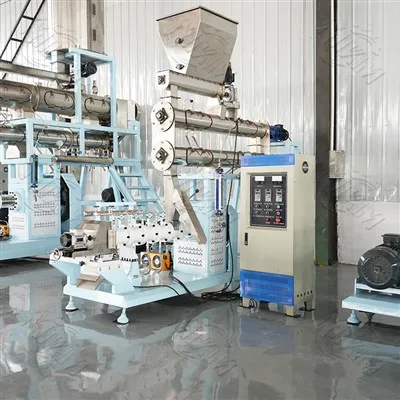
Long-Term Protection Measures: Source Control to Reduce Motor Failure Probability
Establish a long-term protection system for the dog food pellet maker machine motor to reduce motor failures at the source, avoid frequent replacements, and ensure stable production.
First, source control: Strictly control raw material quality, carefully screen raw materials, remove hard impurities to prevent impurities from entering the extruder, causing screw jamming and motor overload burnout; standardize operating procedures, strictly prohibit unauthorized operations and live maintenance to avoid damage to the motor and electrical components.
Second, spare parts reserves: Maintain a reserve of spare motors, motor bearings, terminals, and other spare parts compatible with the dog food pellet mill to cope with sudden motor failures and reduce downtime.
Third, personnel training: Regularly provide professional training to operators and maintenance personnel to ensure they are proficient in motor replacement and maintenance techniques, understand the linkage logic between the motor and the extruder, and improve practical skills and safety awareness.
Fourth, environmental protection: Place the Automatic Dog Food machine and motor in a dry, ventilated, and dust-free environment to avoid damage caused by humidity, dust, and high temperatures. Simultaneously, implement rain and moisture protection measures for the equipment to extend motor lifespan and drive higher product exposure and traffic conversion.
Final product display


Why choose us?
The MIKIM's floating fish feed extruder machine is constructed entirely of food-grade 304 stainless steel, fully complying with food processing hygiene standards. It is corrosion-resistant, easy to clean, and eliminates potential contamination at the source. The core screw is made of high-quality alloy steel through special heat treatment, offering outstanding wear resistance and corrosion resistance. Combined with its integrated structural design, this significantly extends its service life. The entire machine has passed CE and ISO international authoritative certifications, aligning with global quality standards and ensuring safer and more reliable processing.
Our Services
We offer:
One-Year Whole Machine Warranty Service
On-site Installation, Commissioning, and Technical Guidance
24/7 Online Technical Support
Qualifications and Honors

Customer visit

FAQ
1. What is the price of the floating fish food pellet manufacturing machine?
The price ranges from approximately $1,500-$50,000
2. How do you deliver to customers?
MIKIM Machinery's machinery delivery follows a complete process of "customized preparation - safe and fast delivery - precise handover - after-sales extension", with 3-day fast delivery, multi-layer protective packaging, global logistics tracking and 1-year warranty + on-site technical service to ensure that the equipment is delivered efficiently and in good condition and put into use smoothly.