

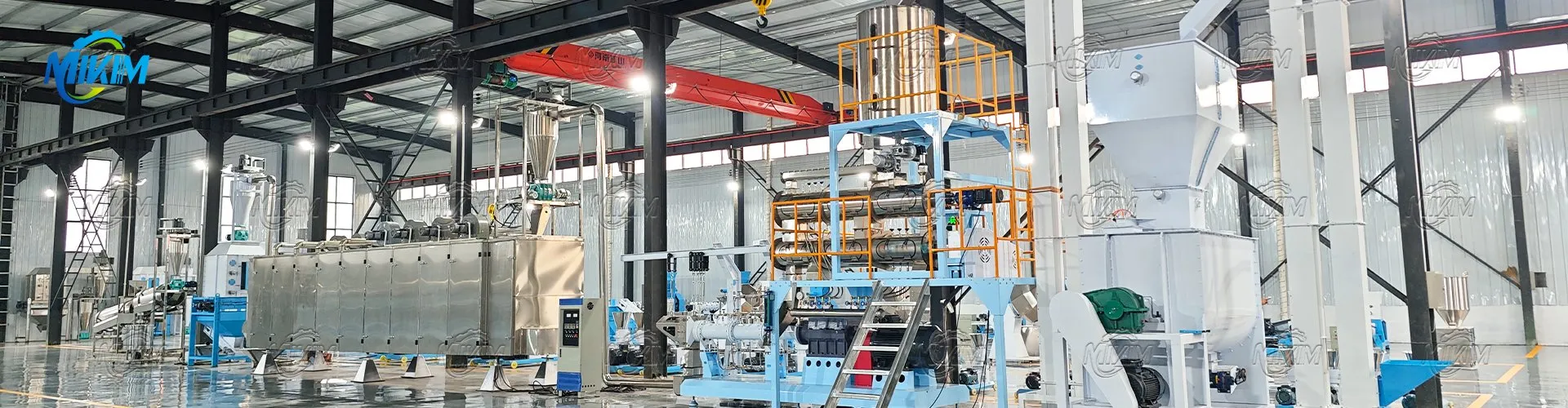
How To Produce Freshwater Fish Feed? Choose A Pellet Feed Production Line!
Leave a message
fish meal production line
During the cultivation of loach fry, the quality of the starter feed directly impacts their survival rate and growth rate. In freshwater fish feed production lines, specialized starter feed production equipment for loach fry must balance nutritional balance, pellet palatability, and water stability. The design and selection of this equipment must meet the demands of large-scale production while also adapting to the unique feeding habits of loach fry.
Loach fry enter their feeding phase 7-10 days after hatching. During this period, their digestive systems are not fully developed, and they have high requirements for the physical form and nutritional content of their feed. Ideal feeds should have the following characteristics:
- Fine particles: Particle size is typically controlled between 50-200 microns, making them easy for the fry to consume;
- Water stability: They must remain stable in water for 2-4 hours without disintegrating, minimizing water pollution;
- High protein content: A crude protein content of 45%-50% is recommended, with fish meal, soybean meal, and other ingredients as the primary ingredients;
- Appetite: Yeast extract or amino acids should be added to increase feeding efficiency.
A complete loach seedling starter feed production line usually includes the following key equipment:
(1) Raw material pretreatment system
Includes a grinder and a screener. The raw materials must be ultra-finely ground to a size of 80 mesh or above to ensure fine particles. The screening process can remove impurities and ensure the purity of the raw materials.
(2) Mixer
A twin-shaft paddle mixer is used, and the coefficient of variation of mixing uniformity is ≤5% to avoid nutrient stratification. The temperature must be controlled not to exceed 40°C during mixing to prevent the inactivation of heat-sensitive ingredients (such as vitamins).
(3) Conditioner
The starch is gelatinized by steam heating to improve the cohesiveness of the feed. The conditioning temperature is usually set at 85-90°C for 20-30 seconds. Excessively high temperatures will cause protein denaturation.
(4) Extruder
A low-shear screw design extruder is used to avoid destroying the nutrients. The density of the extruded feed is controlled at 0.3-0.5g/cm³ to facilitate the suspended feeding of loach fry. (5) Drying and Cooling System
A multi-layer belt dryer is used with temperature control in stages (60°C → 50°C → 40°C) to prevent cracking of the feed caused by high temperatures. The moisture content after cooling must be ≤10% to extend the shelf life.

| Size for whole line | According to land size and layout. |
| Pellet size | 1-12mm |
| Capacity | 5-10t/h |
| Workers requirments | 4-5people |
| Shipment requirments | 5*40ft container |
| Range of application | large commerical Aquatic/ pets feed factory |
| Process flow | 1.bucket elevator 2.raw materials cleaning system-3.silos for crusher 4.crusher 5.Raw material automatic distribution weighing system 6.mixing system 7.second crushing system 8.Raw material automatic distribution weighing system 9.second mixing system 10.extruder 11.drying system 12.screen system -13.seasoning machine 14.cooling system 15.packing system |
MIKIM equipment display


For more information on process design, equipment layout, plant construction plan, single machine equipment quotation, turnkey quotation, etc., please feel free to contact us.
Qualifications and Honors


