

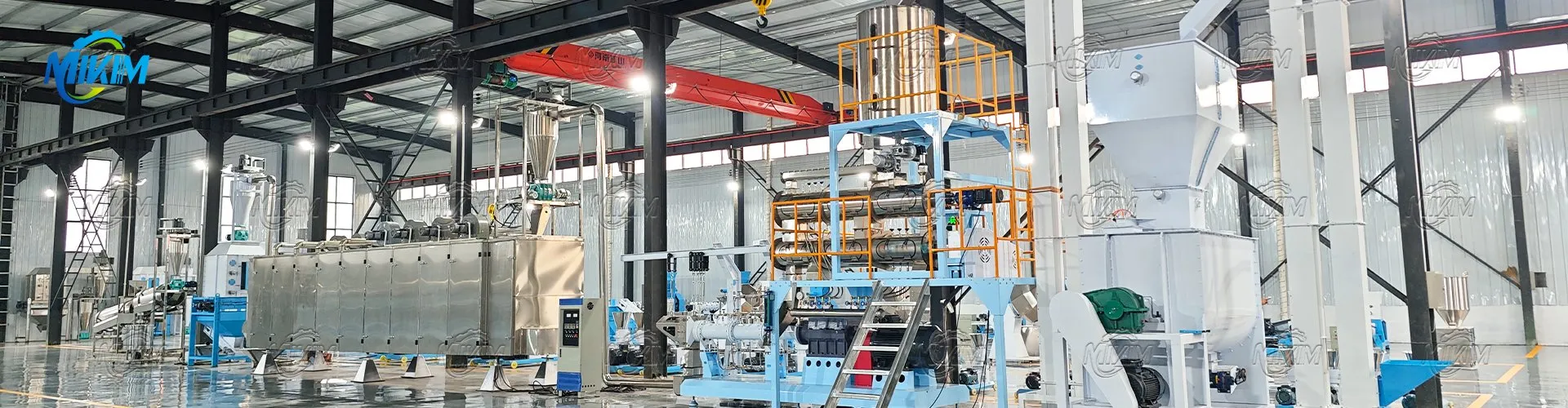
MIKIM 300-350kg/h Dry-type Floating Fish Feed Pellet Extruder Machine Feedback From Cameroon Customer
Leave a message

The MIKIM 300–350kg/h dry-type floating fish feed extruder has emerged as a high-ROI solution for Cameroon's aquaculture sector. By producing professional-grade floating pellets (≥95% buoyancy) without a steam boiler, it reduces operational costs by 40-50%. Real-world testing in Douala confirms its compatibility with local ingredients like cassava meal and palm kernel cake, achieving a stable output of 320+ kg/h for Catfish (Clarias gariepinus) and Tilapia.
1. The Market Context: Why Cameroon Needs Local Feed Solutions
In Cameroon, feed accounts for nearly 70% of fish farming expenses. Small-to-medium enterprises (SMEs) often struggle with:
- High Costs: Imported commercial pellets are priced at a premium due to logistics at the Douala port.
- Infrastructure Gaps: Industrial steam boilers are expensive to purchase and maintain in regions with limited technical support.
- Ingredient Waste: Using raw local grains leads to poor water quality and low FCR (Feed Conversion Ratio).
2. Machine Performance & Technical Specifications
The MIKIM 300-350kg/h unit was specifically selected for its "Boiler-Free" Dry Type technology, which uses mechanical friction and electric heating to achieve high-temperature extrusion.
| Technical Metric | Specification | Impact on Cameroon Farms |
| Production Capacity | 300–350 kg/h | Supports 2.5+ tons of daily feed production. |
| Extrusion Type | Dry Single Screw | No boiler needed; saves 30% on initial Capex. |
| Pellet Size Range | 1.0mm – 8.0mm | Versatile for fry, fingerlings, and adult fish. |
| Floating Rate | ≥95% | Pellets stay afloat for 12-24 hours; zero waste. |
| Power System | Siemens/Schneider Components | Enhanced durability against local grid fluctuations. |
3. Feedback: The "Cameroon Formula" Success
A recent customer in the Littoral Region provided detailed feedback after 90 days of operation. They successfully substituted expensive imported ingredients with local alternatives.
Cameroon Customer Feedback on a 300-350 kg/h Dry-Type Floating Fish Feed Pellet Extruder Machine
See the Machine Used in This Project
3.1. Local Ingredient Compatibility:
- Maize Flour (Local)
- Cassava Meal (as a binder)
- Soybean Meal
- Palm Kernel Cake (locally sourced residue)
- Fish Meal (from local artisanal fisheries)
- Outcome: The machine's optimized screw design maintained a stable 320kg/h output even with high-fiber palm cake, which often clogs inferior machines.
3.2. Operational Performance in Local Conditions
Cameroon's high humidity and unstable power grid were major concerns. Here is how the MIKIM Dry Type fish feed pellet extruder machine performed:
| Performance Factor | Customer Observation | MIKIM Engineering Solution |
| Power Stability | Experienced minor voltage drops in Yaoundé. | The machine's Siemens/Schneider electrics handled small fluctuations without tripping. |
| Output Consistency | Maintained 300kg/h+ even with high-fiber palm cake. | Optimized screw-to-barrel friction generates enough heat for starch gelatinization. |
| Maintenance | Local staff was able to clean the screw in 20 minutes. | Modular screw design allows for quick disassembly and cleaning. |
3.3. Economic Impact
The customer provided a breakdown of their cost savings after 3 months of operation:
- Cost Reduction: Production cost per kg dropped from 850 CFA (imported) to 450-500 CFA (self-produced).
- Independence: No longer affected by global supply chain delays at the Douala port.
- Growth Rate: Fish growth remained consistent with commercial feed, proving the machine's ability to "cook" the starch for better digestibility.
3.4. Customer Quote:
"The pellets are uniform and hard enough for transport, but expand perfectly in the water. Our Catfish growth rates are now identical to those fed on premium imported brands, but our costs have dropped from 850 CFA to 480 CFA per kg."

4. Engineering Deep Dive: Why the Dry Type floating fish feed making machine Works
From an engineering perspective, MIKIM utilizes HTST (High Temperature Short Time) technology.
- Starch Gelatinization: The high-pressure environment (120°C-150°C) transforms local starches into a porous matrix. This is what ensures the pellets float without needing a vacuum system.
- Pathogen Elimination: The heat effectively kills Salmonella and other bacteria common in local raw materials, ensuring a higher survival rate for the fish.
- Expert Optimization Tip: Because dry extrusion involves higher friction, MIKIM recommends adding heat-sensitive vitamins (Vit C) post-extrusion or using stabilized premixes to ensure peak nutritional value.
5. ROI & Economic Impact in the Cameroon Context
Investing in a MIKIM 300-350kg/h Dry Type floating Fish Feed pellet making machine offers a strategic advantage:
- Payback Period: Based on local feed prices, the machine typically pays for itself within 6–8 months.
- Operational Simplicity: The modular screw design allows a two-person team to handle the entire production line, from grinding to packing.
- Water Quality: High buoyancy and water stability (2+ hours) prevent pond eutrophication, a common issue in Cameroon's humid climate.
6. FAQ
Q1: Can the dry type floating fish feed pellet making mill handle the high humidity in Douala?
A: Yes. The dry type floating fish food extruder machine is built with wear-resistant alloy steel and anti-corrosion coatings. However, we recommend using a simple pellet dryer post-extrusion to ensure the 10-12% moisture level required for long-term storage in humid climates.
Q2: Is the electricity consumption too high for local grids?
A: The dry type extruder is more energy-efficient than a boiler-based system because it only consumes power during active extrusion. We provide customized motors (220V/380V/440V) to match Cameroon's regional power standards.
Q3: How long do the wearing parts (screw/die) last?
A: With local Cameroon ingredients (like maize/cassava), our alloy screws typically last 500-800 hours. Replacement is a 20-minute process that requires no specialized tools.
Q4: How difficult was the installation?
A: The customer's feedback: "The machine arrived almost ready-to-run. We followed the video guide provided by MIKIM, and our local electrician had it running in less than 3 hours."
Q5: Can the Dry-Type Fish Feed Extruder produce sinking feed for shrimp?
A: While this customer focused on floating feed for Tilapia, the machine can produce slow-sinking feed by adjusting the moisture and formula starch levels.
7. Conclusion: A Strategic Asset for African Aquaculture
The feedback from Cameroon confirms that the MIKIM 300-350kg/h dry type floating fish food pellet extruder machine is the bridge between subsistence farming and commercial success. By combining technical robustness with an understanding of local raw materials, MIKIM empowers farmers to achieve food security and economic independence.
8. Company Profile
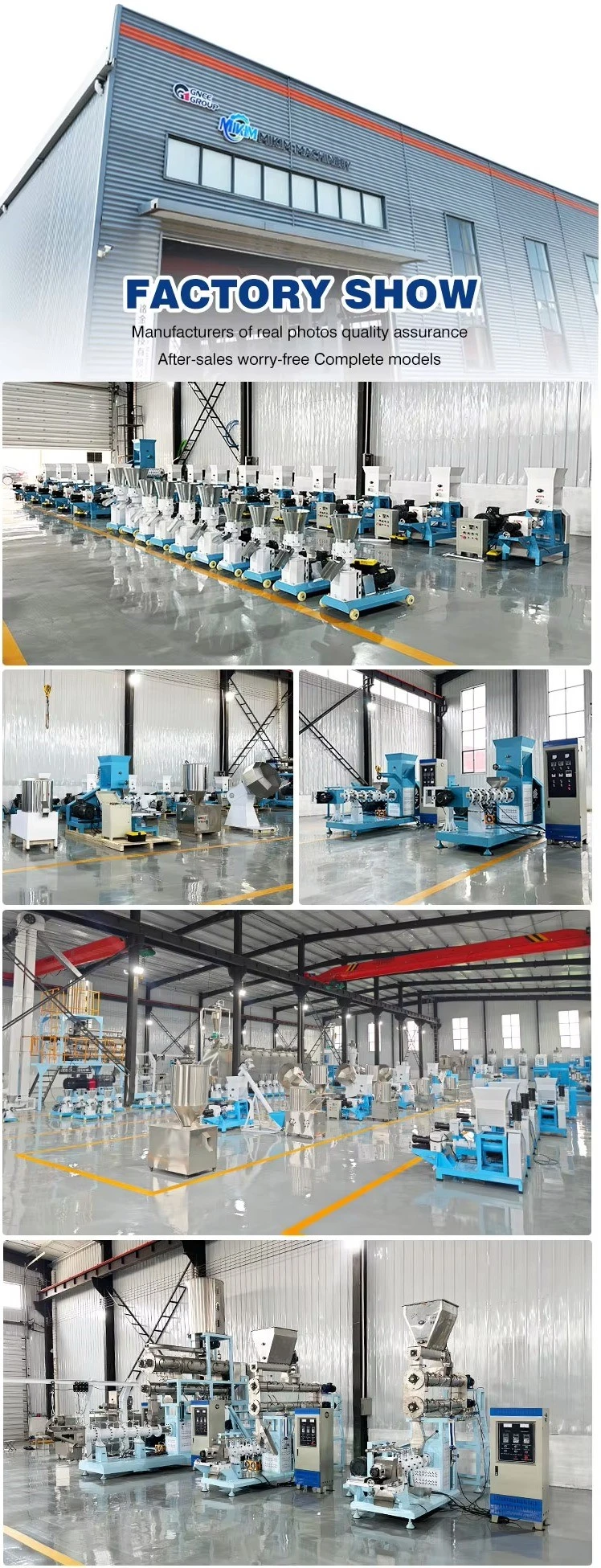


Cameroon Client Expanded to a 500 kg/h Fish Feed Pellet Production Plant
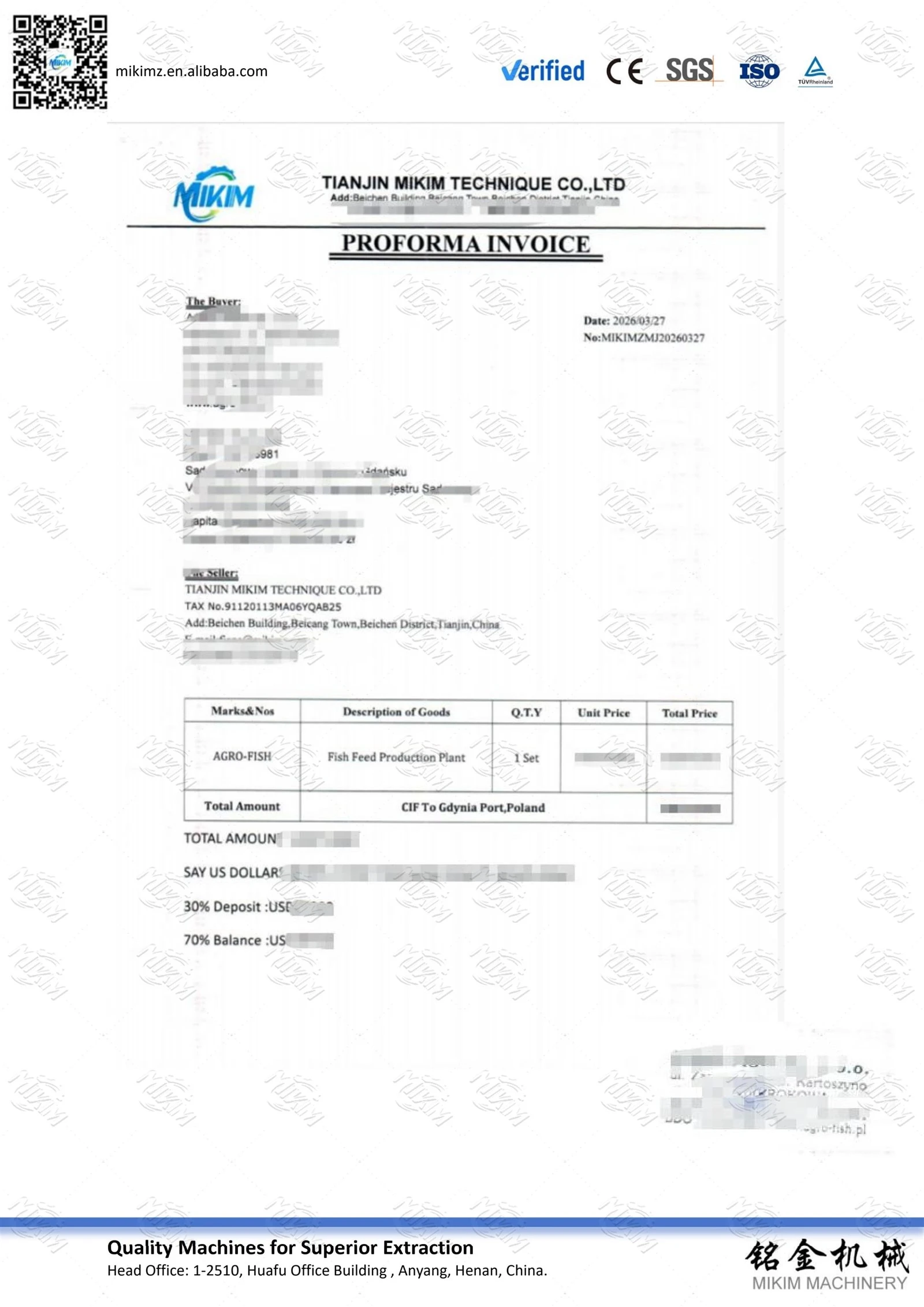
After the 300–350 kg/h extruder ran 90 days in the Littoral Region and cut feed costs from 850 to 480 CFA/kg, the same client came back to turn a proven machine into a complete plant.
"The 300–350 machine is running every shift we have, and we are still short. We need the same reliability, but as a plant. Can you send us the full line?"
Why They Reordered
Three pressures pushed the client from a single extruder to a full plant:
| # | Pressure | What it meant for the client |
|---|---|---|
| 1 | Demand outpaced machine hours | A 300–350 kg/h extruder is a strong starter, but commercial growth needs continuous upstream and downstream flow. |
| 2 | Recipe control | Buying pre-ground meal left cost and quality in someone else's hands. They wanted to crush, mix, extrude, dry, and cool on-site. |
| 3 | Proven trust | The first machine had already survived Cameroon's humidity, grid fluctuations, and high-fiber local ingredients. No reason to re-vet a new supplier. |
What Went in the Box: 500 kg/h Fish Feed Pellet Production Plant
This is a complete crushing–mixing–extrusion–drying plant rated at 500 kg/h. The line includes the following sections. Note: exact motor kW, dimensions, and model numbers for each sub-machine should be verified against the order sheet or nameplate photos before publishing.
| Section | Equipment | Role in the line |
|---|---|---|
| Raw material prep | Crusher / grinder | Pulverize maize, cassava, soybean, and palm kernel cake into feed-grade meal |
| Mixing | Horizontal mixer | Blend dry meal, wet binders, oil, and additives to a uniform recipe |
| Extrusion | Floating fish feed extruder | Cook, expand, and cut floating pellets at ~500 kg/h |
| Drying / cooling | Dryer / cooler | Reduce pellet moisture to 10–12% for humid-climate storage |
| Conveying | Bucket elevator / screw conveyor | Move material between stations with minimal labor |
| Control | Electric control cabinet | Centralize start/stop, overload protection, and motor interlocks |
Before & After: From Standalone Extruder to Turnkey Plant
| Metric | First Order | Repeat Order |
|---|---|---|
| Capacity | 300–350 kg/h | 500 kg/h |
| Configuration | Standalone dry-type extruder | Complete crushing–mixing–extrusion–drying plant |
| Feed cost | 850 CFA/kg imported → 480 CFA/kg self-made | Further scale economy on the same local recipe |
| Labor model | One machine, local staff | Integrated line with centralized control |
| Recipe control | Mixed off-site, extruded on-site | Crushed, mixed, extruded, dried, and cooled on-site |
The jump from 300–350 kg/h to 500 kg/h is significant, but the bigger shift is from machine to system: the client now owns the full process from raw grain to bagged pellet.
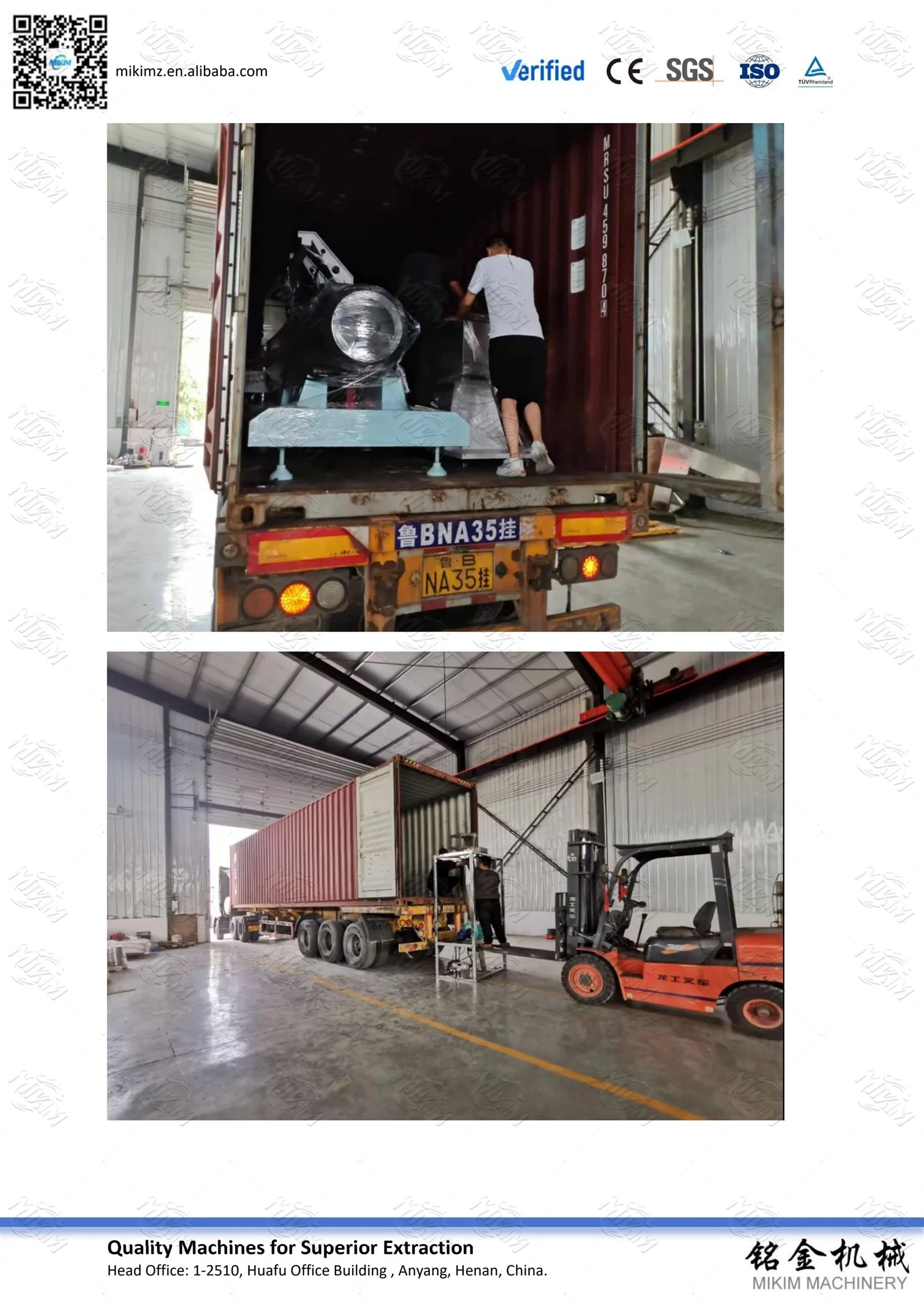
Photo Gallery




FAQ - Repeat Orders
Do MIKIM customers place repeat orders after their first machine?
Yes. This Cameroon client is a clear example. After validating the 300–350 kg/h dry-type fish feed extruder machine for 90 days in the Littoral Region, they returned with Order for a 500 kg/h fish feed pellet production plant. Repeat orders are common once the first machine proves itself under local conditions.
Ready to scale in Cameroon like this client?
Request a Tailored Quote →


