


Process Innovation And Optimization Of Cattle Feed Processing Unit
Leave a message
The following are the key aspects of process innovation and optimization involving cattle feed processing:
1. Digital formula management:
Adopt advanced digital formula management system to realize accurate control and dynamic adjustment of feed ingredients. In this way, the feed formula can be flexibly adjusted according to the needs of cattle herds at different stages to improve the palatability and nutritional balance of feed.
2. Automated raw material delivery system:
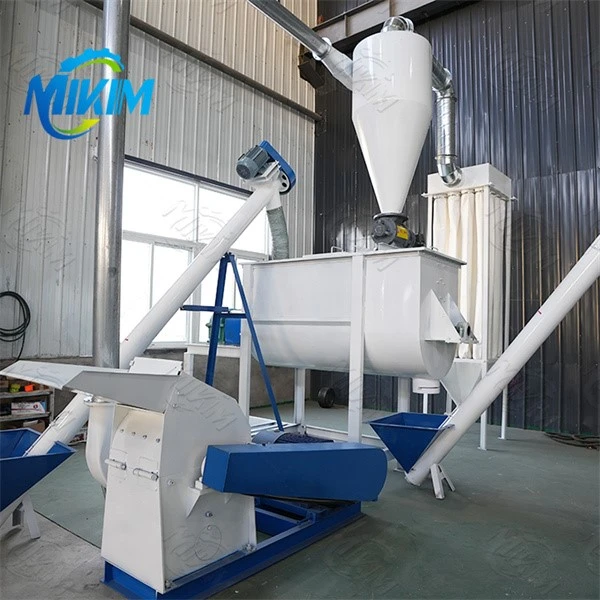
Introducing an automated raw material delivery system, through advanced sensors and control systems, to achieve automatic weighing, mixing and delivery of raw materials, reduce manual operations, improve accuracy and efficiency, and reduce the cost of feed production.
|
Model |
Capacity |
Dimension |
Weight |
|
MK-125 |
80-100kg/h |
110*35*70 cm |
95 kg |
|
MK-150 |
120-150kg/h |
115*35*80cm |
100 kg |
|
MK-210 |
200-300kg/h |
115*45*95cm |
300 kg |
|
MK-260 |
500-600kg/h |
138*46*100cm |
350 kg |
|
MK-300 |
700-800kg/h |
130*53*105cm |
600 kg |
|
MK-360 |
900-1000kg/h |
160*67*150cm |
800 kg |
|
MK-400 |
1200-1500kg/h |
160*68*145cm |
1200 kg |
| 1.Used for making animal feed pellets
2.Used for making wood pellets as fuel 3.Raw material size need 3-5mm ; Humidity :10-12% |
|||
3. Granulation process optimization:
Optimize the granulation process, select pellet machines suitable for different cattle herds, and optimize the particle size and hardness. This helps to improve the utilization rate of feed, promote digestion and absorption of cattle, and reduce the fragmentation and loss of particles.
4. Energy saving and environmental protection design:
Introducing advanced energy saving technology and environmental protection design, including waste heat recovery, efficient energy utilization, etc. This helps to reduce production costs, reduce the impact on the environment, and improve the sustainability of the breeding industry.
5. Intelligent production management system:
Adopting an intelligent production management system, through integrated sensors and control units, to achieve real-time monitoring, data collection and analysis of the production process. This helps to discover and solve problems in a timely manner and improve the stability and controllability of production.
