

What Raw Material Factors Affect The Output Of An Automatic Floating Fish Feed Making Machine?
Leave a message
floating fish food production machine on-site production video
content
I. Insufficient Raw Material Grinding Fineness Leads to Slow Feeding and Low Output
Grinding fineness is the most direct factor affecting the output of a floating fish feed extruder machine. Particles that are too coarse will cause problems such as poor feeding, high extrusion resistance, and intermittent discharge. Experimental data shows that increasing the fineness from 40 mesh to 80–100 mesh can increase output by 20%–35%. Fine powder has better flowability, enters the barrel more easily, gelatinizes faster, and results in a more stable output. Therefore, to increase output, the raw material grinding must first meet the standard.
II. Improper Raw Material Moisture Content Causes Adhesion or Blockage
Excessive moisture content will cause the raw material to stick to the screw and barrel, forming blockages and causing a sharp drop in output. Insufficient moisture content will result in high friction, a high load on the floating fish feed pellet extruder machine, and low output. The optimal raw material moisture content for dry fish feed machines is 16%–20%. Before production, test the moisture content; if it's too dry, add a small amount of water. If it's too wet, allow it to dry appropriately or add dry material. Stable moisture content is the foundation for stable output.
III. The Starch-to-Fiber Ratio in Raw Material Formulation Affects Extrusion Efficiency
The formulation directly affects the gelatinization rate and discharge smoothness. A moderate starch content (25%–35%) ensures easy gelatinization, good flowability, and high yield. Excessive fiber and insufficient starch make extrusion difficult, leading to slippage and low yield. A reasonable ratio of corn flour, wheat bran, soybean meal, and fishmeal ensures feed buoyancy while increasing yield. Optimizing the formulation is a low-cost, high-efficiency method to increase yield.
IV. Excessive Raw Material Impurities Cause Equipment Jams and Shutdowns
Impurities such as stones, plastics, metals, and lumpy raw materials can disrupt feed stability and even damage the screw, causing shutdowns. The more impurities, the shorter the effective production time and the lower the yield. Screening and impurity removal are essential before production to ensure clean raw materials. Clean raw materials allow the floating fish feed pellet making machine to operate continuously and stably, avoiding unexpected shutdowns and increasing overall output.
V. Uneven Mixing of Raw Materials Causes Inconsistent Discharge Speeds
Uneven mixing results in some areas having more powder and others more particles, leading to large fluctuations in equipment load, unstable discharge, and decreased average output. Using a mixer to thoroughly mix for 5–10 minutes, ensuring even distribution of the raw materials, can result in continuous and stable discharge and a significant increase in output.

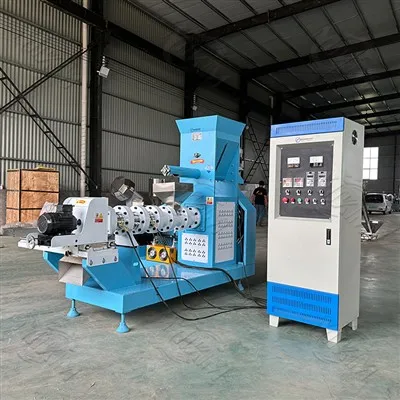
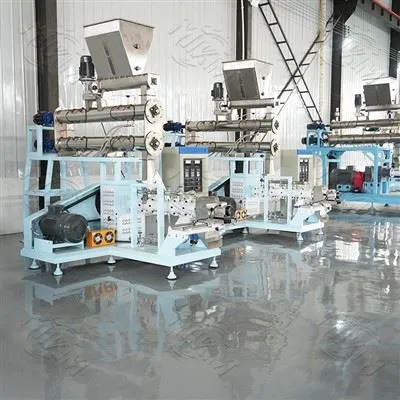
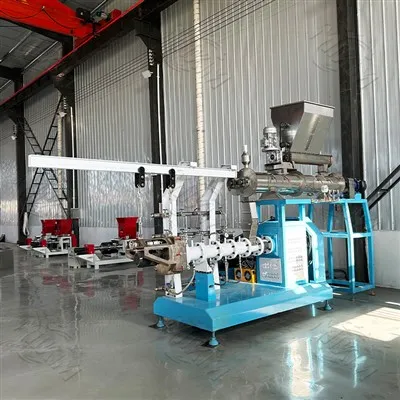
Our equipment

Why choose us?
The MIKIM's floating fish feed extruder machine is constructed entirely of food-grade 304 stainless steel, fully complying with food processing hygiene standards. It is corrosion-resistant, easy to clean, and eliminates potential contamination at the source. The core screw is made of high-quality alloy steel through special heat treatment, offering outstanding wear resistance and corrosion resistance. Combined with its integrated structural design, this significantly extends its service life. The entire machine has passed CE and ISO international authoritative certifications, aligning with global quality standards and ensuring safer and more reliable processing.
Company Introduction

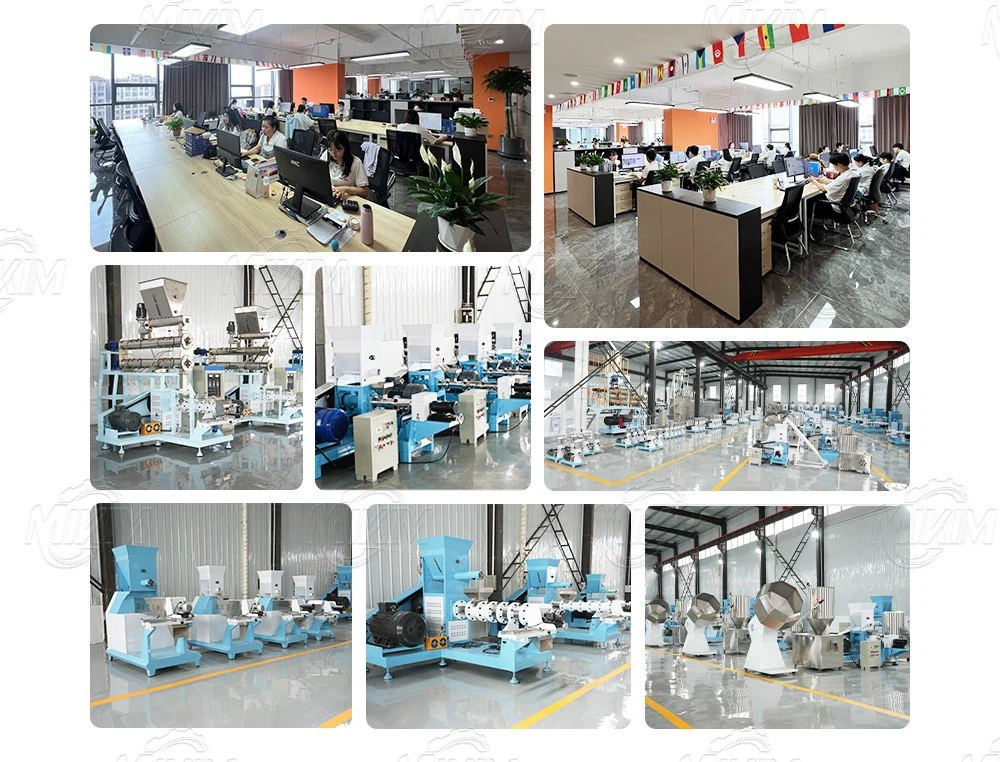
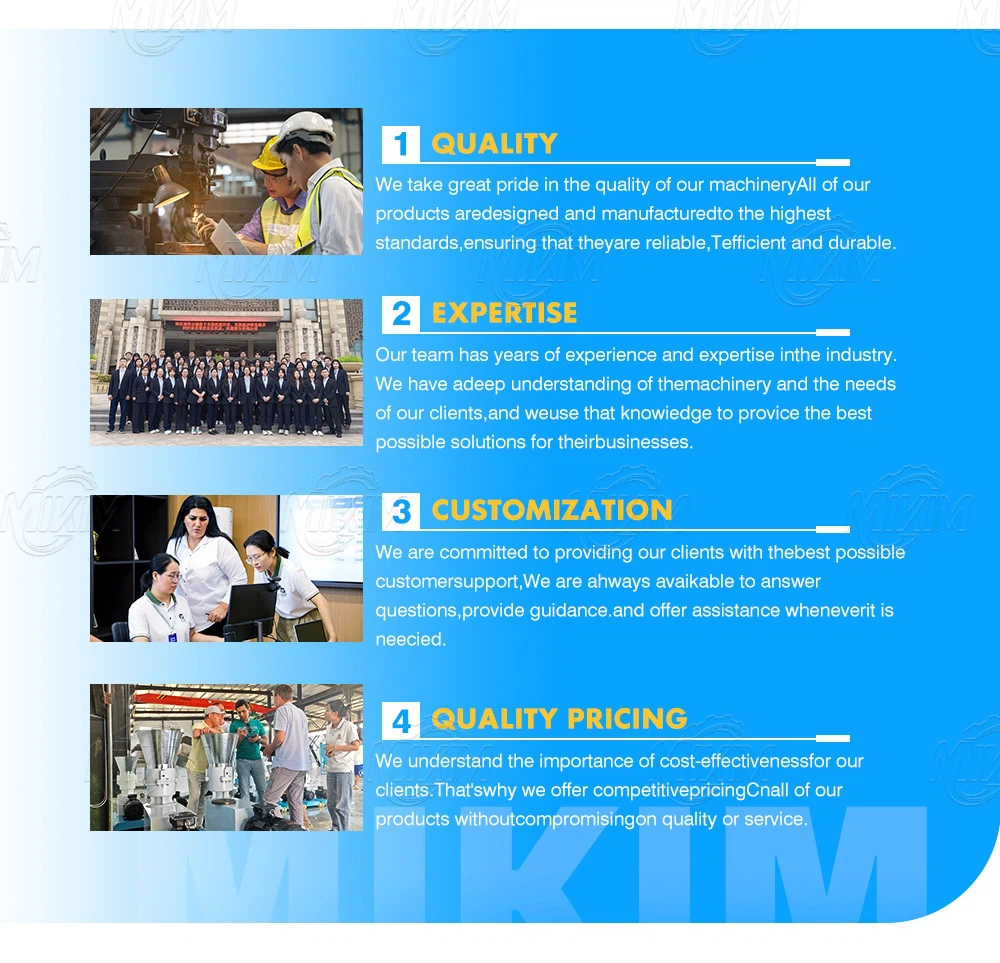

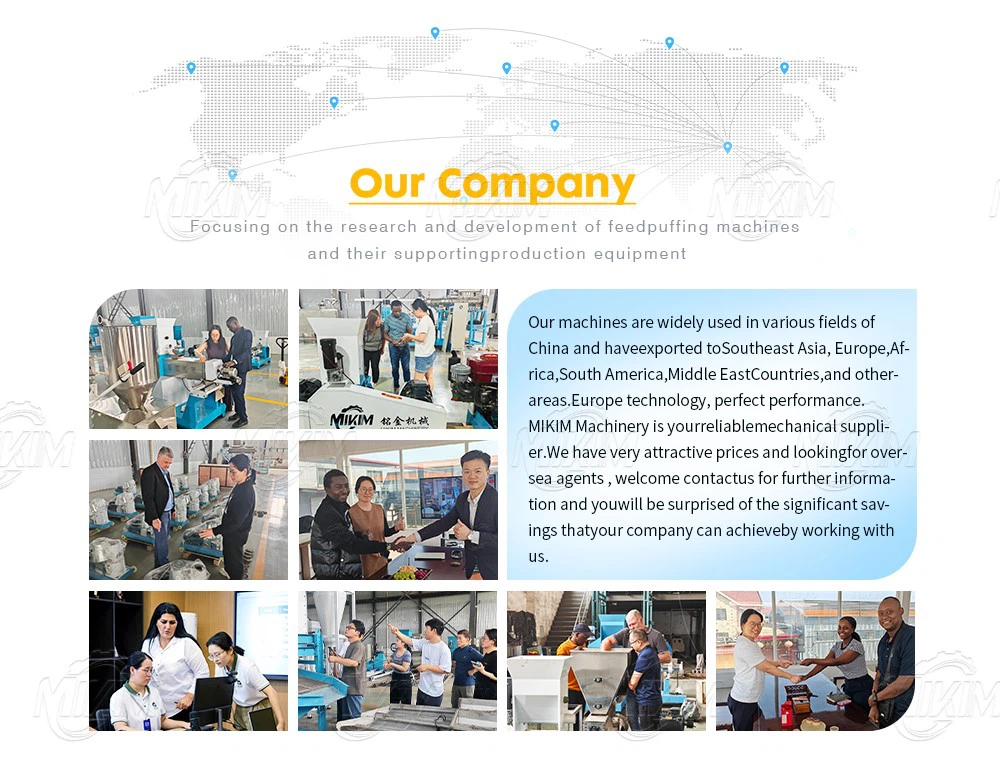
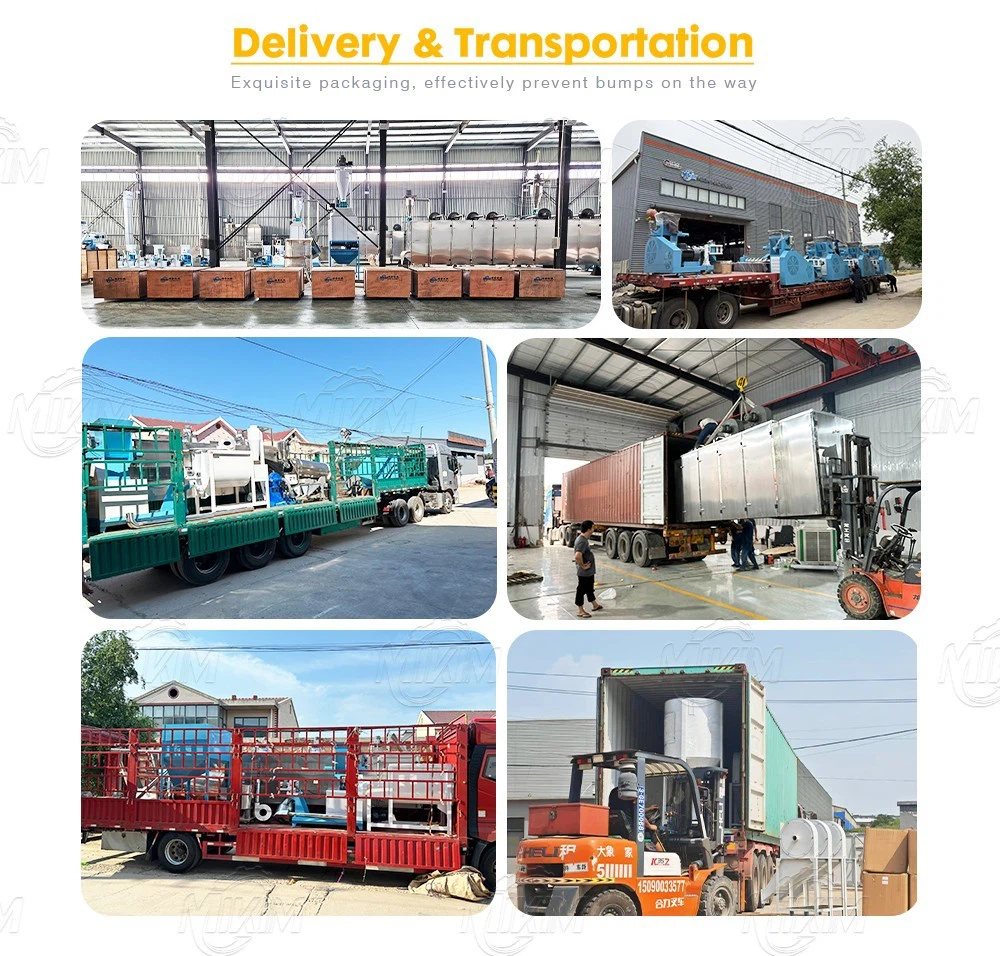
FAQ
1. What is the price of the fish feed floating pellet making machine?
The price ranges from approximately $1,500-$50,000
2. How do you deliver to customers?
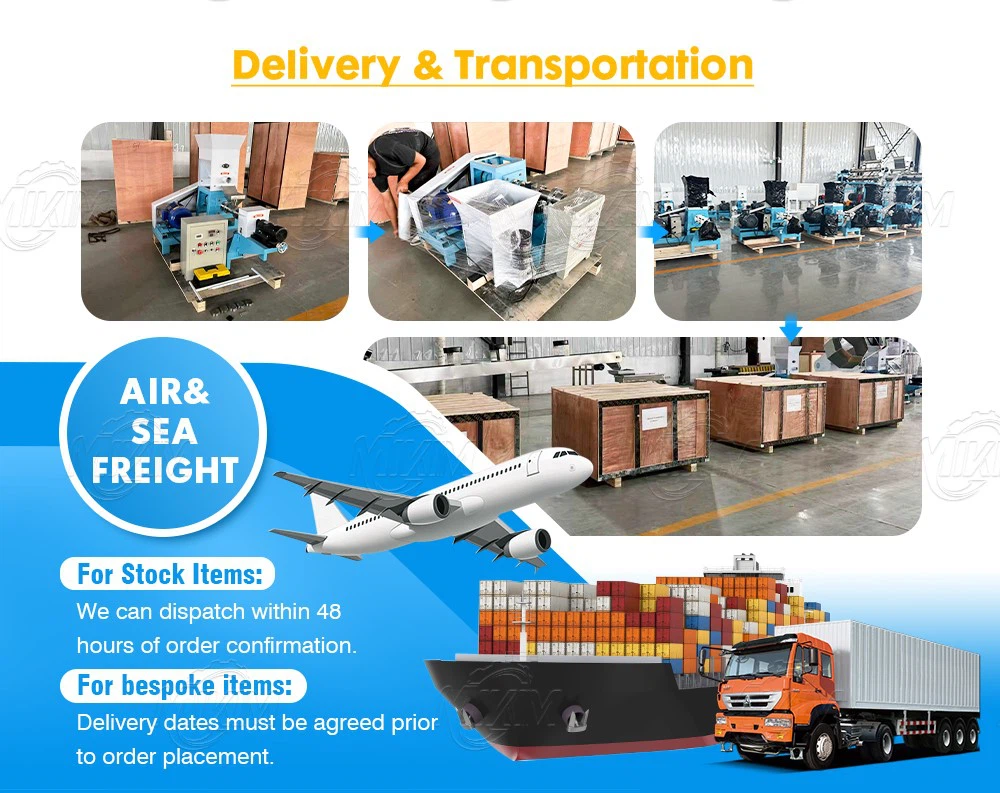
MIKIM Machinery's machinery delivery follows a complete process of "customized preparation - safe and fast delivery - precise handover - after-sales extension", with 3-day fast delivery, multi-layer protective packaging, global logistics tracking and 1-year warranty + on-site technical service to ensure that the equipment is delivered efficiently and in good condition and put into use smoothly.


