Small Fish Feed Pellet Extruder Usage Tips You Need To Know: Beginner's Getting Started Guide
Leave a message
The primary skill for beginners using floating fish feed making machines is to perform thorough pre-start equipment testing and checks. First, inspect the machine's exterior, ensuring the machine body is securely fixed with no loose parts, especially the core components of the extrusion system such as the screw, extrusion chamber, and die. Ensure these are properly installed and well-sealed to prevent raw material leakage or unstable pressure during processing. Next, conduct a no-load test run. After starting the machine, observe whether the screw rotates smoothly and without abnormal noise. Simultaneously check the temperature control system and pressure gauges to ensure they are functioning correctly-pellet machines with integrated extrusion functions are sensitive to temperature and pressure, so the instruments must be calibrated beforehand to ensure accurate readings. Finally, according to the needs of the fish being farmed, change to an appropriate die orifice diameter (e.g., 1-2mm for fry, 3-5mm for adult fish), and adjust the die pressure adjustment knob, preset the initial pressure to 3-4MPa, preparing for subsequent processing.
Raw material pretreatment techniques are fundamental to ensuring effective pellet forming and extrusion. Small fish feed pellet making machines have specific requirements for the particle size and moisture content of raw materials: the particle size needs to be controlled between 80-120 mesh; excessively large particles will increase the load on the equipment and affect the fullness of puffing; the moisture content needs to be maintained between 12%-15%; too high a moisture content will easily lead to soft pellets that are difficult to form, while too low a moisture content will result in poor material flowability, increased extrusion resistance, and even damage to the screw. Beginners can easily judge the moisture content by squeezing the raw material in their hand until it clumps together, and then crumbles when released. During pre-processing, grains, fishmeal, vegetables, and other raw materials should be mixed evenly and then crushed to ensure nutritional balance; if the raw material moisture is insufficient, a small amount of warm water can be sprayed to adjust it, avoiding direct water addition which can cause clumping.
Standardized start-up and shutdown procedures for fish feed production equipment are also essential skills for beginners. When starting the machine, it should first be run idle for 3-5 minutes until the machine temperature reaches the preset value (puffing processing is usually 120-140℃) and the pressure stabilizes before slowly adding raw materials to the feed hopper, avoiding large-scale feeding at once which can cause equipment blockage. During processing, the pressure gauges and pellet forming status must be monitored in real time. If the pellets crack or become loose, it may indicate insufficient pressure or excessive temperature, requiring timely fine-tuning. If the equipment makes abnormal noises or vibrates, it should be stopped immediately for inspection. When stopping the machine, feeding must be stopped first, and the power should only be turned off after all the material in the extrusion chamber has been completely discharged to avoid material residue causing blockages during the next startup. After stopping the machine, the equipment must be cleaned promptly, especially any residual material in the extrusion chamber and die head, to prevent mold growth that could affect subsequent use.
Why choose us?
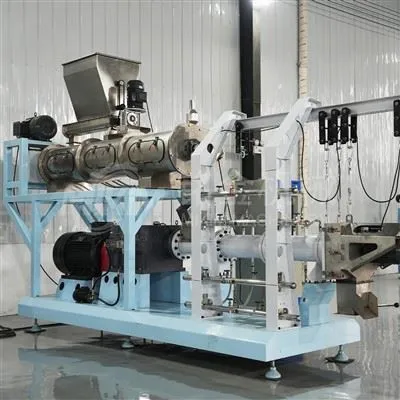
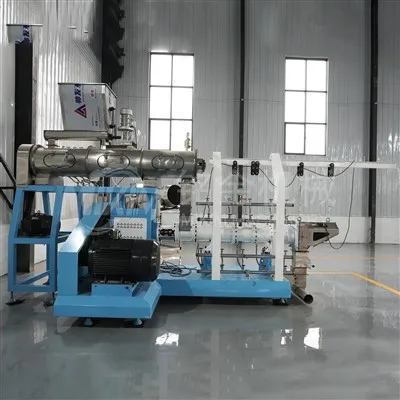
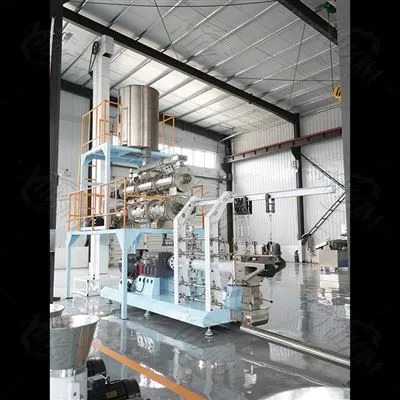
The MIKIM's floating fish feed extruder machine is constructed entirely of food-grade 304 stainless steel, fully complying with food processing hygiene standards. It is corrosion-resistant, easy to clean, and eliminates potential contamination at the source. The core screw is made of high-quality alloy steel through special heat treatment, offering outstanding wear resistance and corrosion resistance. Combined with its integrated structural design, this significantly extends its service life. The entire machine has passed CE and ISO international authoritative certifications, aligning with global quality standards and ensuring safer and more reliable processing.
Our equipment

Our Services
We offer:
One-Year Whole Machine Warranty Service
On-site Installation, Commissioning, and Technical Guidance
24/7 Online Technical Support
Qualifications and Honors

Customer visit

FAQ
1. What is the price of the small fish food making machine?
The price ranges from approximately $1,500-$50,000
2. How do you deliver to customers?
MIKIM Machinery's machinery delivery follows a complete process of "customized preparation - safe and fast delivery - precise handover - after-sales extension", with 3-day fast delivery, multi-layer protective packaging, global logistics tracking and 1-year warranty + on-site technical service to ensure that the equipment is delivered efficiently and in good condition and put into use smoothly.