

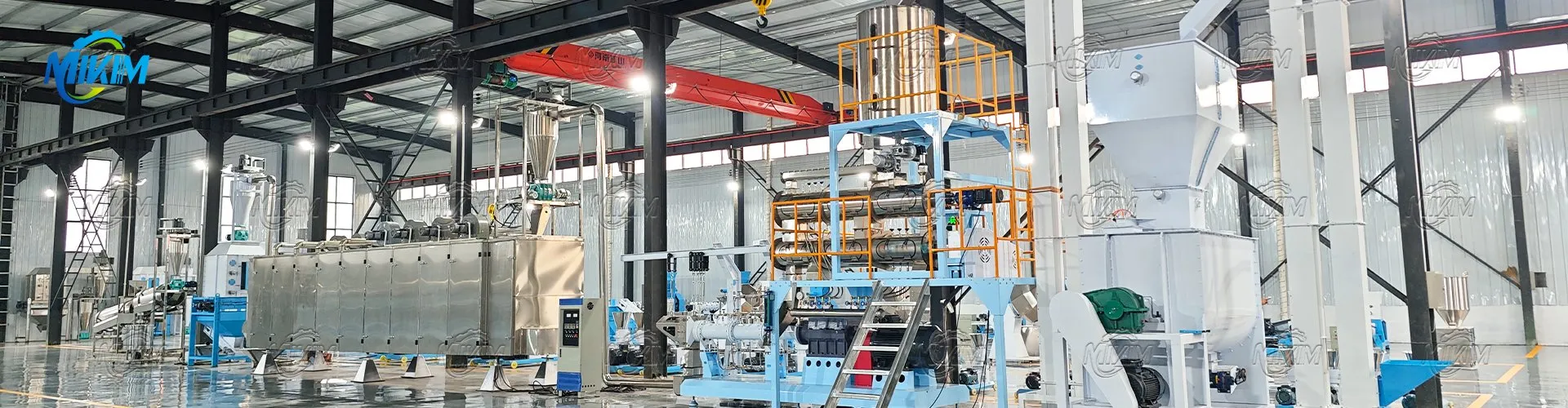
Special Factors Affecting The Pelleting Effect Of Floating Fish Feed Machines And Key Control Points.
Leave a message
The viscosity and composition of raw materials are fundamental to foam resistance. Specialized binders such as alginate and konjac flour need to be added to fish and shrimp feed, with the addition amount controlled at 2%-3%. This significantly improves the water stability of the pellets. If the binder is insufficient, the feed easily disperses in water. Animal protein raw materials such as fishmeal and shrimp meal account for 40%-50%. Their protein gelling effect enhances the pellet structure, but excessive heating will cause protein denaturation and loss of binding ability. Therefore, the temperature of raw material processing must be controlled. In addition, the content of coarse fiber raw materials (such as wheat bran) needs to be controlled below 5%. Too high a content will destroy the dense structure of the pellets and reduce foam resistance.
The pelleting temperature and pressure of the floating fish food mill are key control parameters. The pelleting temperature of fish and shrimp feed needs to be precisely controlled between 95-105℃. This temperature allows the starch to fully gelatinize (gelatinization rate ≥85%), forming a stable network structure, while avoiding high temperatures that could destroy active ingredients such as EPA and DHA in the fishmeal. The pellet mill uses a twin-screw design, increasing the extrusion pressure to 12-15 MPa, 1.5 times that of poultry feed. This high pressure ensures tight particle binding, reducing moisture penetration channels. A specialized ring die with a small aperture (2-3 mm) and high compression ratio (1:8-1:10) is selected to ensure dense pellets. The die material is wear-resistant stainless steel to prevent corrosion in seawater environments from affecting aperture accuracy.
Post-processing is crucial for pelleting results. Freshly pelleted fish and shrimp feed undergoes segmented drying in a rotary drum dryer, with the temperature gradually increasing from 70℃ to 85℃, ultimately controlling the moisture content to 12%-13%. Excessive moisture promotes mold growth, while insufficient moisture makes the pellets brittle. After drying, low-temperature cooling is used to lower the temperature to room temperature, preventing sudden temperature drops that could cause cracking. Some high-grade fish and shrimp feeds require coating treatment, where a waterproof film is sprayed onto the pellet surface to further improve foam resistance. The coating temperature is controlled at 40-50℃ to prevent high temperatures from damaging the coating components. In addition, a foam resistance test is required after granulation. Each batch is sampled and placed in clean water. After 30 minutes, the collapse is observed. If the test is unsatisfactory, the granulation temperature and the amount of binder added are adjusted.
Why choose us?
The MIKIM extruder is constructed entirely of food-grade 304 stainless steel, fully complying with food processing hygiene standards. It is corrosion-resistant, easy to clean, and eliminates potential contamination at the source. The core screw is made of high-quality alloy steel through special heat treatment, offering outstanding wear resistance and corrosion resistance. Combined with its integrated structural design, this significantly extends its service life. The entire machine has passed CE and ISO international authoritative certifications, aligning with global quality standards and ensuring safer and more reliable processing.
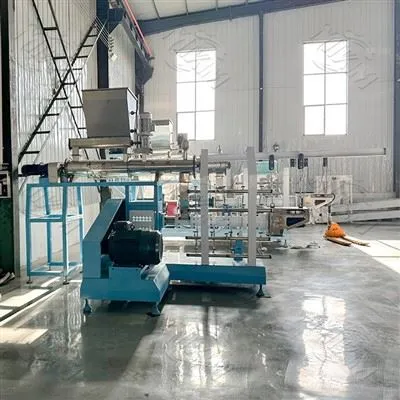
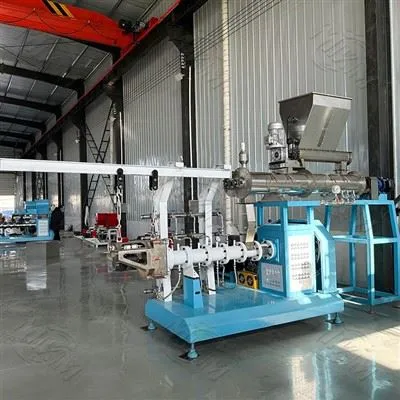
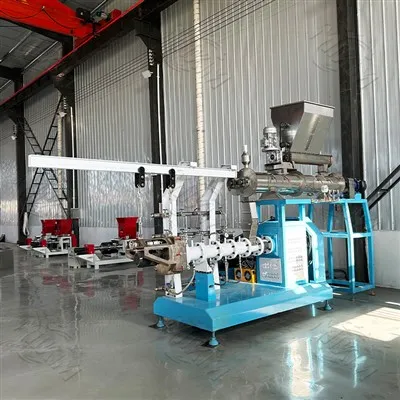
Our equipment

Our Services
We offer:
One-Year Whole Machine Warranty Service
On-site Installation, Commissioning, and Technical Guidance
24/7 Online Technical Support
Qualifications and Honors

Customer visit

FAQ
1. What is the price of the pet feed pellet extruder?
The price ranges from approximately $3,500-$50,000
2. How do you deliver to customers?
MIKIM Machinery's machinery delivery follows a complete process of "customized preparation - safe and fast delivery - precise handover - after-sales extension", with 3-day fast delivery, multi-layer protective packaging, global logistics tracking and 1-year warranty + on-site technical service to ensure that the equipment is delivered efficiently and in good condition and put into use smoothly.


