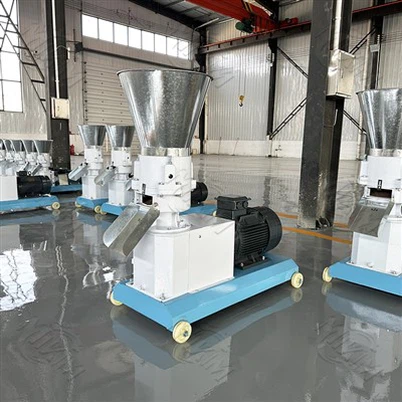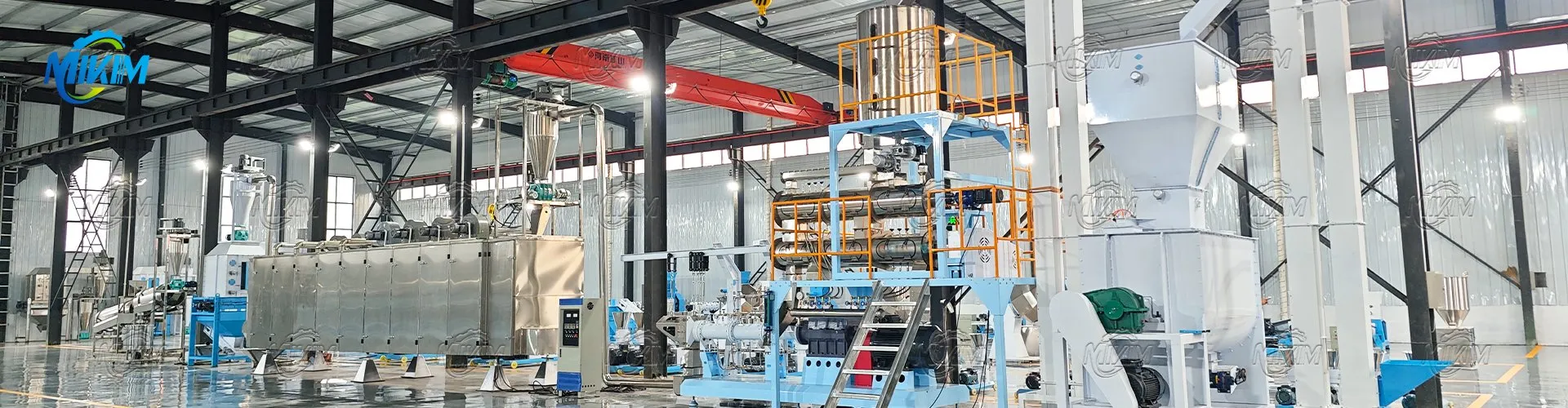
Unfinished Animal Feed Pellet Production Line
Leave a message
Currently, many animal feed mills still rely on manual supervision of their production lines – workers have to stand by the grinder to check the fineness and adjust parameters at the pellet mill, which is tiring and prone to errors. However, with the increasing availability of intelligent equipment in recent years, some say that in the future, feed production lines will be "unattended," with machines completing the entire process from raw materials to finished products, even automating the fine production of fish and shrimp feed. Will this really come to fruition?
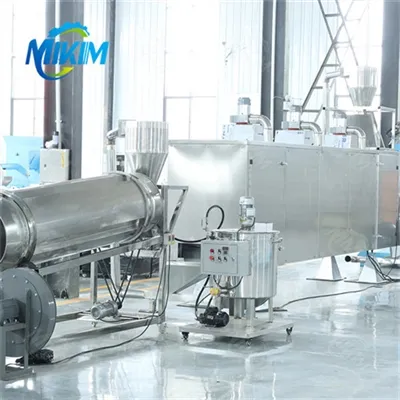


Intelligentization of aquatic feed production lines: 3 specific directions
1. Automated Raw Material Processing: No Need for Manual Moisture Measurement or Formula Calculation
The "intelligent raw material warehouse" in future fish and shrimp feed production lines will be equipped with sensors that can automatically measure the moisture content of corn and fishmeal (for example, if the corn moisture content exceeds 15%, the sensor will alarm and automatically start the drying device). During ingredient mixing, manual weighing will be unnecessary; the intelligent mixing scale will automatically adjust the formula according to the fish and shrimp species (for example, automatically using a 40% protein formula for bass feed and a 28% protein formula for grass carp feed), with an error margin of half that of manual methods, and it will also prevent the addition of incorrect ingredients.
2. Automatic control of the forming process: Particle size and hardness are automatically adjusted.
Currently, fish and shrimp feed production requires manual die changing and particle size adjustment. Future intelligent pellet mills/expanders will "recognize materials and adjust parameters"-for example, when producing 10mm sinking tilapia feed, the machine will automatically select the corresponding die and adjust the pressure of the rollers (ensuring sufficient particle hardness so the particles don't crumble after soaking). If there is a sudden increase in broken particles during production, the machine will automatically slow down the feeding speed and check for blockages in the ring die, eliminating the need for manual shutdown and troubleshooting.
Benefits of intelligent automation: Extremely practical for aquatic feed mills
Intelligent automation can reduce labor costs (where 3 workers were originally needed for one production line, now only 1 worker manages several lines), and it can also improve feed quality (human parameter adjustment error is 5%, while intelligent parameter adjustment error is within 1%). For example, the uniformity of fish and shrimp feed pellets is improved, resulting in fish growing more uniformly, making fish farms more willing to buy from them.
Why choose us?
MIKIM's expertise is comprehensive. From semi-automated production lines suitable for small workshops (120-500 kg capacity per hour) to fully automated production lines required by medium and large factories (up to 2 tons capacity per hour), and even exclusive production solutions for specific categories such as shrimp, crab, and ornamental fish, it can provide customized services based on the user's site size and production targets. This "on-demand" flexibility allows practitioners of different sizes to find suitable equipment configurations.
Our main products
animal feed extruder


FAQ
1. What is the price of the animal floating meal extruder line?
The price ranges from approximately $13,000-$39,000
2. Do you provide maintenance services for your customers?
Yes, we offer comprehensive after-sales maintenance services to our customers.