What Are The Process Steps Of A Complete Set Of Aquatic Feed Equipment Production Line?
Leave a message
A complete set of aquatic feed equipment production line mainly includes cleaning equipment, batching and mixing system, crushing system, puffing and granulation equipment and subsequent processing equipment, etc.
Cleaning equipment: used to remove impurities in raw materials, such as straw, stone, metal, etc., to ensure the quality of raw materials and protect subsequent processing equipment. Common cleaning equipment includes cylindrical primary cleaning screen, permanent magnetic cylinder, etc.
Batching and mixing system: various raw materials are accurately batched and mixed according to formula requirements. This system usually includes equipment such as batching bin, automatic control system and mixer to ensure the accuracy of batching and uniformity of mixing.

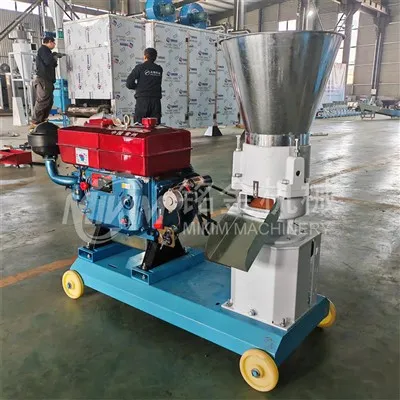
| Model | 40 | 60 | 70 | 80 |
| Power | 5.5KW | 15KW | 18.5KW | 22KW |
| Yield | 120-150 | 180-220 | 240-300 | 400-500 |
| Weight | 350KG | 450KG | 500KG | 580KG |
| Size(mm) | 1500*1100*1100 | 1600*1300*1250 | 1600*1300*1250 | 1800*1400*1350 |
Crushing system: used to reduce feed particle size and increase its specific surface area to improve animal digestibility and feed utilization. Crushing equipment includes water drop type crusher, ultrafine crusher, etc., which can be selected according to raw material characteristics and production needs.
Expanding granulation equipment: Expanded aquatic feed is to feed powdered feed raw materials into the extruder, and then go through the processes of mixing, conditioning, heating, pressurizing, extruding die holes, and sudden pressure reduction to obtain a fluffy and porous pellet feed. This step is the core link in the production of aquatic feed, which directly affects the quality of the feed and the digestion and absorption of animals. Subsequent processing equipment: including drying, cooling, screening, packaging and other equipment, which are used to further process the feed after expansion and granulation to meet the needs of storage and transportation.