What Maintenance Issues Are Encountered in Aquarium Floating Fish Feed Extruder Production Lines?
Leave a message
Common maintenance issues with the electrical system of a fish feed pellet making machine can be categorized into three types. First, motor failure, manifesting as overheating, abnormal noise, or inability to start. This is often caused by overload (excessive feeding speed), poor heat dissipation (fan blockage, high ambient temperature), or insufficient lubrication and wear of bearings. Some older motors may also experience leakage due to aging windings, posing a safety hazard. Second, control cabinet and wiring failures. The dusty and humid environment of feed production can easily lead to corrosion and damage to the insulation layer of wiring, causing short circuits, or oxidation of contactor and relay contacts, resulting in poor contact, manifesting as abnormal equipment start-up and shutdown, and parameter fluctuations. Third, sensor and control system failures. A malfunctioning temperature sensor can lead to uncontrolled extrusion temperature, and a faulty level sensor can cause uneven feeding. These problems directly affect feed quality.
Troubleshooting should follow the principle of "power off first, then troubleshoot; simple problems first, then complex ones." When the motor of a fish food making machine overheats, first check if the feed rate is overloaded. If normal, clean the dust from the cooling fan, check the bearing lubrication, and add lithium-based grease if insufficient. Replace severely worn bearings. If the motor fails to start, use a multimeter to check the power line voltage and winding continuity. After ruling out circuit faults, determine if the motor is burnt out. For control cabinet malfunctions, regularly open and clean the dust, wipe the oxide layer on the contacts with alcohol, check the wiring connections for tightness, and replace any damaged insulation. For sensor malfunctions, calibrate with standard instruments. If the temperature sensor error exceeds ±3℃, replace it to ensure accurate data.
The core of preventing electrical system problems is routine maintenance. Check the motor temperature and wiring appearance before starting the machine daily. Clean the control cabinet and motor dust weekly. Check the insulation performance of the wiring and sensor accuracy monthly. Conduct a comprehensive overhaul of contactors and relays quarterly. Simultaneously, optimize the production environment by installing dustproof and moisture-proof devices around electrical equipment to prevent direct corrosion from dust and moisture, reducing the failure rate at its source.
Why choose us?
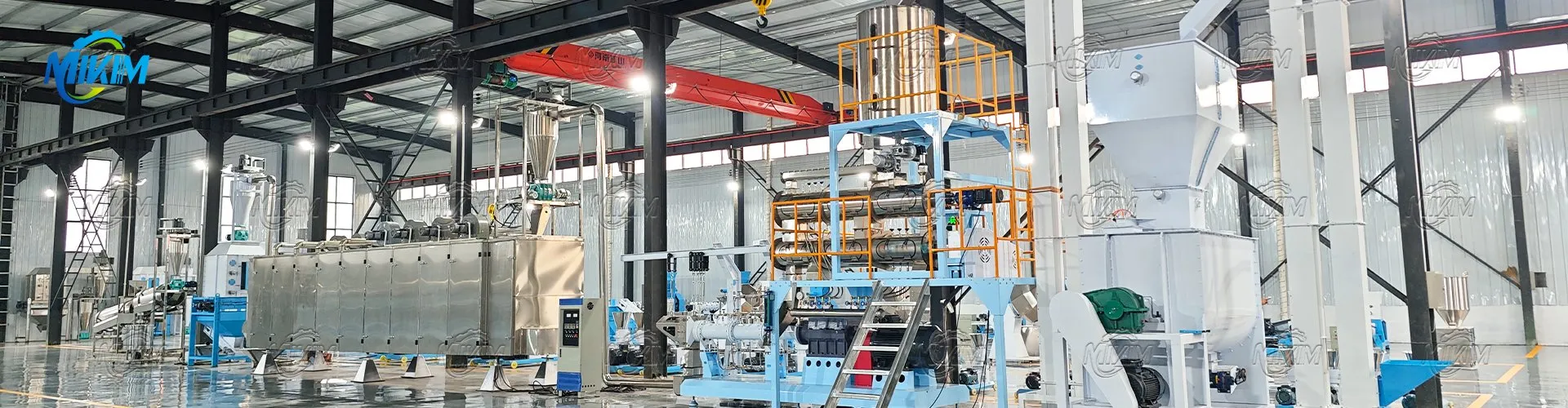
The MIKIM's floating fish feed extruder machine is constructed entirely of food-grade 304 stainless steel, fully complying with food processing hygiene standards. It is corrosion-resistant, easy to clean, and eliminates potential contamination at the source. The core screw is made of high-quality alloy steel through special heat treatment, offering outstanding wear resistance and corrosion resistance. Combined with its integrated structural design, this significantly extends its service life. The entire machine has passed CE and ISO international authoritative certifications, aligning with global quality standards and ensuring safer and more reliable processing.
Our equipment


Our Services
We offer:
One-Year Whole Machine Warranty Service
On-site Installation, Commissioning, and Technical Guidance
24/7 Online Technical Support
Qualifications and Honors

Customer visit