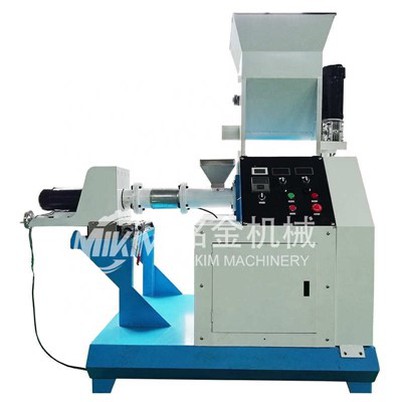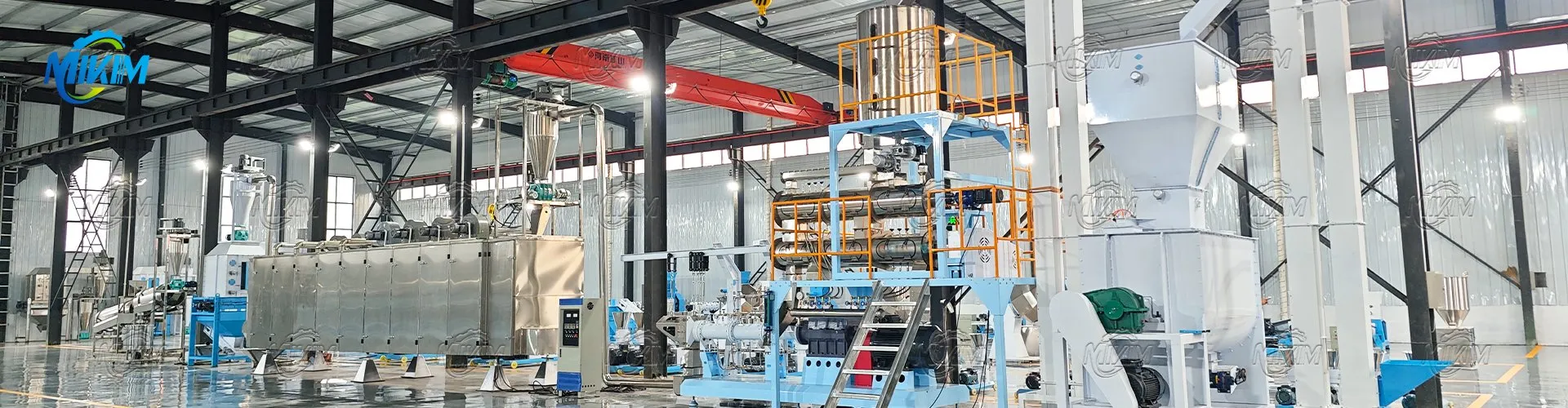
What Pitfalls Are Common When Selecting Automatic Poultry Feed Pellet Equipment?
Leave a message
The selection of a Cattle Feed Complete Production Line involves multiple dimensions, including raw material characteristics, livestock scale, and production processes. Common pitfalls in selection mainly lie in equipment type mismatch, capacity imbalance, and neglect of maintenance. Accurate identification and avoidance are crucial for selecting cost-effective equipment.
The first common pitfall is the mismatch between equipment type and raw material characteristics. This is the most frequent problem. Many farmers choose toothed claw crushers for processing concentrates and straw, but due to the equipment's weak ability to handle coarse fibers, problems such as feed blockage, incomplete crushing, and motor overload and burnout occur. The solution: Recognize that cattle and sheep feed is primarily coarse fiber; therefore, firmly choose a hammer mill crusher with at least 12 hammers and a screen aperture of at least 6mm. If processing silage, choose equipment made of corrosion-resistant materials to prevent acidic substances from corroding the machine body. Another type of mismatch is the use of livestock pellet mills to produce cattle and sheep feed. Livestock pellet mills have small die holes and high pressure, producing overly hard pellets that are difficult for cattle and sheep to chew, affecting rumen digestion. Specialized cattle and sheep pellet mills with die hole diameters of 3.5mm or larger and pressure controlled at 3-5MPa are necessary.
The second pitfall is the imbalance between production capacity and the scale of farming, which can be divided into "using large machines for small purposes" and "using small machines for large purposes." "Using large machines for small purposes" refers to small-scale farming (less than 50 head) purchasing large agricultural feed pellet equipment, resulting in equipment utilization of less than 30%, increasing both initial investment and maintenance costs. A solution is to calculate using the formula: "Daily equipment output = Daily feed requirement for cattle and sheep × 1.2". For example, if 50 cattle require 1000kg of feed per day, equipment with a daily output of 1200kg would be sufficient. The "small machine for big problems" approach, such as using small equipment in large-scale farming (over 200 head), leads to the equipment running at full capacity 24/7, making it prone to malfunctions and affecting feed supply. The solution is to choose equipment with strong continuous operation capabilities and equip it with backup equipment (such as a backup grinder) to avoid production stoppages due to single-unit failure.
The third pitfall is neglecting vulnerable parts and after-sales service. Many farmers only focus on equipment price, purchasing equipment from niche brands. As a result, vulnerable parts (such as hammers and die heads) are difficult to obtain, and after-sales response is slow when equipment malfunctions, delaying production. The solution is to prioritize well-known brands such as Zhengchang and Muyang, which have service outlets throughout the country and have ample supplies of vulnerable parts. Before purchasing, confirm the after-sales service commitment with the manufacturer, including the warranty period (usually more than one year for core components) and repair response time (within 24 hours).
The fourth pitfall is neglecting site and power conditions. Some farmers only realize after purchasing equipment that their space is too small to install it, or that the power supply voltage is incompatible (e.g., the equipment requires 380V, but the site only has 220V). To avoid this: measure the site dimensions before selecting equipment to confirm installation space; clarify the site's power supply type and prioritize equipment with compatible voltage. If 380V power is required, contact the power company in advance to increase capacity.


about Us
We offer:
One-Year Whole Machine Warranty Service
On-site Installation, Commissioning, and Technical Guidance
24/7 Online Technical Support
Qualifications and Honors

Customer visit

FAQ
1. What is the price of the Farm pellet production line?
The price ranges from approximately $7,500-$30,000
2. Do you provide maintenance services for your customers?
Yes, we offer comprehensive after-sales maintenance services to our customers.