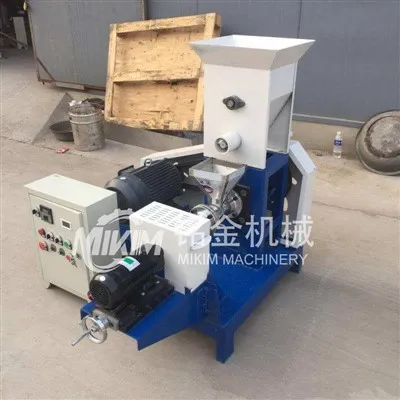
500-800kg/h of the Twin-Screw floating fish feed extruder machine test
Leave a message
What This Test Actually Proves?
This factory test demonstrates a 500–800kg/h Twin screw floating fish feed pellet making machine running under real production conditions. It verifies not just output, but continuous extrusion stability, feed expansion quality, and floating performance.
For serious buyers, this is the difference between a brochure promise and a machine that actually earns money.
Why Twin-Screw Extruders Dominate Medium-Scale Production
Compared with single-screw machines, twin-screw systems behave like a well-rehearsed duet-materials are mixed, cooked, and pushed forward with precision.
Key advantages shown in the test:
- Stronger mixing and cooking ability
- More stable output at 500–800kg/h
- Better control of floating feed expansion
- Lower risk of blockage when processing complex formulas
Key Technical Signals to Watch in the Test Video
1. Stable High-Capacity Output
The machine maintains continuous production within 500–800kg/h without fluctuation.
What to look for:
- No sudden drop in output
- Smooth discharge flow
- Consistent motor load
2. Floating Feed Quality
Good floating feed should:
- Float on water for 12–24 hours
- Have uniform pore structure
- Maintain shape without breaking
3. Screw Configuration Performance
Twin-screw design allows flexible control of:
- Pressure
- Temperature
- Shear force
- In the test, this results in:
- Even cooking of raw materials
- Uniform pellet density
- Adaptability to different formulas
Raw Material Compatibility
The tested machine supports a wide range of formulations:
- Fish meal / soybean meal
- Corn flour / wheat flour
- Rice bran / cassava powder
- Vitamin and mineral premix
- Moisture range before extrusion: 20%–30%
Complete Production Line
A typical 500–800kg/h floating fish feed line includes:
Crushing system
Mixing system
Twin screw floating fish feed pellet extruder machine
Dryer
Oil spraying machine
Cooling system
Common Buyer Questions
Is 500–800kg/h suitable for my business?
Yes for medium-scale commercial production
Suitable for feed factories supplying local markets
Why choose twin-screw over single-screw?
Better for high-capacity and complex formulas
More stable operation in long production runs
Higher-quality floating feed output
Does floating rate really matter?
Absolutely. Poor floating feed leads to:
- Feed waste
- Water pollution
- Higher farming costs
How to Evaluate the Test Like an Expert
When watching the test video, focus on:
- Feeding uniformity (no interruption)
- Extrusion continuity (no shaking or clogging)
- Pellet expansion consistency
- Final feed floating behavior in water
- Machine vibration and noise level
Conclusion
If your goal is stable, medium-scale floating fish feed production, the 500–800kg/h Twin screw floating fish feed pellet mill is a strong choice.
This test confirms:
Reliable continuous output
High-quality floating pellets
Adaptability to different feed formulas
In short, it's not just a machine-it's a production backbone that keeps your feed line running like a well-tuned engine.
Company Profile