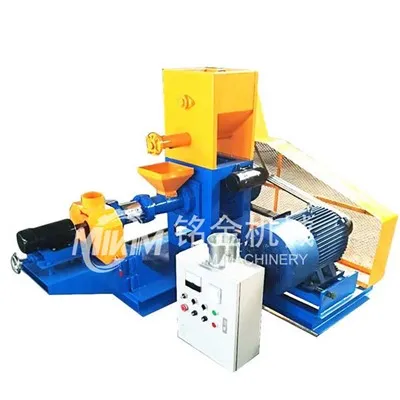
Advantages of Feed Pellet Machines: Five Key Benefits for Feed Producers
Leave a message

Pelleted feed is produced by forcing conditioned, ground compound feed through a die so that it leaves the machine as a dense, uniform cylinder. Compared with mash, the pellet changes how the feed behaves in the animal, in the storage bin and in the transport truck. The five advantages below are the ones buyers ask about most often in equipment selection.
1. Digestibility Rises Through Steam Conditioning
Before the meal reaches the die it passes through a conditioner where saturated steam raises temperature and moisture. Under the combined action of heat, water and mechanical shear, starch gelatinises, the crystalline structure of the granule is disrupted, protein is partially denatured and cell wall material is softened. Digestive enzymes have far easier access to the substrate, so a higher proportion of the ingested energy and protein is actually absorbed. The same conditioning step reduces microbial load on the raw materials.
2. Complete Nutrition and Less Selective Feeding
Mash allows animals to sort: they pick out the maize and leave the fines carrying the vitamins, minerals and amino acids. A pellet locks the formula together, so every bite carries the designed nutrient profile. Lab analysis of a finished pellet is usually performed for crude protein by the Kjeldahl method of ISO 5983-2, for crude fibre by ISO 6865 and for moisture by ISO 6496, which is how a producer verifies that the formula delivered to the die survived the process.
3. Feed Hygiene, Lower Dust and No Segregation
Pelleting reduces the fines fraction that becomes airborne during filling and feeding, which improves the working environment in the barn and reduces losses from the silo. Because the components are bound in one particle, the formula does not segregate during pneumatic conveying or in a feed truck over a long haul. Combined with the thermal treatment in the conditioner, the result is a product with a longer safe storage window than the equivalent mash.
4. Storage and Handling Economics
Density is the key commercial variable. A pellet occupies a smaller volume per tonne than mash, so bulk bins, bags and transport are used more efficiently and the cost per tonne delivered falls. Feeding trials repeatedly show a lower feed conversion ratio for pellets, which offsets the extra energy and die wear that pelleting costs. Pellet durability is quoted as a pellet durability index measured in a tumbling-can tester, and it is the single best indicator of how much fine will be generated between the mill and the trough.
5. Selection Data for Machine Sizing
Capacity must be matched to roller configuration, not to motor power alone. Table 1 shows a representative flat die range used for on-farm and small commercial production.
| Model | Rollers | Capacity |
|---|---|---|
| MK-125 | 2 rollers | 60-75 kg/h |
| MK-150 | 2 rollers | 75-140 kg/h |
| MK-160 | 3 rollers | 100-150 kg/h |
| MK-180 | 4 rollers | 125-160 kg/h |
| MK-210 | 2 rollers | 250-300 kg/h |
| MK-230 | 3 rollers | 300-350 kg/h |
| MK-260 | 3 rollers | 400-500 kg/h |
| MK-300 | 4 rollers | 500-600 kg/h |
| MK-400 | 4 rollers | 1000-1250 kg/h |
Two practical notes on this table: stated capacity assumes a maize-soybean formula at the correct grind fineness and moisture; a high fat or high fibre formula will reduce throughput. Where capacity demand fluctuates, a larger die with fewer rollers often gives better pellet quality than a small die pushed to its limit.
Frequently Asked Questions
Q: What is the difference between a flat die and a ring die pellet machine?
A: A flat die machine uses a horizontal die with rollers running on top, which suits small and medium output and is easy to maintain. A ring die machine forces material from inside a vertical ring, gives a more uniform pellet and is the normal choice above roughly one tonne per hour.
Q: What moisture should the raw material have before pelleting?
A: Mash is usually held around 12-14% moisture, and the conditioner then adds a small amount of moisture as saturated steam. Excess moisture produces soft pellets that crumble in the cooler.
Q: How does pellet diameter affect the animal?
A: Pellet diameter should match mouth size. Poultry take crumbs and small pellets, growing pigs take intermediate sizes, and fish are usually fed pellets sized to their gape with the fines screened out.
Q: How is pellet quality measured at the factory?
A: The usual indicator is the pellet durability index obtained in a tumbling-can test, supported by a visual check for cracks and a moisture determination of the cooled pellet.
Q: Which parts wear fastest and need scheduled replacement?
A: Die and rollers wear together and should always be changed as a set, with the roller shell gap reset afterwards. Conditioner seals and screens are the next items in the maintenance schedule.