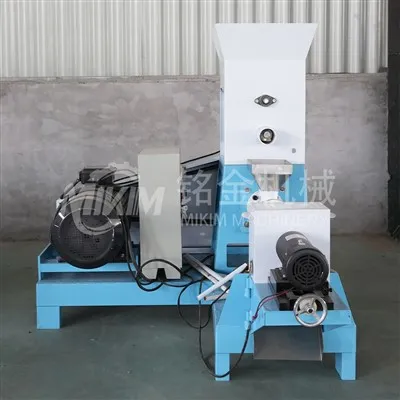
Are there significant differences in raw material processing between dry extrusion feed pellet mills and wet feed extruders?
Leave a message
First, let's clarify the core differences: Dry-feed extruders "rely on dry materials to work," while wet extruders "cannot function without water or steam." Dry extruders have extremely strict requirements for the moisture content of the raw materials, which must be controlled within 10%-12%. For example, dried cornmeal or dried fishmeal can be poured in directly without adding extra water. If the raw materials are slightly damp, they must be spread out and dried beforehand, otherwise they will stick to the machine cavity and cause jams.
Wet-feed extruders are different. The moisture content of the raw materials can be more lenient, up to 15%-20%, and even slightly moist fresh raw materials can be used directly. During operation, steam or water must be introduced into the machine cavity to adjust the raw materials to a state where they "crumble together but don't crumble when released." For example, when mixing fresh fish viscera and cornmeal to make feed, a wet extruder can process it directly, while a dry extruder requires first drying and grinding the fresh fish viscera, adding several cumbersome steps.
The pretreatment steps also differ: dry fish food pellet extruders only need to crush the raw materials and sieve out impurities, without needing to prepare additional water or steam equipment; wet machines for making fish feed require crushing the raw materials and connecting to steam pipes or preparing water supply devices. Beginners may find it troublesome at first, but it is more adaptable to moist raw materials and is more worry-free to use in rainy southern regions.


about Us
Customer visit

Certificate of Honor

FAQ
1. What is the price of the fish feed pellet mill?
The price ranges from approximately $8,000-$34,000
2. Do you provide maintenance services for your customers?
Yes, we offer comprehensive after-sales maintenance services to our customers.