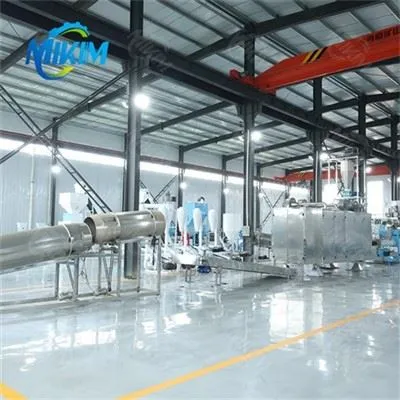
Dry Kibble Dog and Cat Feed Production Line Guide
Leave a message
What Is a Dry Kibble Production Line?
A dry kibble production line is an automatic system that makes dog and cat food pellets with a moisture content low enough to store without refrigeration. The line combines a grinder, a mixer, a twin screw extruder, a dryer, a fat coater, a cooler, and a packing scale. The extruder is the center of the line: it cooks and expands the dough so the kibble has the porous structure that makes it easy to chew and digest. Everything downstream, drying, coating, cooling, and packing, exists to stabilize and finish the extruded pieces.
Extruder Model Range and Capacity
Pet food extruders are sized by screw diameter, and each size corresponds to a capacity class. The following range is typical of automatic kibble lines:
| Extruder model | Installed power | Capacity |
|---|---|---|
| 65 | 74 kW | 120-180 kg/h |
| 75 | 110 kW | 300-500 kg/h |
| 85 | 160 kW | 800-1,200 kg/h |
| 95 | 250 kW | 1,500-2,000 kg/h |
| 120 | 450 kW | 2,500-3,000 kg/h |
| 135 | 712 kW | 3,000-3,500 kg/h |
The installed power includes the extruder, dryer, and auxiliary drives, which is why it grows so quickly with capacity.
The Kibble Manufacturing Process
Grinding reduces cereals and meals to a uniform particle size. Mixing blends the dry formula with meat meal, fats, vitamins, and minerals. Extrusion cooks the dough under pressure and expands it through the die into shaped kibble, which is then cut by a rotary cutter. Drying removes surface moisture so the kibble becomes crisp and stable. Fat coating sprays oils and palatants onto the warm kibble to improve taste and energy density. Cooling brings the product to ambient temperature, and packing seals it in bags that keep moisture out.
Quality Parameters That Matter for Kibble
Porosity: the expanded structure should be even, because dense kibble is hard to chew and very porous kibble crumbles during shipping. Hardness: kibble should resist crushing in the bag but break easily in the mouth; hardness is tuned by moisture, temperature, and die design. Palatability: fat coating and flavor application are what make dogs and cats accept the food. Shelf life: final moisture must be low enough and the packing airtight enough to prevent mold and rancidity. Water stability and feed conversion ratio, which matter for fish feed, are not meaningful quality targets for pet kibble.
Selecting a Pet Food Line
A small workshop producing specialty kibble for local customers can operate a Model 65-75 line with 120-500 kg/h and a modest building. A regional brand selling through pet shops needs a Model 85-95 line with drying and coating capacity matched to the extruder. A large industrial manufacturer should evaluate Model 120-135 equipment and plan for silo storage, automated packing, and quality control lab space. In every case, buy the dryer, coater, and packer together with the extruder, because an unbalanced line idles its most expensive machine.
FAQ
What capacity does a small pet food workshop need?
A Model 65-75 line producing 120-500 kg/h is enough to start a small kibble business and can run one or two shifts.
Why is installed power much higher than the extruder motor?
Installed power covers the whole line, including the dryer, which is usually the second largest consumer after the extruder, plus mixers, conveyors, and packing equipment.
How is kibble given its crunchy texture?
The extruder expands the cooked dough through the die, and the dryer removes moisture to set the structure, so porosity and hardness are controlled by extrusion and drying parameters.
Do pet food lines need a fat coating step?
Yes for most dog and cat food, because coating with fat and palatants improves acceptance and energy density, although low-fat diet formulas may skip heavy coating.
Can a fish feed extruder line be used for pet kibble?
The extruder is similar, but pet food lines add coating and cooling stages and use different dies and recipes, so converting a fish line is possible but not optimal.