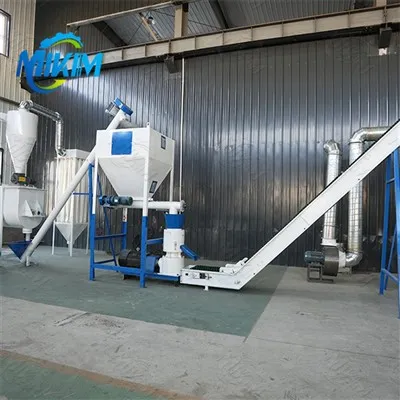
Multi-Feed Capability of Floating Fish Feed Extruders
Leave a message
What a Floating Fish Feed Extruder Really Does
A floating fish feed extruder is a cooking extruder. Preconditioned mash is carried by a screw, heated by injected steam and mechanical friction, then forced through a die that shapes the strand while starch gelatinises and protein is restructured. The pellet is cut to length at the die face and dried to a stable moisture. Because every extruded feed follows the same sequence of mixing, conditioning, cooking, shaping and cutting, the machine itself is not tied to one product. What changes between products is the die, the screw and shear configuration, the temperature profile and the recipe.
Which Products the Same Machine Can Run
With the correct change parts and settings, one extruder platform covers a wide product range:
Floating aquafeed for tilapia, carp, catfish and other surface-feeding species
Slow-sinking and sinking pellets for shrimp and bottom feeders
Extruded dry pet food for dogs and cats
Specialty aquatic diets that need high water stability or a controlled sinking rate
Extruded pet food is the most common second product, because the process principles are shared. Products that demand a fundamentally different texture, such as flakes or semi-moist feed, need additional equipment rather than a simple die swap.
Die Size and Compression Ratio
Pet food and aquatic feed place different demands on the pellet. Pet food needs high protein, moderate fat, balanced nutrition and a crisp bite, while aquatic feed is judged mainly on water stability. Moving from aquafeed to pet food, the usual practice is to fit a smaller die of about 3-4 mm to match the mouth size of dogs and cats, and to reduce the die compression ratio to roughly 1:4-1:5 so the pellets stay crisp and easy to chew instead of baking into a hard, glassy kibble.
| Parameter | Floating aquafeed | Extruded pet food |
|---|---|---|
| Pellet diameter | 1.5-4.0 mm | 3.0-4.0 mm |
| Die compression ratio | 1:6-1:8 | 1:4-1:5 |
| Water stability target | 20 minutes or more | Not a primary criterion |
| Protein target | 28-40% | 25-30% |
| Fat target | 5-12% | 8-10% |
Temperature Profile and Conditioning
Temperature is the second lever. A segmented profile of about 60°C in the feeding section, 90°C in the extrusion section and 70°C in the forming section keeps the fats in meat-based ingredients from over-oxidising, which protects flavour and nutritional value. Steam conditioning ahead of the barrel helps gelatinise starch and reduces mechanical wear; conditioning steam is typically supplied at 0.1-0.4 MPa and 130-150°C. A higher barrel temperature with more shear gives a more expanded, more buoyant pellet for aquafeed, while a lower and flatter profile gives the denser crumb that pet food needs.
Recipe Design and Palatability
Formula design must meet the nutrient target of the animal being fed. A workable dog food starting point combines 25% chicken meal, 15% beef meal, 30% corn meal, 15% rice meal, 10% vegetable meal and 5% fish oil, landing at roughly 25-30% protein and 8-10% fat. Meat ingredients are best frozen and ground to about 80 mesh, then blended thoroughly with the grain and vegetable powders so that lumps cannot form and block the die. Palatability is improved by adding 2-3% of a pet-specific flavour enhancer before processing, or by spraying a small amount of goat milk powder onto cooled pellets.
Hygiene, Cooling and Hardness Control
Pet food production demands stricter hygiene than most aquafeed lines. Disinfect the extruder barrel and dies with alcohol before use, and verify the freshness of every raw material; mouldy grain or expired meat must never enter the line. After extrusion, cool the pellets rapidly to room temperature and hold moisture below 10% before vacuum packing to limit oxidation and spoilage.
Hardness should match the age and species of the animal. For puppies and kittens, reduce extrusion pressure so the pellet is easier to chew and digest; for adult animals a firmer pellet holds its structure better in storage and in the bowl. Adjust pressure in small steps while watching the finished product, because both overly soft and overly hard batches reduce acceptance.
Frequently Asked Questions
Q: Can one floating fish feed extruder really run several different feeds?
Yes. Mixing, conditioning, cooking, shaping and cutting are shared steps, so a change of die, screw configuration, temperature profile and recipe lets the same machine produce aquafeed and extruded pet food.
Q: What die size is used for extruded dog and cat food?
A die of about 3-4 mm with a compression ratio of roughly 1:4-1:5 gives a crisp pellet sized to the mouth of the animal.
Q: Which temperature profile is recommended for pet food?
A segmented profile of about 60°C in the feeding section, 90°C in the extrusion section and 70°C in the forming section limits fat oxidation and preserves flavour.
Q: How is palatability improved without changing the nutrient balance?
Add 2-3% of a pet-specific flavour enhancer before extrusion, or spray a small amount of goat milk powder onto the cooled pellets.
Q: What moisture level is required before packing?
Cool pellets to room temperature and bring moisture below 10% before vacuum packing, which limits oxidation and spoilage during storage.
Q: How is hardness adjusted between young and adult animals?
Lower the extrusion pressure for puppies and kittens so the pellet is softer, and raise it gradually for adult animals to obtain a firmer, more durable pellet.