


Does the small fish food pellet making machine support multi-purpose animal feed production?
Leave a message
The core characteristic of ruminant feed is its high crude fiber content (20%-30%), such as straw, alfalfa, and silage. These raw materials are tough and have poor flowability, placing special requirements on the structure and parameters of fish feed pellet machines. Fish feed pellet machines typically use a single-screw feeding system, which can easily lead to uneven feeding when processing high-fiber raw materials. A forced feeding device is needed, using a double-screw structure to push the raw material into the cylinder and prevent accumulation and blockage. Simultaneously, wear-resistant molds and screws need to be replaced. Ruminant feed pellets have a relatively large diameter (6-8mm), requiring corresponding adjustments to the mold aperture. Furthermore, the mold material should be made of wear-resistant alloy steel to resist coarse fiber wear and extend its service life.
Raw material pretreatment is crucial for successful processing. Raw materials such as straw and alfalfa need to be crushed twice: first to 5-10mm, and then sieved and crushed to 1-2mm to ensure that coarse fibers are fully cut off, reducing the extrusion resistance of the small fish feed pellet making machine. After crushing, the raw materials need to undergo conditioning. Add 15%-20% water or silage to increase the moisture content to 18%-20%, and simultaneously introduce low-pressure steam (0.3MPa) to soften the materials and enhance their binding properties. One farmer crushed corn stalks and mixed them with 10% corn flour and 5% soybean meal for conditioning. Processing this mixture using a modified fish feed pellet mill resulted in significantly improved pellet density and a 15% increase in digestibility for sheep.
The parameters of the small fish feed maker machine need to be adjusted specifically. Ruminant feed does not require high water resistance; the processing temperature should be controlled at 70-80℃ to avoid damaging the fiber structure. The screw speed should be reduced to 150-200 rpm, and the extrusion time extended to ensure the high-fiber raw materials are fully formed. During processing, the die holes should be cleaned every 30 minutes to prevent coarse fiber residue from clogging the pellets and affecting subsequent production. Furthermore, since ruminant feed pellets have a low density, a grading screen can be installed at the discharge port to separate unformed coarse material for reprocessing, improving raw material utilization.
Related equipment


about Us
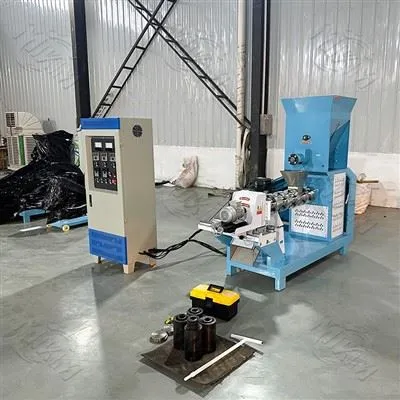
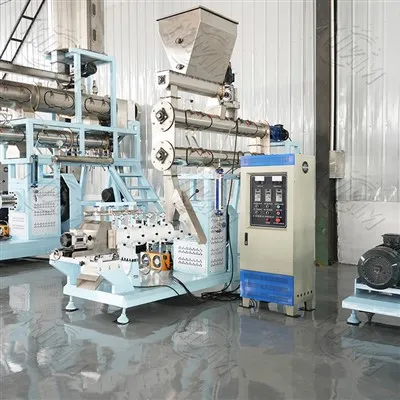
MIKIM's fish feed pellet production lines and supporting machinery offer excellent value for money. Not only are they affordable, eliminating middlemen markups and allowing small and medium-sized enterprises (SMEs) and fish farmers to purchase complete sets of equipment at reasonable costs, but they also boast exceptional efficiency. The fully automated process, from raw material crushing and precise ingredient mixing to extrusion pelleting and maturation, is completed in one continuous flow. This results in high starch gelatinization rates and uniform pellet formation, significantly improving production efficiency and feed quality, truly achieving "low cost, high output." Choosing a MIKIM fish feed pellet production line means enjoying comprehensive pre-sales and after-sales service, including 24-hour online customer support, a one-year warranty on the entire machine, professional on-site installation, commissioning, and maintenance, and a stable supply of spare parts. Customers can buy with confidence and use with peace of mind, with both excellent value and service quality!
Customer visit

Certificate of Honor

FAQ
1. What is the price of the fish feed pellet extruder?
The price ranges from approximately $3,500-$55,000
2. Do you provide maintenance services for your customers?
Yes, we offer comprehensive after-sales maintenance services to our customers.
If you would like to learn more about MIKIM machinery, please contact us. We offer one-stop service and welcome your inquiries!!!


