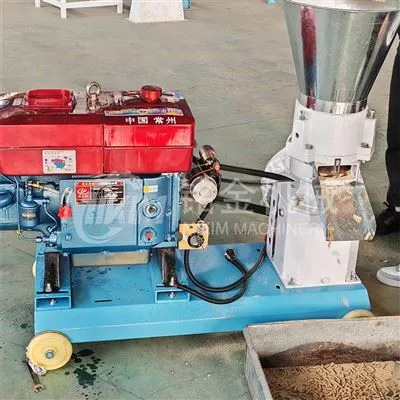
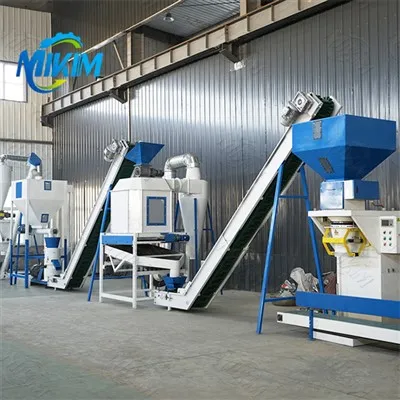
Dry fish feed production equipment vs wet fish feed extruder machine: What’s the Difference?
Leave a message
content
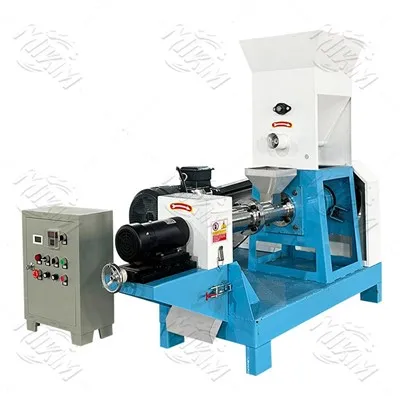
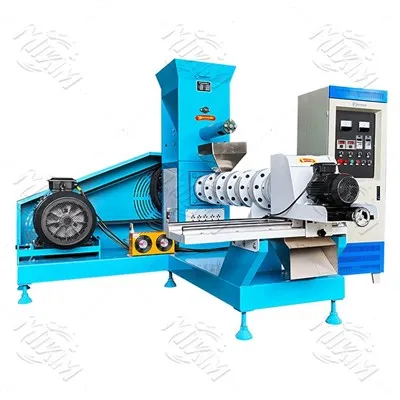
Extrusion Effect and Pellet Characteristics: Wet extrusion results in more complete extrusion, while dry extrusion produces denser pellets. Wet floating fish feed machines utilize ample moisture and uniform heat for more thorough extrusion of raw materials, resulting in a more uniform porous structure within the pellets, a higher extrusion ratio, and a fluffier, crisper texture with enhanced palatability. This is particularly suitable for producing pet treats and starter feed for puppies/fish fry. For example, kitten food produced using a wet extruder has an extrusion ratio of up to 5 times, producing fine and soft pellets that are easier for kittens to eat and digest. Dry-type floating fish feed pellets produce pellets with a lower extrusion ratio, a denser internal structure, higher hardness, and stronger bite resistance, making them suitable for producing chew-resistant adult pet food and sinking feed for bottom-dwelling fish. For example, when producing sinking feed for grass carp, pellets produced by a dry extruder have higher hardness, are less prone to disintegration in water, and can withstand water for 8-12 hours, far superior to pellets produced by a wet extruder.
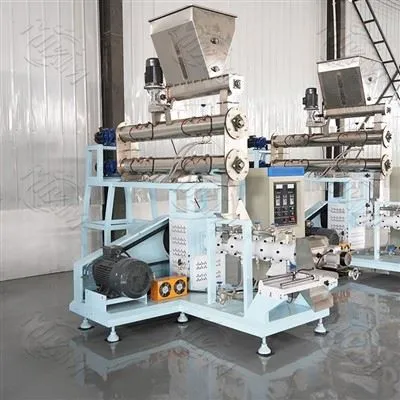
Nutrient Retention Rate: Dry extrusion uses high temperature and short time, while wet extrusion uses low temperature and long time. Dry-type fish feed making machines use friction heating, resulting in rapid heating of the raw materials and a short residence time (only 3-5 seconds) in the high-temperature zone (140-160℃). This maximizes the retention of heat-sensitive nutrients such as vitamins and amino acids, achieving a nutrient retention rate of over 85%. Wet extruders use steam heating, which has a relatively slower heating rate. The raw materials spend a longer time in the high-temperature zone (140-180℃) (5-8 seconds), resulting in greater loss of heat-sensitive nutrients and a nutrient retention rate of approximately 75%-80%.
Water resistance and storage stability: Dry pellets are more water-resistant, while wet pellets require additional drying. Pellets produced by dry-type fish feed pellet processing machines have low moisture content (typically ≤12%), a compact structure, and strong water resistance. They are less prone to moisture absorption and deterioration during storage, exhibiting good storage stability and requiring no additional drying process. Pellets produced by wet fish feed pellet processing machines have a high moisture content of 18%-22% at the time of discharge due to the addition of moisture during processing. Direct storage makes them prone to mold growth, necessitating the use of drying equipment to reduce the moisture content to below 12% to ensure storage stability. However, after drying, the water resistance of wet-extruded pellets is improved, meeting the needs of some aquatic feeds. For example, when producing floating feed for sea bass, if a wet extruder is used, a drum dryer is required; after drying, the pellets can withstand water for 6-8 hours.
Related equipment

about Us
MIKIM's fish feed pellet production lines and supporting machinery offer excellent value for money. Not only are they affordable, eliminating middlemen markups and allowing small and medium-sized enterprises (SMEs) and fish farmers to purchase complete sets of equipment at reasonable costs, but they also boast exceptional efficiency. The fully automated process, from raw material crushing and precise ingredient mixing to extrusion pelleting and maturation, is completed in one continuous flow. This results in high starch gelatinization rates and uniform pellet formation, significantly improving production efficiency and feed quality, truly achieving "low cost, high output." Choosing a MIKIM fish feed pellet production line means enjoying comprehensive pre-sales and after-sales service, including 24-hour online customer support, a one-year warranty on the entire machine, professional on-site installation, commissioning, and maintenance, and a stable supply of spare parts. Customers can buy with confidence and use with peace of mind, with both excellent value and service quality!!!
Customer visit

Certificate of Honor

FAQ
1. What is the price of the wet pet food processing machine?
The price ranges from approximately $1,500-$55,000
2. Do you provide maintenance services for your customers?
Yes, we offer comprehensive after-sales maintenance services to our customers.
If you would like to learn more about MIKIM machinery, please contact us. We offer one-stop service and welcome your inquiries!!!