


What Is the Difference BetweenDry Type fish feed pellet processing machine and wet pet food processing machine?
Leave a message
content
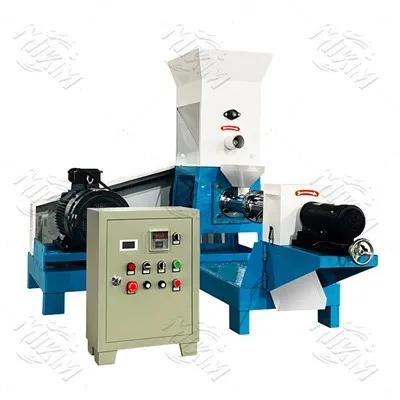
Moisture Control Methods: Dry extruders require no additional water, while wet extruders provide precise water replenishment. The core feature of a dry-type floating fish feed pellet making machine is that no additional water is added during processing; extrusion and puffing are achieved solely based on the raw material's inherent moisture content (typically controlled at 10%-14%). The moisture content remains relatively stable from feed to output, eliminating the need for additional water addition and drying equipment. In contrast, wet dog food production machines precisely replenish moisture into the extrusion chamber via a specialized water-adding device, raising the overall moisture content of the raw material to 15%-25%. This synergistic effect of moisture and heat enhances the puffing process. For example, when producing floating fish feed, a wet extruder can adjust the raw material moisture content to around 20% for more complete puffing; while a dry extruder must strictly control the initial moisture content of the raw material to 12%-14% to prevent excessive moisture from causing the raw material to stick together.
Heat Source Mechanism: Dry extruders rely on frictional heat, while wet extruders combine frictional heat and steam heat. Dry-type fish feed making machines generate heat entirely from the friction between the raw material and the screw, the inner wall of the extrusion chamber, and the friction between the particles within the raw material. The high-speed rotation of the screw (300-400 rpm) generates significant frictional heat, raising the raw material temperature to 120-160°C, meeting the puffing requirements. This heating method eliminates the need for external heating devices, resulting in a simpler equipment structure. Wet dog food processing machines, on the other hand, employ a combined heating method of "frictional heat + steam heating." In addition to frictional heat generation, high-temperature steam is introduced through a steam jacket outside the extrusion chamber, rapidly raising the raw material temperature to 140-180°C. Steam heating ensures more even heat distribution, avoiding the localized overheating or underheating problems caused by uneven raw material particle size in dry extruders, resulting in more stable puffing.
Core puffing mechanism: Dry fish feed production equipment relies on high-pressure instantaneous pressure release, while wet extruders rely on the volume expansion of water vapor. In a dry extruder, dry raw materials are compressed under high pressure (up to 4-6 MPa) by a screw. The pressure is released rapidly as the material is extruded from the die, causing a small amount of moisture inside the material to vaporize instantly, resulting in volume expansion and puffing. This puffing method has extremely high requirements for the moisture content and particle size of the raw materials. Too low a moisture content leads to insufficient puffing, while too high a moisture content causes particle sticking. In a wet fish feed extruder, due to the high moisture content of the raw materials, a large amount of moisture vaporizes under high temperature and pressure, generating far more steam than in a dry extruder. This results in stronger steam expansion force and a higher puffing ratio (typically 30%-50% higher than dry extrusion). For example, when producing highly puffed pet snacks, a wet extruder can achieve a puffing ratio of 4-6 times, while a dry extruder can only achieve 2-3 times, resulting in a more fluffy product.
Related equipment



about Us
MIKIM's fish feed pellet production lines and supporting machinery offer excellent value for money. Not only are they affordable, eliminating middlemen markups and allowing small and medium-sized enterprises (SMEs) and fish farmers to purchase complete sets of equipment at reasonable costs, but they also boast exceptional efficiency. The fully automated process, from raw material crushing and precise ingredient mixing to extrusion pelleting and maturation, is completed in one continuous flow. This results in high starch gelatinization rates and uniform pellet formation, significantly improving production efficiency and feed quality, truly achieving "low cost, high output." Choosing a MIKIM fish feed pellet production line means enjoying comprehensive pre-sales and after-sales service, including 24-hour online customer support, a one-year warranty on the entire machine, professional on-site installation, commissioning, and maintenance, and a stable supply of spare parts. Customers can buy with confidence and use with peace of mind, with both excellent value and service quality!!!
Customer visit

Certificate of Honor

FAQ
1. What is the price of the wet floating fish feed machine?
The price ranges from approximately $1,500-$55,000
2. Do you provide maintenance services for your customers?
Yes, we offer comprehensive after-sales maintenance services to our customers.
If you would like to learn more about MIKIM machinery, please contact us. We offer one-stop service and welcome your inquiries!!!


