Dry Type vs. Wet Type Floating Fish Food Pellet Making Machine: Which is Better for Your Feed Business?
Leave a message

Choosing the right extrusion technology is a critical decision for any feed producer. The main difference between a Dry Type floating fish feed making machine and a wet Type Floating fish feed extruder machine is the use of steam conditioning. While dry extruders rely on mechanical friction to generate heat, wet extruders use a steam conditioner to pre-cook the raw materials.
If you are looking for a quick answer:
- Choose a Dry Type fish feed pellet processing machine for small-scale production, limited budgets, and simple operation.
- Choose a wet Type floating fish feed making machine for high-quality commercial aquafeed, pet food, and large-scale industrial output.
1. What is a Dry Type fish feed making machine?
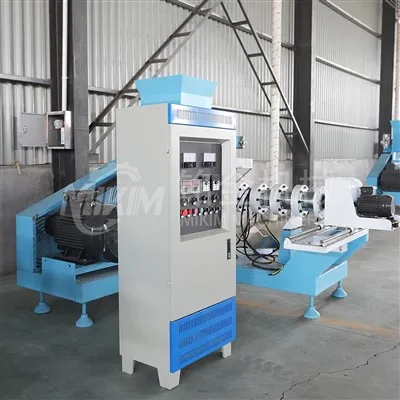
A Dry Type fish feed pellet extruder machine generates heat through high-speed screw rotation and mechanical friction. As the raw material passes through the barrel, the pressure and temperature rise, cooking the material before it is forced through the discharge die.
- Key Feature: No external steam boiler is required.
- Best For: Startups, small fish farms, and small-scale pet food processing.
- Advantages: Low initial investment, compact design, and easy maintenance.
2. What is a wet Type floating fish feed pellet processing machine?
A wet Type floating fish food making machine is equipped with a steam conditioner. Before entering the extrusion barrel, raw materials are mixed with hot steam and water. This "pre-conditioning" phase hydrates and partially cooks the ingredients.
- Key Feature: Requires a steam boiler or generator.
- Best For: Commercial feed plants, premium floating fish feed, and professional pet food brands.
- Advantages: Superior pellet stability, higher digestibility, and larger production capacity.
3. Dry vs. Wet Fish Feed pellet maker machine: Key Comparison Table
To help you decide, here is a side-by-side comparison of the technical and economic factors:
| Feature | Dry Type floating fish feed pellet maker machine | Wet Type fish feed pellet extruder machine |
| Heat Source | Mechanical Friction | Steam + Mechanical Friction |
| Boiler Required? | No | Yes (Steam Generator) |
| Starch Gelatinization | 80% - 85% | Over 90% |
| Floating Time | 12 - 15 Hours | 24+ Hours |
| Pellet Appearance | Slightly Rough | Smooth and Uniform |
| Power Consumption | Higher (per ton of feed) | Lower (Steam assists cooking) |
| Wear Part Lifespan | Shorter (Due to high friction) | Longer (Steam lubricates material) |
| Investment Cost | Low | High |
4. Why Does Steam Conditioning Matter? (The Wet Advantage)
For commercial producers, the "wet Type floating fish feed pellet maker machine" is often the preferred choice. Here is why:
-
Better Nutritional Value
The steam conditioning process ensures higher starch gelatinization. This means the feed is easier for fish or pets to digest, leading to a better Feed Conversion Ratio (FCR) and faster growth rates.
-
Superior Floating Stability
In aquaculture, floating stability is vital. Wet extrusion creates a more uniform internal pore structure in the pellets. This allows floating fish feed to stay on the water surface for over 24 hours without disintegrating, reducing water pollution.
-
Higher Production Efficiency
Because the steam does much of the "cooking" work, the motor of a wet type extruder faces less resistance. This allows for higher output (up to several tons per hour) and reduces the wear and tear on the screw and die.
5. How to Choose the Right Extruder for Your Project?
Choose a Dry Type floating Fish Feed pellet making machine If:
- Your budget is under
- 5,000–5,000–10,000.
- Your production capacity is less than 500kg per hour.
- You do not have the space or permit for a steam boiler.
- You are producing feed for your own small farm.
Choose a wet Type floating fish food maker machine If:
- You plan to sell feed commercially.
- You require high-quality, professional-grade pet food or aquafeed.
- You need a production capacity of 1 ton/h or more.
- You want to minimize long-term electricity and maintenance costs.
FAQ:
Q1: Can I make floating fish feed with a dry type floating fish feed pellet making mill?
Yes. Dry type extruders can produce floating feed. However, the floating time is usually shorter (12-15 hours) and the pellets may produce more "fines" (dust) compared to the wet type.
Q2: Why is a wet Type floating fish feed pellet extruder machine more expensive?
The higher cost is due to the additional conditioning system and the requirement for a steam boiler. However, the wet type is more cost-effective in the long run for large-scale production due to lower energy consumption per ton.
Q3: Which machine is better for making dog food?
The wet type feed extruder is the industry standard for pet food. It allows for a higher inclusion of fresh meat and fats, resulting in better palatability and a professional look that consumers expect.
Q4: Does the dry type floating fish food extruder machine consume more electricity?
Yes. Because it relies 100% on mechanical energy to create heat, the motor works harder. A wet type extruder uses thermal energy from steam, which reduces the electrical load on the motor.
Q5: Is it hard to maintain a wet Type floating fish feed pellet mill?
While it has more components (like the boiler and conditioner), the extrusion parts (screw and barrel) actually last longer in a wet system because the steam softens the raw material, reducing abrasive wear.
Conclusion
There is no "one-size-fits-all" answer. If you are a startup or small farmer, the dry type feed extruder is an excellent, low-risk entry point. However, if you aim for commercial success and high-end feed quality, investing in a wet Type fish feed production equipment system is the key to long-term profitability.
Still not sure which one fits your factory? [Contact our engineering team] for a customized production layout and a free quote!
Company Profile