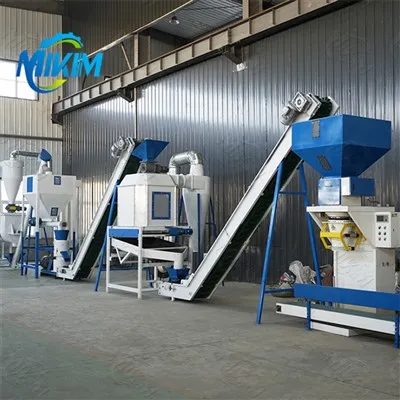
Floating and Sinking Fish Feed Extruder Line: Output, Power and Switching
Leave a message
What the Floating and Sinking Feed Extruder Line Covers
The floating and sinking fish feed extruder making machine line is designed for commercial pellet feed built from raw materials such as corn flour, wheat flour, rice flour, soybean powder, fish powder and bone powder. The finished feeds come out in different shapes with a distinct flavor, rich nutrient content and fine texture, and they are used as aquatic and pet feed for fish, shrimp, pig, dog, cat and similar animals. Full automation control gives the line high production efficiency, which is why it is a common choice for medium and large feed mills and breeding farms.
Raw Materials and Finished Product Range
Typical raw materials for dog, cat and fish food include wheat flour, corn flour, fish meal, bone powder, animal oil, soybean meal and mustard cake. The same line can produce different shapes and sizes of dog food, cat food, shrimp feed, fish feed and poultry feed. Because the raw material list is flexible, operators can adjust the formula to local ingredient prices and to the nutritional needs of the target species without rebuilding the line.
Model Output, Power and Dimensions
The table below shows common line models with their nominal output, installed power and overall line dimensions. Output figures are reference values and depend on the formula and the pellet diameter actually being produced.
| Model | Output | Installed power | Dimension (L x W x H) |
|---|---|---|---|
| 65 | 150 kg/h | 80 kW | 17 x 1.5 x 2.2 m |
| 70 | 250 kg/h | 100 kW | 20 x 1.5 x 2.2 m |
| 85 | 500 kg/h | 150 kW | 30 x 1.5 x 2.6 m |
| 90 | 1,000 kg/h | 180 kW | 40 x 2 x 3.5 m |
| 95 | 1,500 kg/h | 200 kW | 45 x 2 x 3.5 m |
| 120 | 3,000 kg/h | 245 kW | 60 x 3 x 3.5 m |
| 140 | 5,000 kg/h | 290 kW | 78 x 3.8 x 3.5 m |
Installed power and line length scale together, so the model choice is really a question of how much floor space and electrical capacity the site can support. A model 90 line, for example, needs a building roughly 40 m long, while a model 140 line needs about 78 m in a straight run. Where the building is shorter than the straight-line dimension, the layout is normally folded into an L or U arrangement during plant design.
Automated Continuous Production
The fish feed production line uses an automated control system that enables continuous operation from raw material conveying through mixing, pelletizing, drying, cooling and packaging. This configuration far exceeds the output of traditional manual or semi-manual production methods, significantly shortening production cycles and increasing feed output per unit time. For a medium-sized line, hourly output in the range of 1 to 5 tons is typical, which helps large-scale aquaculture operations meet their feed demand with fewer operators on the floor.
Continuous conveying keeps the extruder fed at a steady rate instead of in surges.
Controlled drying and cooling stabilize pellet moisture before bagging.
Fewer manual transfer points mean less spillage and fewer chances of contamination.
Quick Switching Between Floating and Sinking Feed
By adjusting production line parameters, such as replacing the pelletizing die and changing temperature and pressure, the line can quickly switch between different sizes and types of fish feed. Moving from floating fish feed to sinking fish feed, or from juvenile fish feed to adult fish feed, can be done without a long shutdown. That adaptability lets a single line serve several market segments and respond to changes in demand without investing in additional equipment.
A practical production plan groups orders by pellet size and feed type, so that die changes are batched together and the number of changeovers per week stays low. Cleanout of the conveying and drying sections between formulas also protects flavor and nutrient integrity when the line moves between species.
Frequently Asked Questions
Q: Which raw materials can this line process?
Corn flour, wheat flour, rice flour, soybean powder, fish powder and bone powder are the base materials, and formulas commonly add animal oil, soybean meal and mustard cake.
Q: What pellet types can one line produce?
The same line can make dog food, cat food, shrimp feed, fish feed and poultry feed in different shapes and sizes by changing the die and the formula.
Q: How is floating feed changed over to sinking feed?
Line parameters are adjusted by replacing the pelletizing die and changing the temperature and pressure settings, so the switch is completed without a long shutdown.
Q: What output is typical for a medium-sized line?
Hourly output in the range of 1 to 5 tons is typical for a medium-sized line, depending on the model selected and the formula being run.
Q: Does installed power limit the model that can be chosen?
Yes. A larger model such as the 140 needs about 290 kW installed and roughly 78 m of line length, so available power supply and floor space are the practical limits.
Q: Why does automation raise output per unit time?
Continuous control of conveying, mixing, pelletizing, drying, cooling and packaging removes the idle gaps of manual or semi-manual operation and shortens the production cycle.