Floating Fish Food Pellet Processing Line: Extruder and Feed Machine
Leave a message
What Is the Floating Fish Food Pellet Processing Line?
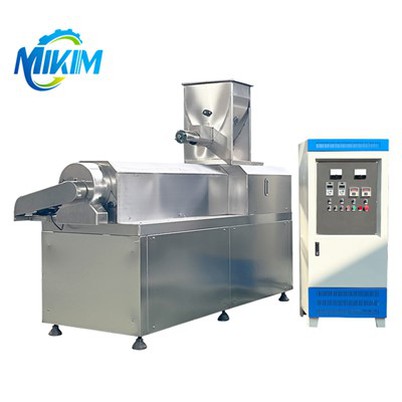
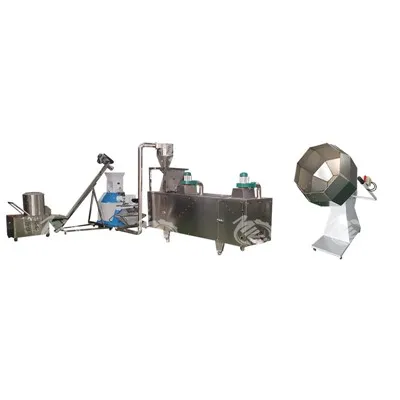
The floating fish food pellet processing line is core equipment built for diverse feed production needs. Its flexible functional configuration serves both aquaculture and pet breeding, giving manufacturers an efficient and cost-effective route from raw material to packed pellet. Whether the plant processes feed for a large aquaculture farm or runs batch production for pet food brands, the stable performance and wide applicability of the line cover the requirements of different production scenarios.
Because capacity is matched between the connected systems, the line runs continuously rather than in isolated steps, which keeps pellet quality consistent from the first bag of a shift to the last.
Five Connected Systems of the Line
The plant is organised into five systems that are matched in capacity so the line runs without intermediate storage bottlenecks.
| System | Function |
|---|---|
| Mixing system | Blends raw materials and additives into a uniform base before extrusion. |
| Extrusion system | Cooks and shapes the pellets, setting density, size and floating behaviour. |
| Drying system | Fixes the moisture content so the pellet stores well and keeps its shape in water. |
| Flavouring system | Applies oil, fat and flavour coatings that raise energy density and palatability. |
| Packing system | Weighs and bags the finished feed for storage and transport. |
Model Specifications and Power Data
The table below lists the electric models of the line with their capacity and power ratings.
| Model | Capacity (kg/h) | Main power | Cutting blade power | Cutting power | Modulator power |
|---|---|---|---|---|---|
| 65 | 250-300 | 22 kW | 1.5 kW | 1.5 kW | 3 kW |
| 70 | 500-600 | 45 kW | 1.5 kW | 1.5 kW | 3 kW |
| 75 | 800-1000 | 55 kW | 1.5 kW | 1.5 kW | 3 kW |
| 85 | 1200-1500 | 90 kW | 3 kW | 2.2 kW | 5.5 kW |
| 95 | 2000-2500 | 110 kW | 3 kW | 3 kW | 11 kW |
| 120 | 3000-4000 | 160 kW | 5.5 kW | 3 kW | 15+7.5 kW |
| 136 | 5000-6000 | 200 kW | 7.5 kW | 5.5 kW | 22+7.5 kW |
Model selection should follow the required daily tonnage, the number of product lines to be covered and the available power supply, rather than the highest capacity in the table.
Species Coverage and Feed Shape Flexibility
The fish feed machine produces different shapes of food for a wide variety of fish, including trout, salmon, grass carp, herring carp and tilapia. Because pellet shape and size are set by the die, one line can serve multiple species and growth stages. When planning the product range, match the pellet diameter and density to the feeding behaviour of the target species, and test floating time against the water depth and culture system used on the farm. Crumble sizes for fry and larger pellets for grow-out fish therefore come from the same machine.
Cold water species: trout and salmon, with denser pellets and longer floating time
Warm water species: grass carp, herring carp and tilapia, with medium-density floating pellets
Juvenile stages: fine crumble produced with a dedicated die and higher cutter speed
Raw Materials and Pretreatment Benefits
The line uses corn flour, wheat flour, low-temperature soybean flakes meal, rice bran and wheat bran as raw materials. Pretreatment of the feed reduces the loss of nutrition during processing and improves the protein ratio, so the finished pellet is digested more easily by the animals. Pretreatment also gives the pellets a uniform structure, which keeps the nutritional level consistent from pellet to pellet and from batch to batch. Operators should check the moisture and particle size of every raw material lot, because both directly affect gelatinisation and pellet durability.
Operating and Quality Control Notes
Keep the mixing time constant between batches so the extruder sees a consistent feed, and dry the pellets to a stable moisture before coating. Inspect the cutter blades and die holes at fixed intervals, since worn blades produce fines and blocked holes distort pellet shape. Record the barrel temperature profile and the cutter speed for each recipe so a good batch can be repeated without guesswork.
Frequently Asked Questions
Q: What systems make up the pellet processing line?
The line contains five matched systems: mixing, extrusion, drying, flavouring and packing.
Q: Which fish species can the line produce feed for?
Trout, salmon, grass carp, herring carp and tilapia are typical targets, and other species can be covered by changing die and formulation.
Q: What raw materials are used?
Corn flour, wheat flour, low-temperature soybean flakes meal, rice bran and wheat bran form the base of most recipes.
Q: What does pretreatment do for the feed?
It reduces nutritional loss, improves the protein ratio and gives the pellet a uniform structure, so digestibility and batch consistency both improve.
Q: How do I set the right pellet size?
Pellet diameter is set by the die, and the size should be matched to the feeding behaviour and growth stage of the target species.
Q: What is the output range of the line?
Capacity runs from 250-300 kg/h up to 5000-6000 kg/h, with main power from 22 kW to 200 kW depending on the model.